
On payday, put the cash for each flexible spending category into its own labeled envelope, spend only from that envelope, and stop when it is empty. ProfitDrawer's zero-based budget guide uses envelopes for categories like groceries, fuel and fun money, and its $4,200 example budget plans $520 for groceries, so that envelope would get $520 for the month, or a share of it each payday.
Steps:
- Make a budget first. Decide what each category gets for the month.
- Choose envelope categories: flexible costs paid in person, such as groceries, fuel, dining out, household items and fun money. Bills paid online stay in your bank account.
- Fill on payday. Withdraw the cash and split it across the envelopes. If you are paid every two weeks, fill each envelope with half its monthly amount.
- Spend from the envelope and write each purchase on it or on a tracker.
- When it is empty, that category is done, or you move cash from another envelope on purpose. Moving money is fine as long as the plan still adds up.
- At month end, decide what to do with leftovers, such as savings or next month's envelope.
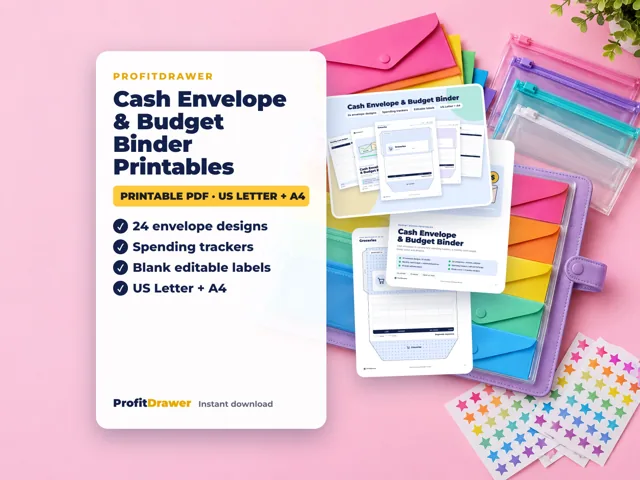
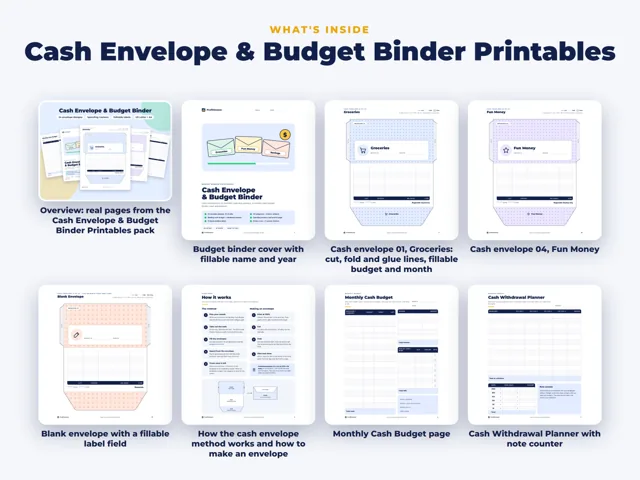
Keep the cash somewhere safe at home, and only carry the envelopes you need that day. ProfitDrawer's cash envelope printables include 24 envelope designs and spending trackers in US Letter and A4.
Source: Zero-Based Budget: What It Is and How to Make One (With an Example) · Updated
Tools and spreadsheets for this
Related questions
All questions on ProfitDrawer Answers →
General information, not tax, legal or financial advice. Check the rules for your state and your situation.