
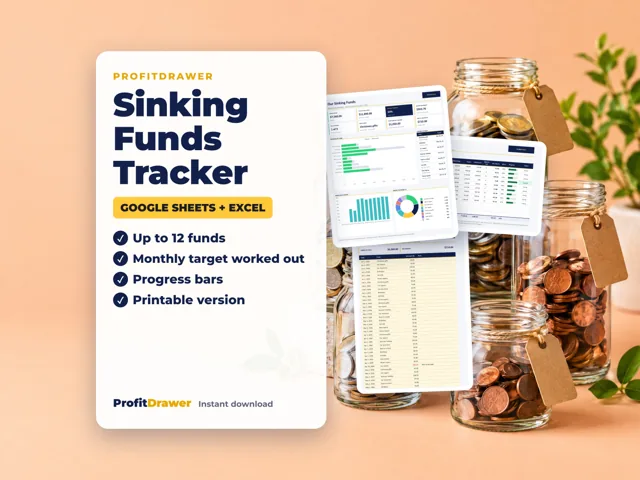
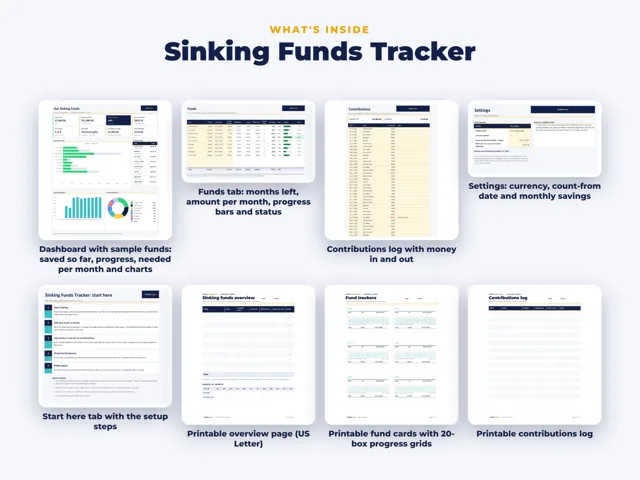
Sinking funds are savings set aside a little each month for costs you know are coming but that do not arrive monthly, such as holidays, car repairs, birthdays or yearly insurance. The math is the cost divided by the months until you need it: $900 of holiday gifts 12 months away is $75 a month. ProfitDrawer's zero-based budget guide includes sinking funds for car repairs, holidays and yearly bills in its example budget.
How to set them up:
- List irregular costs for the next 12 months: holidays and gifts, car repairs and registration, yearly insurance or subscriptions, school costs, vacations, pet care.
- Estimate each cost and the month it is due.
- Divide the cost by the months left. Example: $600 car insurance due in 6 months is $100 a month.
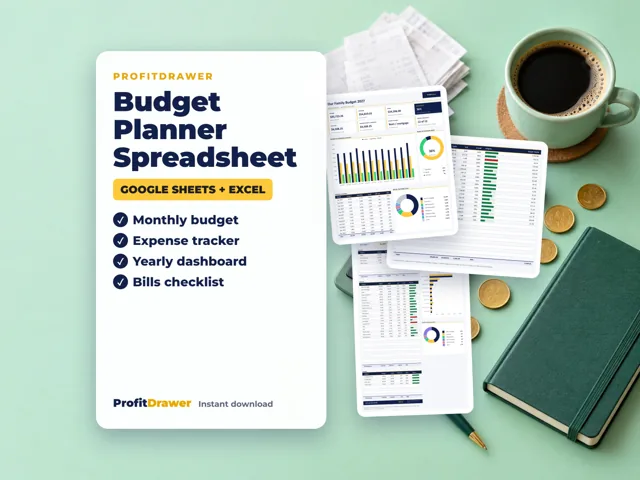
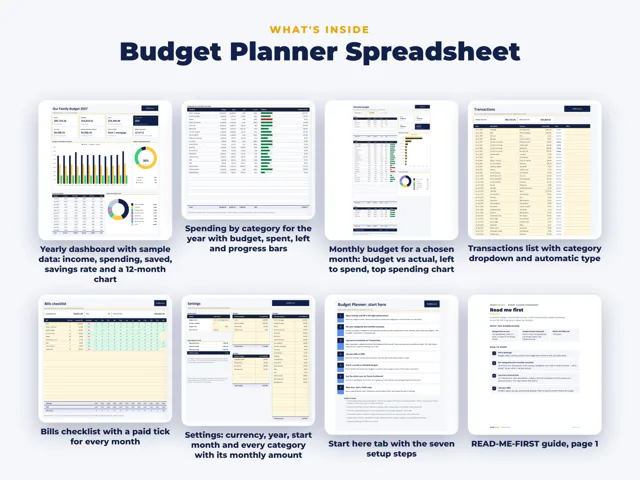
- Add each fund as a line in your monthly budget.
- Move the money on payday into savings, or track each fund's balance inside one savings account.
- When the bill comes, pay it from the fund, then restart it for next year.
Sinking fund vs emergency fund:
| Sinking fund | Emergency fund | |
|---|---|---|
| For | Expected costs | Unexpected costs |
| Timing | Known or likely date | Unknown |
| Example | Holiday gifts, yearly insurance | Job loss, sudden medical bill |
In ProfitDrawer's example zero-based budget, the sinking funds are car repairs ($50), holidays and gifts ($75) and yearly bills ($40), alongside a separate emergency fund ($350).
Source: Zero-Based Budget guide (ProfitDrawer) · Updated
Tools and spreadsheets for this
Related questions
All questions on ProfitDrawer Answers →
General information, not tax, legal or financial advice. Check the rules for your state and your situation.