
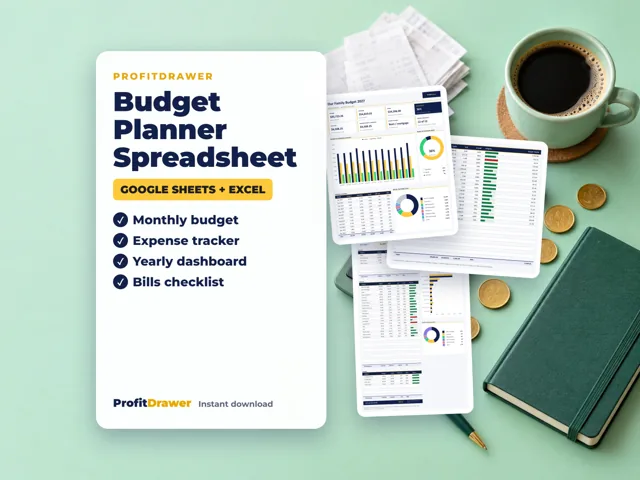
The 50/30/20 rule is a common budgeting guideline that splits take-home pay three ways: 50% for needs, 30% for wants and 20% for savings goals. A Consumer Financial Protection Bureau teaching guide describes it this way and notes it is one rule to live by that not everyone can follow. On $4,000 of monthly take-home pay, that is $2,000, $1,200 and $800. ProfitDrawer's budget spreadsheets work with this split or any other.
The three buckets (as a percent of net income):
| Share | Bucket | Examples |
|---|---|---|
| 50% | Needs | Rent or mortgage, groceries, utilities, transportation |
| 30% | Wants | Dining out, vacations, entertainment |
| 20% | Savings goals | Emergency savings, saving for education, retirement |
Net income is what lands in your account after taxes and other deductions.
How to use it:
- Total your monthly take-home pay.
- Multiply by 0.50, 0.30 and 0.20.
- Sort last month's spending into needs, wants and savings and compare.
Limits: in high cost areas, needs alone can pass 50%, and someone paying off debt may want more than 20% in the savings bucket. Treat the split as a starting point and adjust it. A zero-based budget, where every dollar is assigned, can be built on top of the 50/30/20 split.
Source: Analyzing budgets, Building Blocks teacher guide (Consumer Financial Protection Bureau) · Updated
Tools and spreadsheets for this
Related questions
All questions on ProfitDrawer Answers →
General information, not tax, legal or financial advice. Check the rules for your state and your situation.