
The estimated tax safe harbor means you avoid the underpayment penalty if your withholding and on-time estimated payments add up to at least 90% of this year's tax or 100% of last year's tax, whichever is smaller. For the 2026 tax year, use 110% of your 2025 tax if your 2025 adjusted gross income was over $150,000 ($75,000 married filing separately). ProfitDrawer's free self-employed tax calculator shows a monthly or quarterly amount to set aside.
Worked example from IRS Publication 505 (2026): 2025 tax was $42,581, expected 2026 tax is $71,253, and 2025 AGI was $180,000. 90% of the 2026 tax is $64,128. 110% of the 2025 tax is $46,839. The required annual payment is the smaller figure, $46,839.
Points to know:
- The prior-year option needs a 2025 return that covered all 12 months.
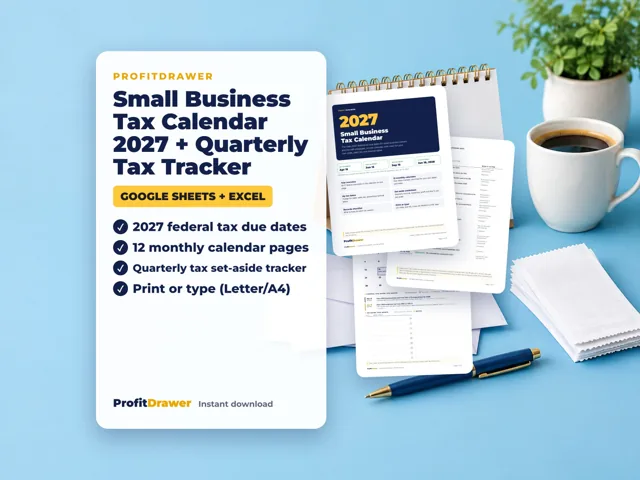
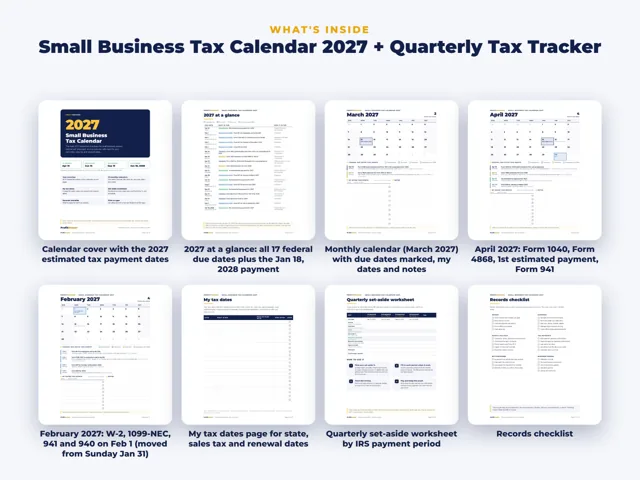
- Pay enough by each due date. For the 2026 tax year: April 15, June 15 and September 15, 2026, and January 15, 2027. The penalty is figured separately for each period.
- If you owe less than $1,000 after withholding and refundable credits, no penalty applies.
- Different rules apply if at least two-thirds of your gross income is from farming or fishing.
- The safe harbor only avoids the penalty. Any tax still owed for 2026 is due by April 15, 2027, even if you file an extension.
If your income jumps late in the year, the prior-year figure can be the easier target to plan around. General information, not tax advice.
Source: IRS Publication 505 (2026), Tax Withholding and Estimated Tax · Updated
Tools and spreadsheets for this
Related questions
- What is the penalty for not paying quarterly estimated taxes?
- When are quarterly estimated tax payments due in 2027?
- Do I have to pay quarterly estimated taxes in my first year of business?
- How much should I set aside for taxes if I am self-employed?
- How do I pay estimated taxes online to the IRS?
- When are small business taxes due in 2027?
All questions on ProfitDrawer Answers →
General information, not tax, legal or financial advice. Check the rules for your state and your situation.