
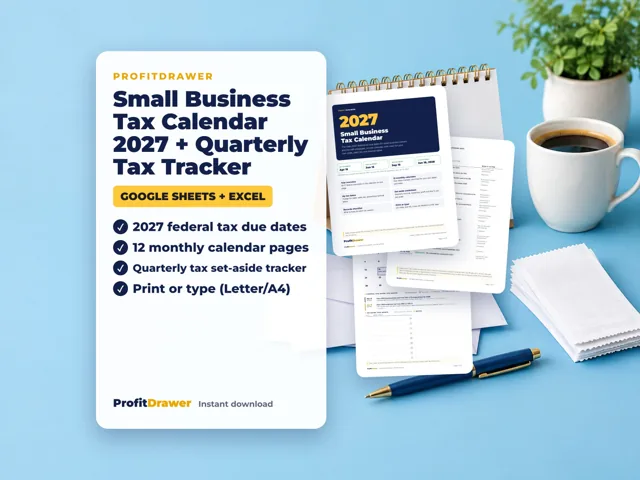
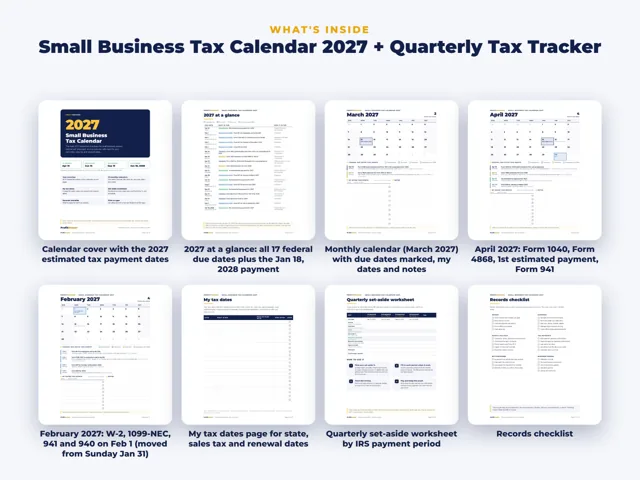
The IRS charges an underpayment of estimated tax penalty when you did not pay enough tax during the year through withholding or estimated payments. It is figured from the amount underpaid, how long it stayed underpaid and the IRS's published quarterly interest rates for underpayments, and it is figured separately for each payment period. You generally avoid it if you owe less than $1,000. ProfitDrawer's 2027 tax calendar includes a quarterly tax tracker for logging payments.
Ways to avoid or reduce the penalty (IRS Tax Topic 306 and the IRS penalty page):
- You owe less than $1,000 after subtracting withholding and refundable credits.
- You paid at least 90% of this year's tax or 100% of last year's tax, whichever is smaller. Use 110% of last year's tax if last year's adjusted gross income was over $150,000 ($75,000 married filing separately).
- If your income came in unevenly, the annualized income installment method (Form 2210, Schedule AI) may lower or remove the penalty.
- The IRS can waive it if a casualty, disaster or other unusual circumstance caused the underpayment, or if you retired after age 62 or became disabled during the year or the year before and had reasonable cause.
Because each period is checked on its own, you can owe a penalty for an early quarter even if you are due a refund when you file (IRS Publication 505, 2026). For the 2026 tax year, the due dates were April 15, June 15 and September 15, 2026, and January 15, 2027.
The IRS sends a notice if you owe the penalty, and it charges interest on penalties. General information, not tax advice.
Source: IRS: Underpayment of estimated tax by individuals penalty · Updated
Tools and spreadsheets for this
Related questions
- What is the safe harbor rule for estimated tax payments?
- When are quarterly estimated tax payments due in 2027?
- Do I have to pay quarterly estimated taxes in my first year of business?
- How do I pay estimated taxes online to the IRS?
- Does a tax extension give me more time to pay?
- When are small business taxes due in 2027?
All questions on ProfitDrawer Answers →
General information, not tax, legal or financial advice. Check the rules for your state and your situation.