
To pay off a car loan faster, pay more toward the principal than your required payment: add a fixed extra amount each month, make half payments every two weeks, or put windfalls like a tax refund toward the balance. First check that your loan uses simple interest and has no prepayment penalty, and tell your lender to apply the extra to principal. On a $25,000 loan at 7% for five years, an extra $100 a month saves $939 and ends the loan 11 months early.
Here is how it works, with the math shown, so you can decide what is worth it for your own loan.
General information, not financial advice. Your loan contract and your state's law decide what is allowed.
Step 1: Check two things in your loan contract
Before you send a single extra dollar, find your loan contract or call your lender and ask two questions.
1. Is there a prepayment penalty? The CFPB explains that some lenders charge a fee if you pay off early, because they collect less interest. Some states ban these penalties for certain loans. If your contract has one, find out exactly how it is calculated before deciding.
2. Is it simple interest or precomputed interest?
- Simple interest (the more common type) is charged on your remaining balance. Every extra dollar of principal cuts the interest you pay from then on. This is where paying extra really pays off.
- Precomputed interest works out the total interest up front and spreads it over your payments. The CFPB says extra payments on this type do not reduce the principal or interest owed. You may get a refund of some unearned interest if you pay off early, but the savings are usually smaller.
The rest of this guide assumes a simple interest loan.
Step 2: Understand where your payment goes
Each monthly payment is split. Payments usually cover fees first, then interest, then principal. Early in the loan, a bigger slice goes to interest.
Example loan used in this guide: $25,000 borrowed at 7% APR for 60 months.
- Monthly rate: 7% / 12 = 0.5833%
- Monthly payment: $495.03
- Total interest over 5 years if you never pay extra: $4,701.80
In month one, interest is $25,000 x 0.07 / 12 = $145.83. The rest, $495.03 minus $145.83 = $349.20, goes to principal. Any extra you add goes straight to principal (once you have told the lender to apply it that way), which lowers next month's interest, and so on.
Step 3: Pick a payoff method
Method 1: Add a fixed extra amount every month
This is the simplest and most reliable method. Here is what extra payments do on the example loan:
| Extra each month | Months to pay off | Total interest | Interest saved | Time saved |
|---|---|---|---|---|
| $0 | 60 | $4,701.80 | $0 | 0 |
| $50 | 54 | $4,179.18 | $522.62 | 6 months |
| $100 | 49 | $3,762.80 | $939.00 | 11 months |
| $200 | 41 | $3,141.43 | $1,560.37 | 19 months |
These figures come from a standard month-by-month calculation on this example. Your own loan will differ, so run your numbers in the free loan payoff calculator.
Method 2: Pay half your payment every two weeks
There are 52 weeks in a year, so paying half every two weeks gives you 26 half payments, which is 13 full payments instead of 12. On the example loan, that one extra payment a year works out to about $41.25 extra a month ($495.03 / 12), which ends the loan in about 55 months and saves about $440 in interest.
Ask your lender first. Some lenders hold a half payment until the other half arrives, which gives you no benefit. Others charge a fee for a biweekly plan. If either is true, just add $41.25 to your normal monthly payment instead. Same result, no fee.
Method 3: Round up your payment
Round $495.03 up to $500, $525 or $550. The small round up to $500 is only $4.97 a month, which saves about $58 on the example loan. Rounding up to $550 is about $55 extra and saves a little more than the $50 row in the table. Round ups are painless, but the bigger the round up, the bigger the savings.
Method 4: Put windfalls toward the principal
A tax refund, a work bonus or money from selling something can make a big dent. On the example loan, a single $2,000 principal payment in month 12 ends the loan 5 months early and saves about $611 in interest. The earlier in the loan you make it, the more it saves.
Method 5: Refinance to a lower rate
If your credit has improved or rates have dropped since you bought the car, a new loan at a lower rate can lower your interest. Keep the term the same or shorter, or you may pay more over time. The CFPB points out that refinancing means paying off the original loan in full, which can trigger a fee if your contract has a prepayment penalty. Compare the total cost of both loans, not just the monthly payment.
Method 6: Cut the add-ons
If you bought extras with the car, like a service contract, check whether you still want them. Ending one early may get you a refund of the unused part, depending on the contract. Put any refund toward the loan.
Step 4: Make sure the extra goes to principal
This step is where many people lose the benefit. Your lender may treat an extra payment as next month's payment paid early, which does not lower the principal faster.
- Ask your lender or servicer how to mark a payment as principal only. The CFPB says you may be able to request that more of your payment goes to principal, so check your loan documents.
- Make the extra payment separately from your regular payment if your lender allows it, and label it.
- Check your next statement. The principal balance should drop by the full extra amount.
Step 5: Find the extra money in your budget
Paying off a car early only works if the extra money is there every month. A few places to look:
- Name the money. Give the extra payment its own line in your budget so it is planned, not leftover. A zero-based budget is a good way to do this, since every dollar gets a job.
- Cancel one subscription you do not use and send that amount to the loan.
- Use raises. When your pay goes up, send part of the raise to the loan before you get used to it.
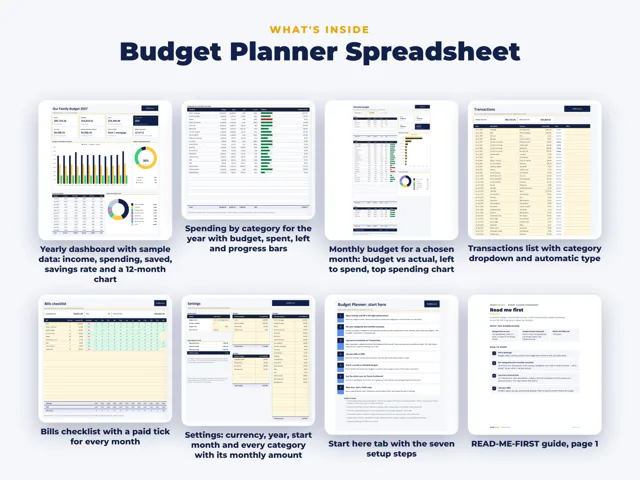
A budget planner spreadsheet with a monthly budget, expense tracker and bills checklist makes it easier to see where an extra $50 or $100 can come from.
Should you pay off your car loan early?
Paying extra is a good idea when most of these are true:
- You have some emergency savings, so one surprise bill will not go on a credit card.
- You have no higher-interest debt. If a card charges a much higher rate than your car loan, every extra dollar saves more on the card.
- Your loan has simple interest and no prepayment penalty.
- You are on track with any retirement savings you want to make.
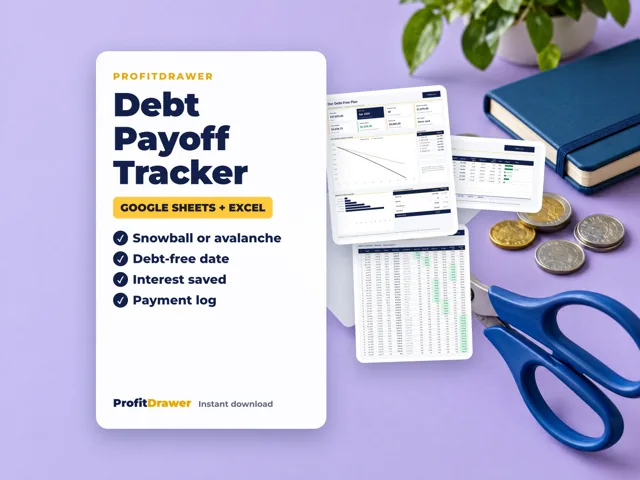
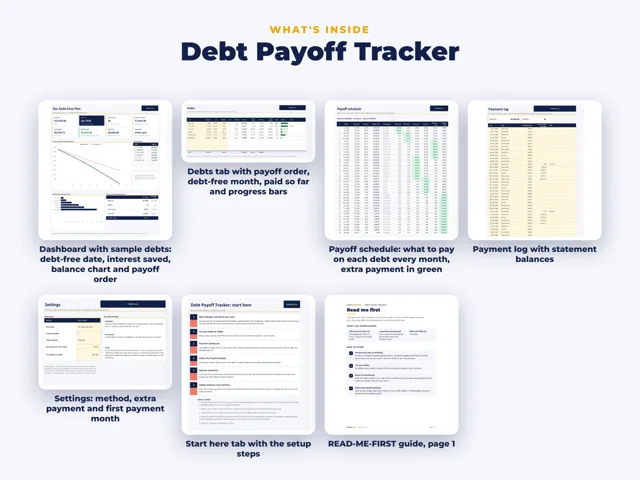
If you have several debts, a debt payoff tracker lets you list them all, choose smallest balance first or highest interest first, and see your debt-free date and interest saved, with a log of each payment.
A simple 30-day plan
- Days 1 to 3: find your contract. Check for a prepayment penalty and the interest type.
- Days 4 to 7: call your lender and ask how to make principal-only payments.
- Days 8 to 14: go through last month's spending and pick an extra amount you can keep up.
- Days 15 to 30: make your first extra payment, then check your statement to confirm the principal dropped.
Repeat the extra payment every month, and celebrate the day you get the title in the mail.
Tools for this
Questions people ask
Can you pay off a car loan early?
Often yes, but it depends on your contract and your state's law. The CFPB notes that some lenders charge a prepayment penalty, while some states ban these penalties for certain loans. Read your loan contract or ask your lender before you start paying extra.
If you pay off a car loan early, do you save interest?
On a simple interest loan, yes, because interest is charged on the remaining balance. On the example $25,000 loan at 7% for 60 months, paying $100 extra a month saves $939 and ends the loan 11 months early. On a precomputed interest loan, extra payments do not lower the interest owed, though you may get a refund of some unearned interest.
Should I pay off my car loan early?
It depends on your rate and the rest of your money. Paying extra makes most sense when you already have some emergency savings, no higher-interest debt like credit cards, and no prepayment penalty. If your car loan rate is low and you carry a card balance at a much higher rate, paying the card first usually saves more.
How do I make sure extra payments go to principal?
Ask your lender or servicer how to mark an extra payment as principal only, and check your loan documents to confirm it is allowed. The CFPB says payments usually go to fees first, then interest, then principal. After each extra payment, check your statement to see that the principal balance dropped by the extra amount.
Does paying biweekly pay off a car loan faster?
Only if it adds up to more money over the year. Half your payment every two weeks is 26 half payments, which equals 13 full payments instead of 12. On the example loan, that extra payment each year ends the loan about 5 months early and saves about $440 in interest.
Sources
General information, not tax, legal or financial advice. Check the rules for your state and your situation.