
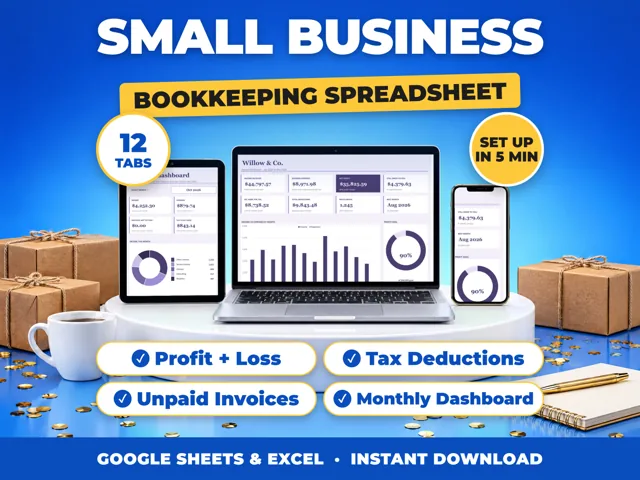
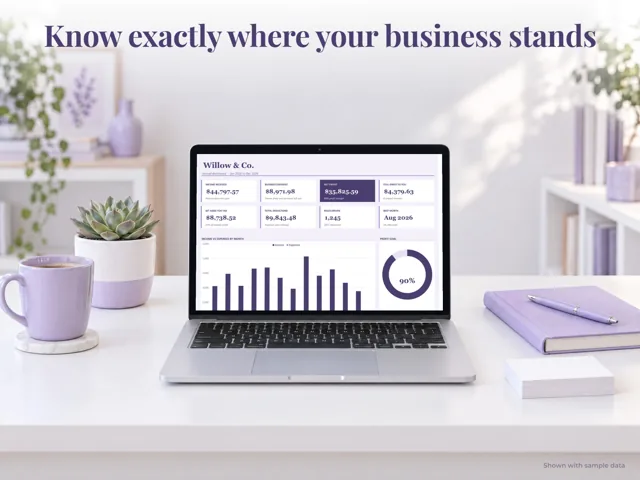
A balance sheet shows what a business owns (assets), what it owes (liabilities) and the owner's equity on a given date, and assets always equal liabilities plus equity. IRS Publication 583 (December 2024) defines it this way. Many sole proprietors with few assets or debts run day to day on a profit and loss statement, but a balance sheet helps when you borrow or hold equipment. A ProfitDrawer bookkeeping spreadsheet produces profit figures, not a balance sheet.
Simple example on December 31:
| Assets | Liabilities and equity | ||
|---|---|---|---|
| Business checking | $6,000 | Credit card balance | $1,500 |
| Money owed by clients | $2,000 | Equipment loan | $4,000 |
| Equipment | $5,500 | Owner's equity | $8,000 |
| Total | $13,500 | Total | $13,500 |
When a sole proprietor is more likely to need one:
- Applying for a loan or line of credit
- Owning vehicles, equipment or inventory
- Carrying business debt
- Bringing in a partner or selling the business
Profit and loss vs balance sheet. The profit and loss covers a period, such as a month or year, and shows whether you made money. The balance sheet is a snapshot on one day. The SBA calls the balance sheet the foundation of managing your finances, and many lenders ask for both.
To build a basic one, list your account balances, what clients owe you and what you owe on the same date. An accountant can prepare a formal version from your records.
Source: IRS Publication 583: Starting a Business and Keeping Records · Updated
Tools and spreadsheets for this
Related questions
- What is a profit and loss statement for a small business?
- What is a general ledger in simple terms?
- What is cash flow in a small business?
- What is the difference between revenue and profit?
- What is the difference between bookkeeping and accounting?
- How do I keep track of business expenses as a small business owner?
All questions on ProfitDrawer Answers →
General information, not tax, legal or financial advice. Check the rules for your state and your situation.