
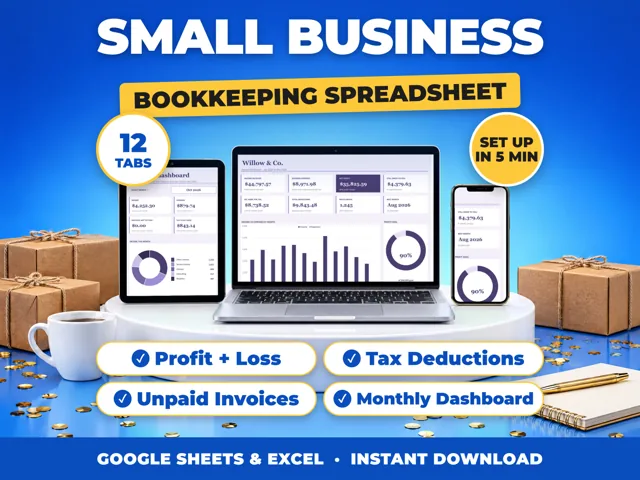
Bookkeeping is recording the day-to-day money: sales, expenses, invoices, receipts and bank activity. Accounting uses those records to prepare financial statements and tax returns, check results and plan. The SBA notes that a bookkeeper provides basic day-to-day functions at a lower cost, while a CPA usually offers more tailored service. Many owners keep their own books, for example in a ProfitDrawer bookkeeping spreadsheet, and hire an accountant for the 2026 return due April 15, 2027.
| Bookkeeping | Accounting | |
|---|---|---|
| Main job | Record each transaction | Interpret and report the numbers |
| How often | Weekly or daily | Monthly, quarterly, yearly |
| Typical output | Income and expense records, unpaid invoice list | Profit and loss statement, balance sheet, tax return, tax planning |
| Who does it | Owner or bookkeeper | Accountant or CPA |
Good bookkeeping makes accounting faster and cheaper: an accountant who receives clean yearly totals by category, a mileage log and receipts spends less time sorting.
If your business is a sole proprietorship with simple income and expenses, a weekly bookkeeping habit plus a once-a-year tax appointment is a common setup. Payroll, inventory, several owners or an S corporation election usually call for more accounting help.
Source: Manage your finances (SBA) · Updated
Tools and spreadsheets for this
Related questions
- How do I do bookkeeping for a small business myself?
- Is a spreadsheet good enough for small business bookkeeping?
- What is a profit and loss statement for a small business?
- When are small business taxes due in 2027?
- When are S corporation taxes due in 2027?
- How do I keep track of business expenses as a small business owner?
All questions on ProfitDrawer Answers →
General information, not tax, legal or financial advice. Check the rules for your state and your situation.