
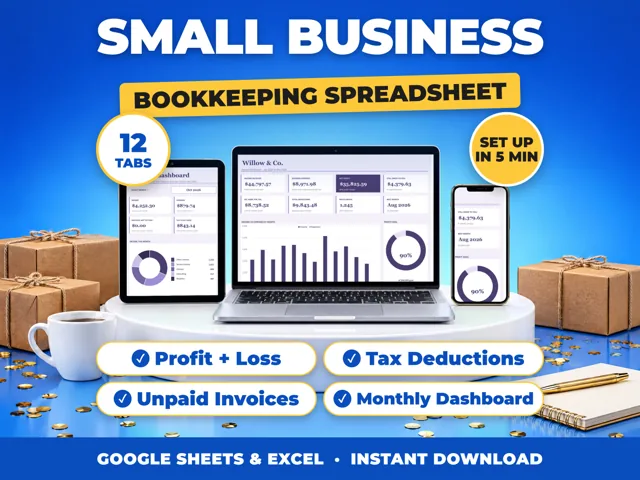
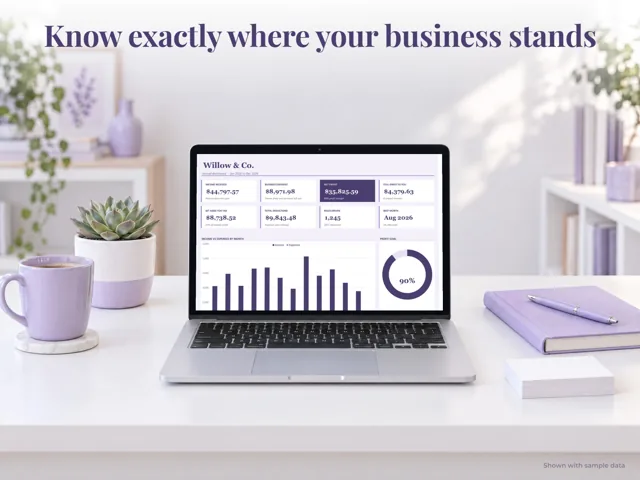
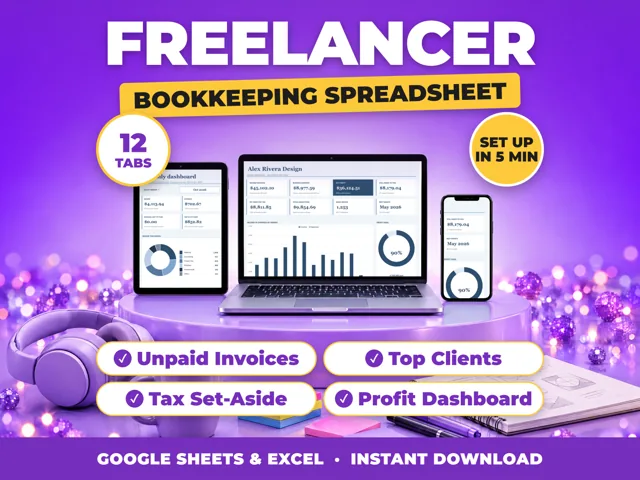
Cash flow is the money moving into and out of a business over a period, such as a month. Positive cash flow means more cash came in than went out. A business can be profitable and still run short if customers pay late: invoice $5,000 in March, get paid 45 days later, and you have the sale but not the cash. A ProfitDrawer bookkeeping spreadsheet tracks unpaid invoices next to income and expenses for this reason.
The SBA calls cash flow "truly the life blood of a business." Profit and cash flow are different numbers:
- Profit is income minus expenses for a period.
- Cash flow is when the money actually arrives and leaves. Late customer payments, a large equipment purchase or a quarterly tax payment can leave the account low even in a profitable month.
Ways to improve it, based on SBA suggestions:
- Issue invoices immediately and have a follow up system for collecting.
- Ask for a deposit before you start larger jobs.
- Move slow-paying customers to payment on delivery.
- Ask suppliers for Net 30 terms, which let you pay 30 days after you buy.
- Keep a cash cushion for slow months and for estimated tax payments: January 15, 2027 for tax year 2026, then April 15, June 15 and September 15, 2027 and January 18, 2028 for tax year 2027.
Check your bank balance and your unpaid invoices together once a week, so a gap shows up before a bill is due.
Source: How Net 30 Accounts Help Conserve Business Cash Flow (SBA) · Updated
Tools and spreadsheets for this
Related questions
- What is a profit and loss statement for a small business?
- How do I keep track of unpaid invoices?
- When are quarterly estimated tax payments due in 2027?
- How do I know if my small business is actually making money?
- How do I set a monthly profit goal for my business?
- How do I keep track of business expenses as a small business owner?
All questions on ProfitDrawer Answers →
General information, not tax, legal or financial advice. Check the rules for your state and your situation.