
It depends on how many accounts and transactions you have and whether you hire an employee or an outside service. For employees, the Bureau of Labor Statistics reports a median wage of $24.36 an hour, or $50,670 a year, for bookkeeping, accounting and auditing clerks in May 2025. ProfitDrawer's guide to starting a bookkeeping business works through an example monthly package of $300 for a small client; that is an example, not a market rate.
What the BLS figure measures: the median wage paid to employed bookkeeping, accounting and auditing clerks across the U.S. in May 2025. Half earn more and half less; the lowest 10% earned under $36,000 and the highest 10% over $74,550 a year. It is not what an outside bookkeeping firm charges, which also covers its own software, insurance, taxes and profit.
How outside bookkeepers often price: many quote a monthly package based on the number of bank and card accounts and transactions. In our guide's example, a client with 2 bank accounts, 1 credit card and about 150 transactions a month takes about 4 hours, which becomes $300 a month after overhead and a 25% buffer. Catch-up work is often priced separately; the guide's example is 6 months behind at $150 per month, a $900 project.
To get real prices: ask two or three bookkeepers for a written quote listing what is included each month, what costs extra and how you send documents.
Ways to keep the cost down: a separate business account, receipts saved as you go, and your own monthly entries, so a bookkeeper only reviews and reconciles.
Source: How to Start a Bookkeeping Business From Home (Step by Step) · Updated
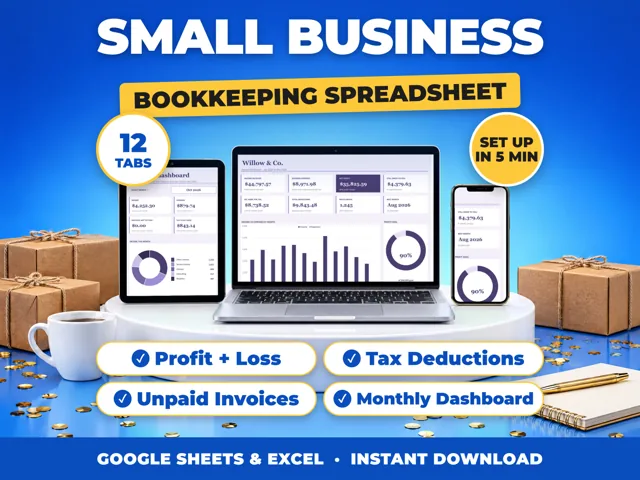
Tools and spreadsheets for this


Related questions
- What does a bookkeeper do for a small business?
- How much does it cost to start a bookkeeping business?
- How do I catch up on bookkeeping that is months behind?
- How do I do bookkeeping for a small business myself?
- Is a spreadsheet good enough for small business bookkeeping?
- How do I keep track of business expenses as a small business owner?
All questions on ProfitDrawer Answers →
General information, not tax, legal or financial advice. Check the rules for your state and your situation.