

To start a bookkeeping business, get solid bookkeeping skills first, pick the services and type of client you will serve, and register the business with your city, county and state. Then price your work as monthly packages, sign two or three first clients through your own network, and keep your own books as cleanly as you keep theirs.
A bookkeeping business can run from a spare room or fully online, which makes it a popular home business. Below is a step by step plan with real numbers.
Step 1: Decide what you will do (and what you will not)
Bookkeeping and tax preparation are different jobs. Be clear about which one you offer, because the rules differ.
Typical bookkeeping services:
- Monthly bookkeeping: categorizing transactions, bank and credit card reconciliations, a monthly profit and loss and balance sheet.
- Catch up or clean up: fixing months or years of messy books, usually priced as a project.
- Accounts payable and receivable: entering bills, tracking unpaid invoices, sending reminders.
- Payroll support: often done through a payroll service, with you checking the records.
- Year end package: organized reports for the client's tax preparer.
If you also want to prepare tax returns for pay, the IRS says anyone who prepares or helps prepare federal tax returns for compensation must have a valid PTIN for that year (IRS PTIN requirements). Many new bookkeepers skip tax prep at first and refer clients to a tax professional.
Next, choose a niche. "Bookkeeping for small businesses" is broad. "Bookkeeping for cleaning companies" or "bookkeeping for contractors" is easier to market, and you learn one industry's expenses deeply. Your niche is often an industry you already know.
Step 2: Build your skills and your process
Clients trust bookkeepers with their bank data and their tax numbers, so skill matters more than marketing. Before you sign anyone:
- Take a bookkeeping course or certificate program and learn at least one common bookkeeping software well.
- Practice on sample company books from start to monthly close.
- Write a monthly close checklist: download statements, categorize, reconcile each account, review unusual items, send reports, note questions.
- Prepare an engagement letter that lists exactly what is included each month, what costs extra, how the client sends documents and when reports are delivered.
Step 3: Check local requirements and set up the business
The SBA explains that most businesses need some mix of state and local licenses (SBA licenses and permits). Check with your city, county and state for:
- A general business license or business tax registration.
- A home occupation permit if you work from home in a residential zone.
- Any state rules about the words you can use in your business name. Some titles, such as accountant or CPA, may be restricted.
Choose a structure (sole proprietor, LLC or other) and register any business name; the SBA's register your business page walks through it. An EIN is free from the IRS (EIN page), and it lets you keep your Social Security number off client forms. Open a business bank account.
Because you handle client data, look into professional liability (errors and omissions) insurance and cyber coverage, use strong passwords and two factor sign in, and never accept documents by plain email if a secure portal is available.
Step 4: Startup costs
This is an example budget for a home based bookkeeper. Your costs will differ, so get your own quotes.
| Item | Low | High |
|---|---|---|
| Laptop or computer upgrade | $0 | $1,200 |
| Second monitor and scanner | $100 | $400 |
| Bookkeeping software and practice tools (first year) | $0 | $600 |
| Training or certificate course | $200 | $1,000 |
| Business registration and license | $50 | $400 |
| Professional liability insurance (first year) | $300 | $1,000 |
| Website, domain and email (first year) | $50 | $300 |
| Secure document portal and password manager | $50 | $300 |
| Total | $750 | $5,200 |
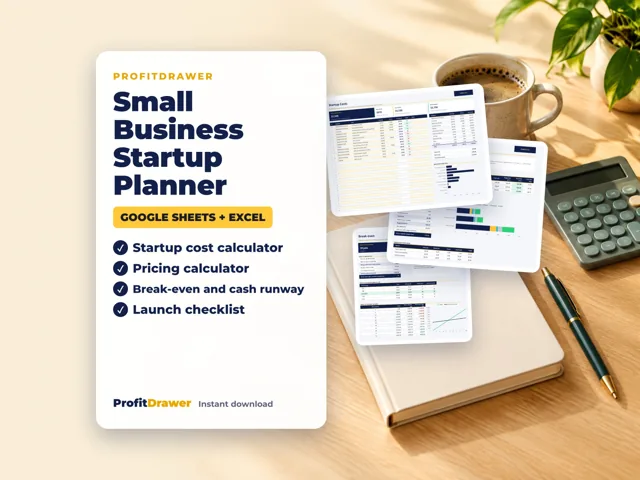
Put your own numbers into the free startup cost calculator and you will see how many months of client fees it takes to cover them.
Step 5: Price as monthly packages
Hourly billing punishes you for getting faster. Most bookkeepers move to monthly packages based on how many accounts and transactions a client has. Here is a worked example for a small client with 2 bank accounts, 1 credit card and about 150 transactions a month:
- Time each month: categorizing 2 hours + reconciliations 1 hour + reports and review 0.5 hour + client questions 0.5 hour = 4 hours.
- Target pay: $55 an hour, so 4 x $55 = $220.
- Overhead share (software, insurance, portal, website, about $2,400 a year spread over 10 clients and 12 months): $2,400 / 120 = $20.
- Cost before profit: $220 + $20 = $240.
- Add 25% profit and buffer for messy months: $240 x 1.25 = $300 a month.
Price catch up work separately, for example by the month of books being fixed. A client who is 6 months behind at $150 per month is a $900 project before the monthly package starts. You can test different hours and rates with the free price per job calculator.
To see the bigger picture: 12 clients at $300 is $3,600 a month in revenue. That is an example, not an average, and it is before your own expenses and taxes.
Step 6: Find your first clients
- Start with people you know. Friends, past employers and local business owners in your niche.
- Partner with tax preparers. Many tax pros want clients to arrive with clean books and will refer bookkeeping work.
- Join local business groups and offer a short talk on "five bookkeeping habits that save you money at tax time."
- Set up a map listing and simple website that names your niche and lists your packages.
- Offer a free review of a prospect's last month of books and show them exactly what you would fix.
Two or three good clients who refer others are worth more than a long list of one time projects.
Step 7: Keep your own books and plan for taxes
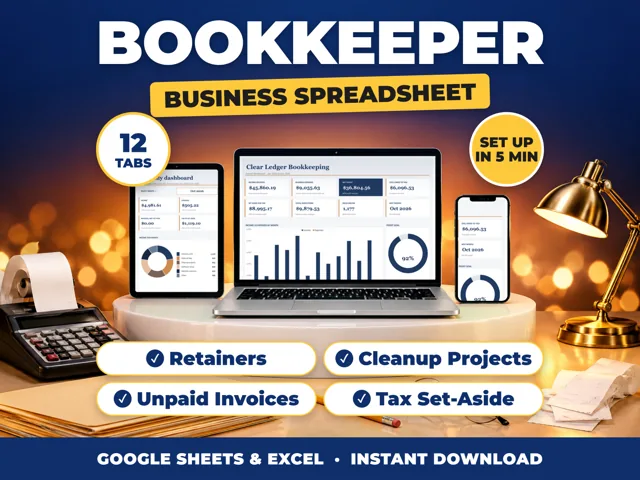
A bookkeeper with messy books loses credibility. Track your own income, expenses, unpaid invoices and top clients from day one. A spreadsheet like the bookkeeper business spreadsheet is built for this, with Income, Expenses, Mileage, Unpaid Invoices, Top Clients, a Monthly Summary and a Quarterly and Tax Summary in Excel or Google Sheets. Our guide on how to track business expenses has a simple routine you can also share with clients.
As a self-employed bookkeeper you generally owe self-employment tax of 15.3% on net earnings of $400 or more (IRS self-employment tax), plus income tax. If you expect to owe $1,000 or more, plan for quarterly estimated payments (IRS estimated taxes). The 2027 tax deadlines guide lists the dates, and the free self-employed tax calculator helps you estimate how much to set aside. Keep your records as long as the IRS says to; three years is the general rule, with longer periods in some situations (IRS record retention). This is general information, not tax advice.
A simple 30 day launch plan
Week 1: Decide. Choose services and a niche. Confirm what you will not do (for example, tax returns). Check city, county and state licensing.
Week 2: Set up. Register the business, get a free EIN, open a bank account, buy insurance, set up secure document sharing.
Week 3: Package and price. Write your monthly close checklist and engagement letter. Build two or three packages with the pricing math above. Publish a simple website and map listing.
Week 4: Sign clients. Contact 20 people in your network and 5 local tax preparers. Offer free book reviews. Sign your first client and start your own bookkeeping file the same day.
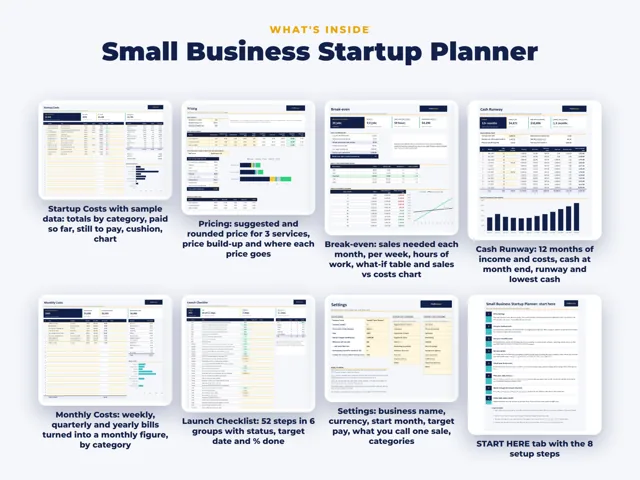
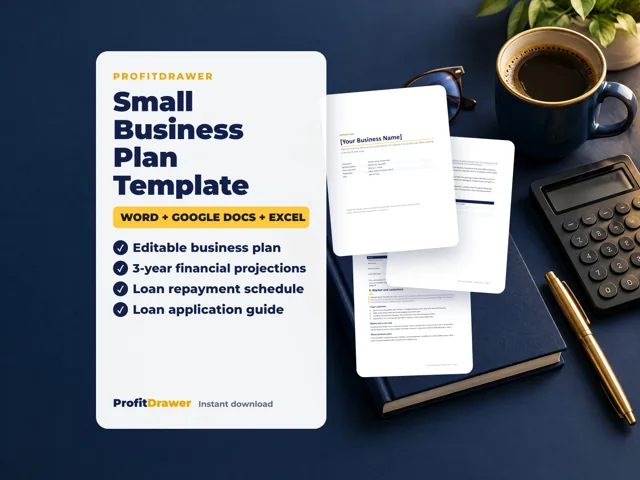
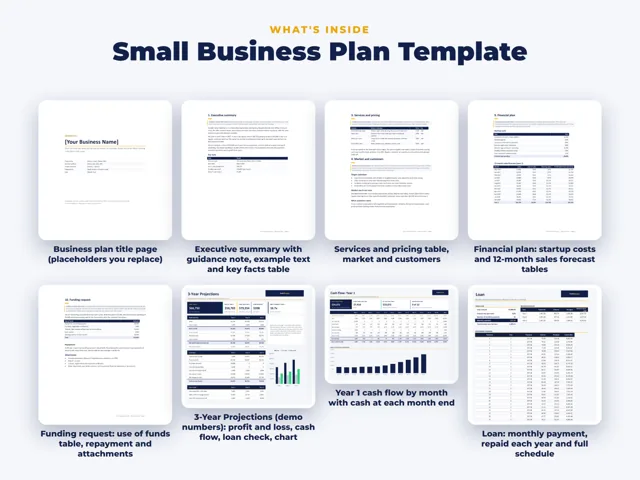
To put your plan, costs and break even on paper, see the small business startup planner and the small business plan template.
Tools for this




Questions people ask
How much does it cost to start a bookkeeping business?
A home bookkeeping business is one of the cheaper businesses to start because you mostly need a computer, software, insurance and registration. The example budget in this guide runs from about $750 to $5,200, and the low end assumes you already own a computer. Your total depends on the software, training and insurance you choose.
Is a bookkeeping business profitable?
It can be, because overhead is low and clients pay every month. Profit depends on how many clients you keep and how efficiently you work. For example, 12 clients on a $300 monthly package is $3,600 a month in revenue before your own costs and taxes.
Can I start a bookkeeping business with no experience?
You need real skills before you take client money, because mistakes cost clients money. Take a bookkeeping course, practice on sample books, and consider starting with simple clients such as sole proprietors who need monthly categorizing and reconciliations.
What does a bookkeeper do for a small business?
A bookkeeper records income and expenses, categorizes transactions, reconciles bank and card accounts, tracks unpaid invoices and produces monthly reports such as a profit and loss. Many also help prepare year end numbers for the client's tax preparer.
Do I need a license to be a bookkeeper?
There is generally no single national bookkeeping license, but your city, county and state may require a business license. If you prepare or help prepare federal tax returns for pay, the IRS requires a valid PTIN. Check your local rules before you sign clients.
Sources
- PTIN requirements for tax return preparers (IRS)
- Apply for licenses and permits (U.S. Small Business Administration)
- Register your business (U.S. Small Business Administration)
- Get an employer identification number (IRS)
- Self-employment tax (Social Security and Medicare taxes) (IRS)
- Estimated taxes (IRS)
- How long should I keep records? (IRS)
General information, not tax, legal or financial advice. Check the rules for your state and your situation.