
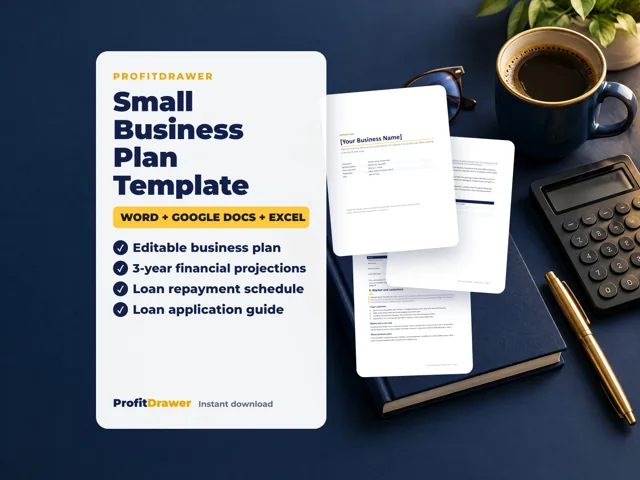
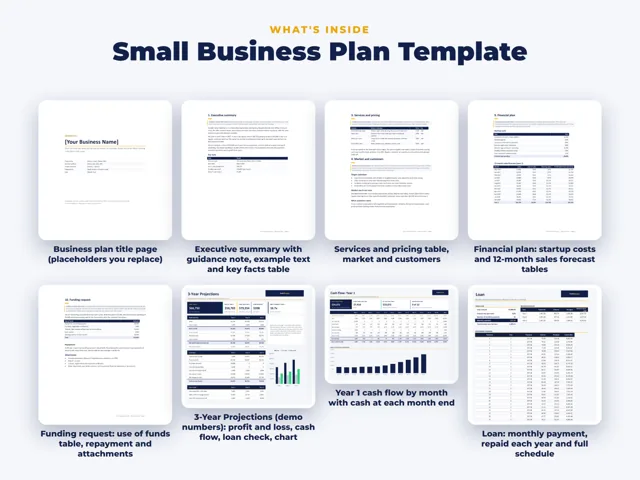
Start with a lean, one page plan. The SBA says a lean startup plan can take as little as one hour and covers 9 items: key partnerships, key activities, key resources, value proposition, customer relationships, customer segments, channels, cost structure and revenue streams. A traditional plan runs dozens of pages and goes into more detail, which a lender or investor may ask for. ProfitDrawer's small business plan template is one option if you'd rather fill in sections than start from a blank page.
A simple way to do it:
- Describe the business in two sentences: what you sell and who buys it.
- Name your customers and how you will reach them.
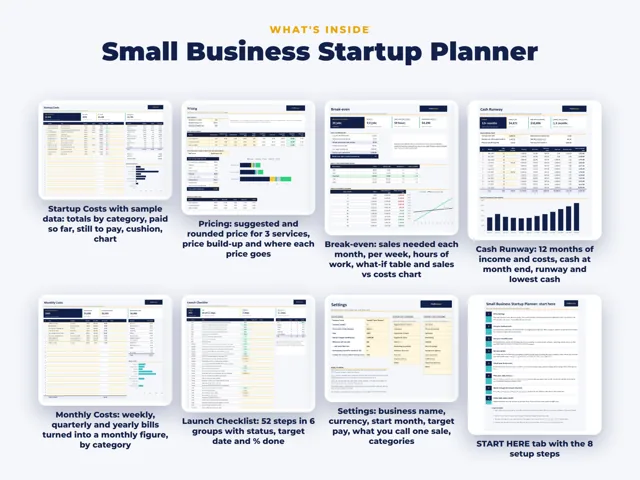
- List startup costs (one-time) and monthly costs.
- Set prices and estimate how many sales or jobs you need each month to break even.
- Write how you will cover the first slow months: savings, a loan or a side income.
- Review it every few months and update the numbers with real results.
If a lender or investor asks for a plan, the SBA's traditional format usually includes:
- Executive summary
- Company description
- Market analysis
- Organization and management
- Service or product line
- Marketing and sales
- Funding request
- Financial projections
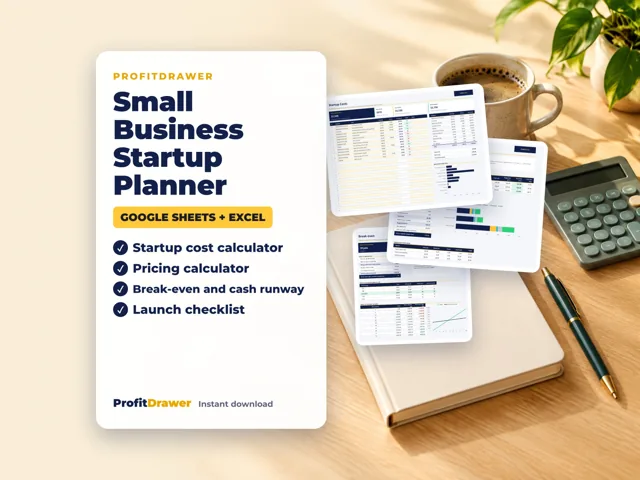
Keep the financial part honest and simple: realistic sales, every cost you know about, and a cash buffer. A startup cost calculator or planner helps you get those numbers before you write the words around them.
Source: Write your business plan (U.S. Small Business Administration) · Updated
Tools and spreadsheets for this

Related questions
All questions on ProfitDrawer Answers →
General information, not tax, legal or financial advice. Check the rules for your state and your situation.