
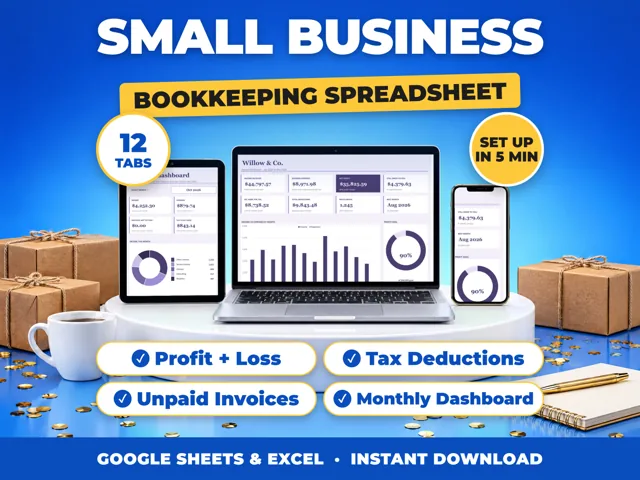
Start with the oldest month you missed, download every bank, card and payment app statement for the gap, record each deposit and payment with a category, then reconcile month by month until you reach today. IRS Publication 583 (December 2024) says account statements can help prove a payment when you lack a canceled check. A ProfitDrawer bookkeeping spreadsheet holds 1,000 income and 1,000 expense rows a year, enough for most catch-up work.
A step-by-step catch-up plan:
- Pick the start date, usually the first day of your financial year or the last month you know is right.
- Gather statements for every business account, plus sales reports from payment apps and online marketplaces.
- Enter one month at a time, starting with the earliest. Statements are your list of what happened; receipts back up the details.
- Find missing receipts. Check email confirmations and vendor accounts. Note any expense where you only have the statement line.
- Reconcile each month before moving on, so errors do not carry forward.
- Mark personal items as owner draw, not expenses.
- List unpaid invoices and chase them.
- Check tax deadlines you may have missed. For the 2026 tax year, the 4th estimated payment is due January 15, 2027 and Schedule C returns April 15, 2027.
Then set a weekly 15-minute slot so it does not happen again. If you are a year or more behind, a bookkeeper may quote the work as a separate catch-up project. General information, not tax advice.
Source: IRS Publication 583: Starting a Business and Keeping Records · Updated
Tools and spreadsheets for this

Related questions
- How often should I update my business books?
- How do I reconcile my bank statement with my books?
- Do I need to keep paper receipts or are photos enough?
- How do I do bookkeeping for a small business myself?
- How much does it cost to hire a bookkeeper for a small business?
- What should I give my accountant at the end of the year?
All questions on ProfitDrawer Answers →
General information, not tax, legal or financial advice. Check the rules for your state and your situation.