
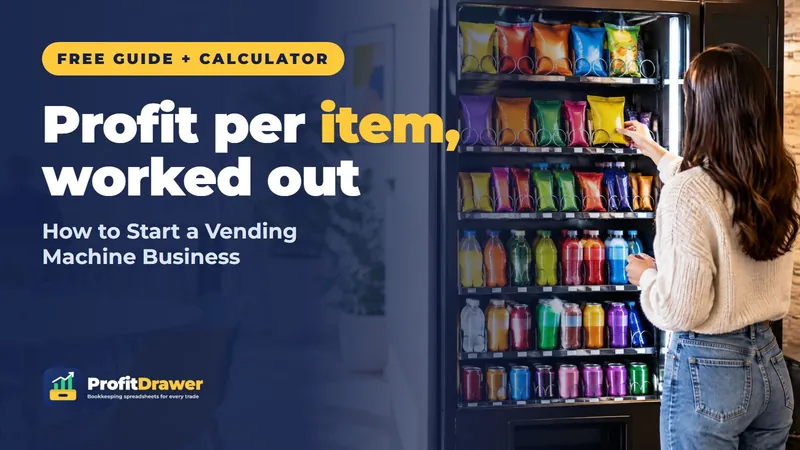
To start a vending machine business, pick one type of machine, find a busy location that will let you place it, buy the machine (used is fine to start) and your first stock, register your business and any permits your area requires, then restock on a regular route and track sales per machine. Most new owners start with one or two machines and grow from the profits. The location you choose decides whether a machine makes money, so spend more time on that than on the machine itself.
Below are the steps in order, with an example budget, a worked profit example and a 30-day plan.
1. Choose your type of vending
Each type has different costs, rules and work:
- Snack machines: chips, candy, crackers. Shelf-stable stock, simple to run.
- Drink machines: cans and bottles, refrigerated. Higher power use, steady sales in warm places.
- Combo machines: snacks and drinks in one cabinet. Good for small sites that only have room for one machine.
- Healthy or fresh food machines: higher prices, but shorter shelf life and often more permits.
- Specialty machines: toys, gumball and bulk candy, phone chargers, personal care items. Low cost per machine, smaller sales per visit.
For a first machine, snack or combo is the most forgiving: stock lasts longer and waste is low.
2. Find a good location first
The best machine in a poor spot will lose money. Look for places with many people, long stays and few food options nearby:
- Break rooms in warehouses, factories, auto shops and offices with 30 or more staff
- Apartment buildings, laundromats and gyms
- Car washes, repair shops with waiting rooms, and storage facilities
- Schools, clinics and community centers (these may have extra rules)
Walk in, ask for the manager or owner and keep the pitch simple: free service, you keep the machine full and clean, staff get snacks and drinks on site. Many locations want a share of sales (a commission). Others accept no commission for small sites. Put the deal in a short written agreement: who pays power, commission percentage, how often you restock, and how either side can end it.
3. Check local requirements and register
Rules for vending vary a lot, so check with your city, county and state before you place a machine. The SBA explains that most businesses need a mix of state and local licenses, and that states regulate a wide range of activities.
Things to look into:
- Business structure and name. Sole proprietor or LLC. Register a DBA if you use a business name.
- General business license from your city or county.
- Sales tax. Many states tax vending sales, and some have special vending rules or machine stickers. Ask your state revenue department how to collect and report it.
- Food or health permits. Fresh food and some drink machines may need one.
- Insurance. General liability is a common starting point; some locations ask for proof of it.
4. Work out your startup costs
Example budget, your costs will differ (one to two machines):
| Item | Low | High |
|---|---|---|
| Machine (used snack, or new combo) | $1,200 | $6,000 |
| Card reader and setup | $200 | $600 |
| First stock | $200 | $600 |
| Delivery or moving the machine (dolly, help) | $100 | $500 |
| Business registration, license, permits | $100 | $500 |
| Insurance (first months) | $150 | $500 |
| Storage bins, locks, cleaning supplies | $50 | $200 |
| Spare cash for repairs | $200 | $500 |
| Total | $2,200 | $9,400 |
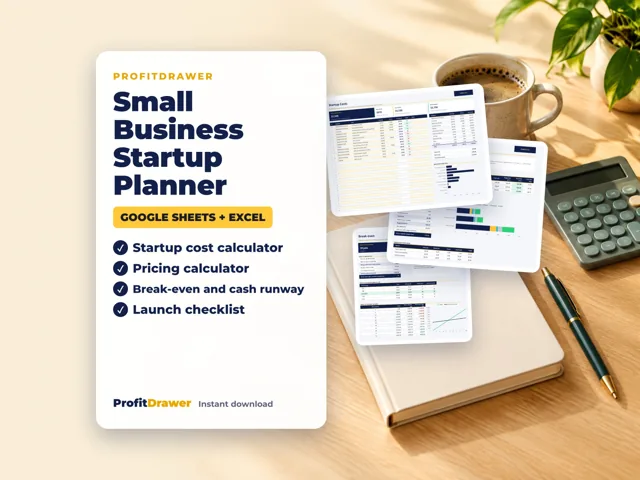
Add your own numbers to the free startup cost calculator to see your total and how many months it may take to earn it back.
5. Price your products
Vending prices are usually set per item, with a target markup over what you pay for the product at a warehouse or wholesale club. Many owners aim for the price to be at least double the product cost where the location allows it.
Worked pricing example (example numbers only):
- You buy a 30-pack of chips for $15.00, so each bag costs $15.00 / 30 = $0.50
- You price a bag at $1.75
- Card fees: about 6% of the sale on a card machine (check your provider), so $1.75 x 0.06 = $0.105
- Location commission: 10% of the sale, so $1.75 x 0.10 = $0.175
- Profit per bag before travel: $1.75 minus $0.50 minus $0.105 minus $0.175 = $0.97
If the machine sells 250 items a month at about that margin, it earns about $242 before restocking trips. A 20-mile monthly route at $0.70 a mile as a rough running cost is $14, so the machine keeps about $228. Watch slow sellers each visit and swap them out.
6. Run your route
Running a vending business is mostly logistics:
- Restock on a schedule. Weekly for busy sites, every two weeks for quieter ones. Write down what sold at each visit.
- Keep it clean and working. A jammed coil or broken card reader loses sales and the location's trust.
- Rotate stock. Check dates and move older items to the front.
- Track each machine separately. That is how you spot which locations to keep and which to move.
7. Track your money and plan for taxes
Keep a separate bank account and record every purchase and cash collection. The IRS says you can use any recordkeeping system that clearly shows your income and expenses, so a spreadsheet works well.
Record:
- Sales per machine per visit (cash and card)
- Expenses: stock, commissions, card fees, repairs, insurance, permits
- Mileage for restocking runs and supply trips. The IRS business standard mileage rate for 2026 was 72.5 cents a mile from January to June and 76 cents from July to December. Check the 2027 rate on irs.gov.
If you work for yourself, you pay self-employment tax of 15.3% on net earnings plus income tax, often through quarterly estimated payments. Our guide to small business tax deadlines for 2027 lists the dates, and the free self-employed tax calculator helps you estimate what to set aside. This is general information, not tax advice.
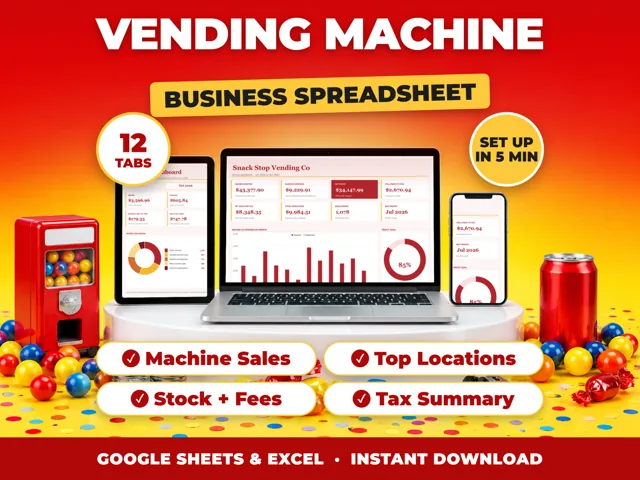
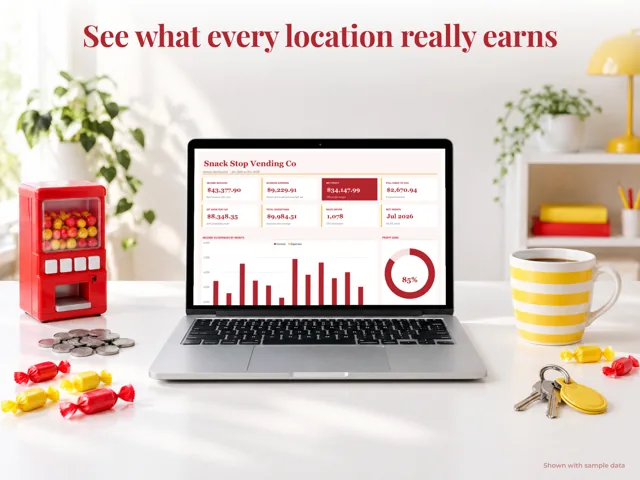
The coming-soon vending machine business spreadsheet is built for this: START HERE, Settings, dashboards, Income, Expenses, Mileage, Top Clients (use it for your top locations), a Monthly Summary, Quarterly totals and a Tax Summary. It does not count inventory, so keep a simple stock list alongside it. For the habit itself, see how to track business expenses.
8. A simple 30-day launch plan
Days 1 to 7: research - Choose your machine type. - List 20 possible locations close to home and visit at least 10. - Check license, sales tax and permit rules in your city, county and state.
Days 8 to 14: secure a location and a machine - Get one written location agreement. - Compare used and new machines; test any used machine before paying. - Register your business and open a separate bank account.
Days 15 to 21: set up - Buy insurance, a card reader and first stock. - Place the machine, test every coil and the card reader. - Set up your bookkeeping spreadsheet and mileage log.
Days 22 to 30: restock and review - Visit weekly at first and write down what sold. - Swap the slowest two items. - At day 30, work out profit for the machine and decide on the next location.
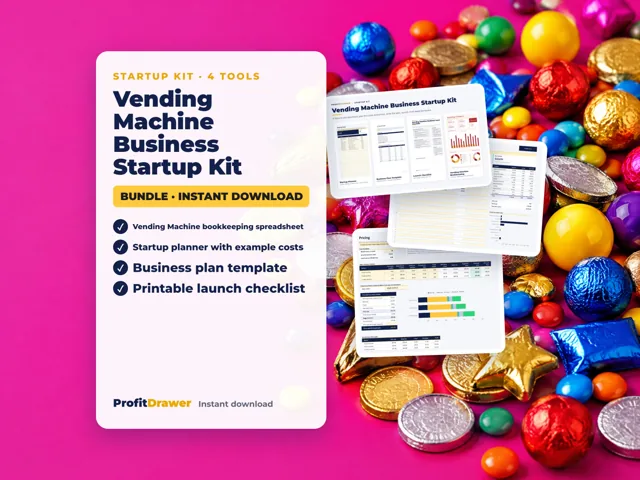
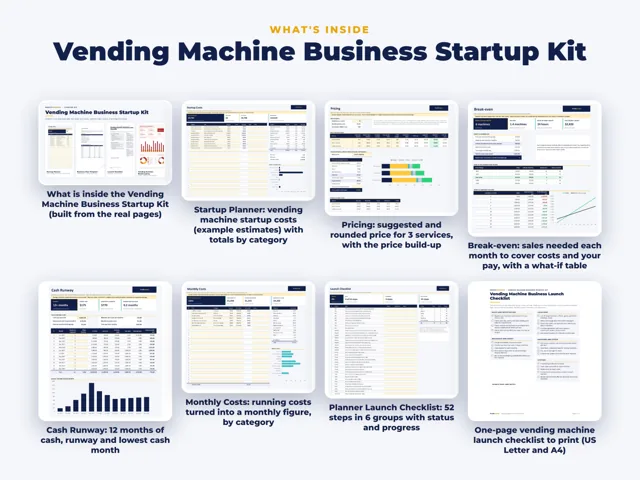
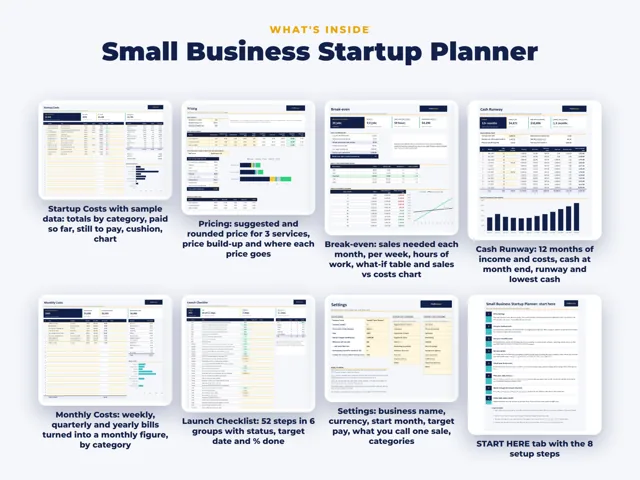
The coming-soon vending machine business startup kit pairs the bookkeeping spreadsheet with a Startup Planner workbook (startup costs, pricing, break-even, cash runway), a business plan template and a launch checklist.
Common mistakes to avoid
- Buying several machines before one location is proven.
- Signing a high commission that leaves nothing for you. Run the numbers first.
- Ignoring card payments. Many buyers carry no cash.
- Not tracking each machine. Without per-location numbers you cannot tell winners from losers.
- Forgetting sales tax. Ask your state early, not at year end.
A vending machine business can be a steady part-time income if you start small, choose locations carefully and keep honest numbers for every machine.
Tools for this
Questions people ask
How much does it cost to start a vending machine business?
It depends mostly on whether you buy new or used machines and how many you start with. One used snack machine with a card reader and first stock can come in at a couple of thousand dollars, while new combo machines cost much more. Our example budget below runs from about $2,200 to $9,400 for one or two machines, but your numbers will differ.
Do vending machines make money?
A machine makes money when its monthly profit after product cost, location commission, card fees and your travel is positive. A machine in a busy break room can do well; the same machine in a quiet lobby may barely cover its restocking trips. Location matters more than the machine.
How do I start a vending machine business with no money?
You cannot fully avoid buying a machine and stock, but you can keep the start small. Some owners begin with one used machine, a free placement in a location they already know, and reinvest profits before adding the next machine. Avoid borrowing heavily before you have proven one location.
What do you need to start a vending machine business?
You need a machine, a location agreement, starting stock, a way to accept card payments, a vehicle for restocking and any business license or sales tax permit your city, county and state require. Food and drink machines may also need a health or machine permit in some places, so check locally.
How much does one vending machine make a month?
There is no single number. For example, if a snack machine sells 300 items a month at $2.00 with a product cost of $0.85, gross profit is $345 (300 x $1.15). Take off a 10% location commission on sales ($60), card fees and restocking travel, and you might keep around $250. Real results depend on traffic.
Sources
- Launch your business: Apply for licenses and permits (U.S. Small Business Administration)
- Launch your business: Register your business (U.S. Small Business Administration)
- Plan your business: Calculate your startup costs (U.S. Small Business Administration)
- Self-employment tax (Social Security and Medicare taxes) (IRS)
- Standard mileage rates (IRS)
- Recordkeeping (IRS)
General information, not tax, legal or financial advice. Check the rules for your state and your situation.