
Start with the yearly pay you want, add yearly business overhead, and divide by the hours you can actually bill, which are fewer than the hours you work. Example: $50,000 of pay plus $6,000 of overhead over 1,000 billable hours is $56 an hour. Then allow for tax: self-employment tax alone is 15.3% on 92.35% of net profit in 2026. ProfitDrawer's price per job calculator turns an hourly rate into a price per job.
Steps:
- Pick a yearly pay target, what you would want from a job doing similar work.
- List yearly overhead: insurance, phone, software, advertising, vehicle costs, equipment and training.
- Estimate billable hours. Quotes, travel, admin and bookkeeping are not billed. Many self-employed people bill well under 40 hours a week, and you also need time off.
- Divide pay plus overhead by billable hours.
- Add a profit margin for the business and for slow months.
- Check the market. Compare with local rates and adjust your hours or costs if you are far off.
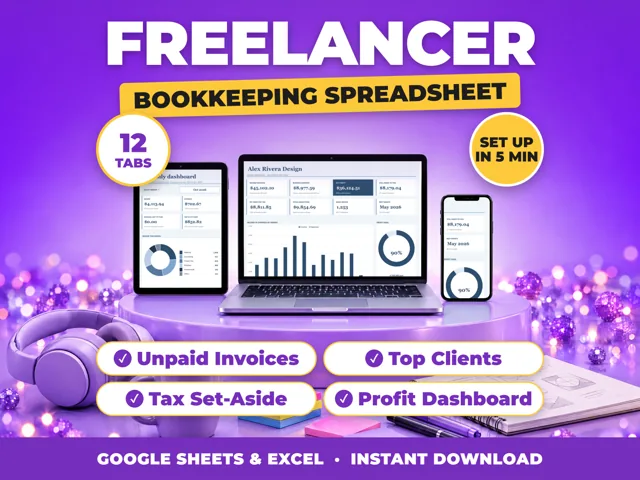
Taxes come out of what you earn, with no employer paying half of Social Security and Medicare. Many self-employed people set aside 25% to 30% of profit for tax; the free self-employed tax calculator helps pick an amount. Income tax and any state tax are on top of the 15.3% self-employment tax.
General information, not tax advice.
Source: Price Per Job Calculator for Service Businesses · Updated
Tools and spreadsheets for this




Related questions
- How do I price a service job so I make a profit?
- What is self-employment tax and how much is it in 2026?
- How much should I set aside for taxes if I am self-employed?
- How do I pay myself from my small business?
- How do I set a monthly profit goal for my business?
- How do I calculate profit margin for my small business?
All questions on ProfitDrawer Answers →
General information, not tax, legal or financial advice. Check the rules for your state and your situation.