
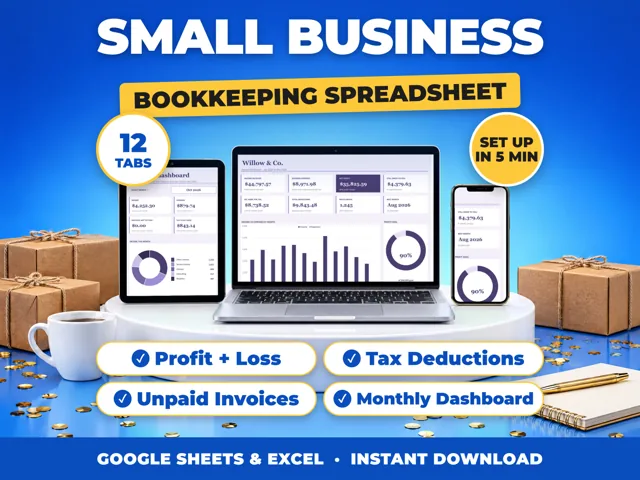
It depends on how the business is set up. A sole proprietor usually takes an owner's draw, a transfer from the business account to a personal one, and pays tax on the business's net profit, not on the draw; IRS Publication 334 (2025) says you can't deduct your own salary or personal withdrawals. Corporation officers, including S corporation shareholder-employees, are generally paid wages. A ProfitDrawer bookkeeping spreadsheet keeps owner draws out of profit and tax.
By structure:
- Sole proprietor: take draws as needed. You are not an employee of the business, so there is no paycheck or W-2. Income tax and self-employment tax are figured on net profit, usually paid through estimated taxes if you expect to owe $1,000 or more.
- Partnership: partners are not employees and should not get a Form W-2 for distributions or guaranteed payments.
- S corporation: a shareholder who works in the business should receive a reasonable salary through payroll before taking distributions.
- C corporation: officers are generally employees paid wages; distributions from earnings are generally dividends.
A practical routine for draws:
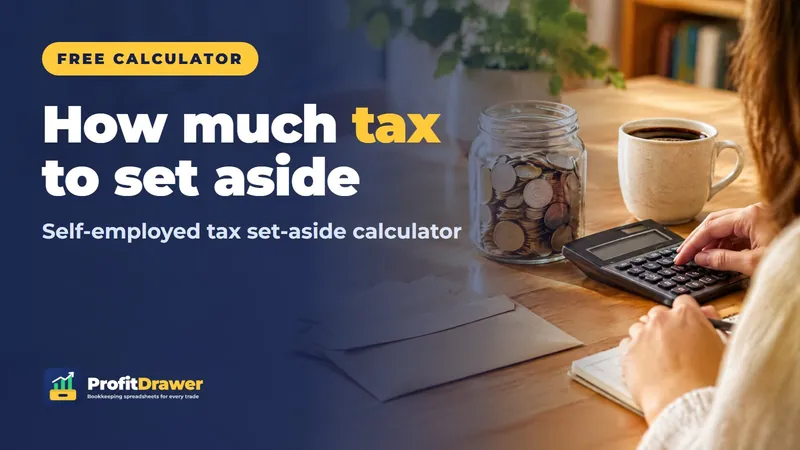
- Move your tax set-aside to savings first.
- Keep a cash cushion for upcoming bills.
- Pay yourself a fixed amount on a set day each month, and record it as an owner draw, not an expense.
General information, not tax advice.
Source: IRS Publication 334 (2025), Tax Guide for Small Business · Updated
Tools and spreadsheets for this


Related questions
- Do I need a separate bank account for my small business?
- What is self-employment tax and how much is it in 2026?
- When are quarterly estimated tax payments due in 2027?
- How much should I set aside for taxes if I am self-employed?
- What is the difference between a sole proprietorship and an LLC?
- How do I set a monthly profit goal for my business?
All questions on ProfitDrawer Answers →
General information, not tax, legal or financial advice. Check the rules for your state and your situation.