
To start a trucking business with one truck, decide whether you will lease onto an existing carrier or run under your own authority, then set up the business, the truck and the paperwork that FMCSA, the IRS and your state require. For interstate for-hire freight, that usually means a USDOT number, operating authority (an MC number), the insurance FMCSA sets, UCR registration and, for heavy trucks, the Form 2290 heavy highway vehicle use tax. Before you take a load, work out your cost per mile so you never haul below it. Track every mile, fuel receipt and payment from day one.
This guide walks you through each step, with an example budget, a worked cost per mile and a 30-day launch plan.
1. Choose how you will start: lease on or own authority
Most one-truck owners pick one of two paths.
- Lease onto a carrier. You drive your own truck under an established carrier's authority. The carrier often handles some filings and finds freight, and you share revenue. It is a lower cost way to learn the business. Read the lease agreement closely.
- Your own authority. You run as your own motor carrier, find your own freight through shippers and brokers, and handle every filing. More control and more paperwork.
Also pick your freight: dry van, flatbed, refrigerated or hot shot. It decides the trailer you need and the insurance you buy. If you plan to run a smaller, non-CDL truck instead, read how to start a box truck business.
2. Federal registration: USDOT number and MC authority
Here is what FMCSA's own pages say. Confirm the details for your operation with FMCSA before you apply.
USDOT number. FMCSA says companies that operate commercial vehicles hauling cargo in interstate commerce must register and have a USDOT number. For cargo, that covers vehicles with a gross vehicle weight rating, gross combination weight rating or actual weight of 10,001 pounds or more. FMCSA also lists many states that require a USDOT number for trucks that stay within the state, so check with your state too.
Operating authority (MC number). FMCSA says that, in general, companies that haul federally regulated goods owned by others for pay in interstate commerce need operating authority in addition to a USDOT number. It lists carriers that do not need authority, including private carriers hauling their own goods and for-hire carriers that only haul exempt goods. The filing fee is $300 for each authority, and FMCSA says it is not refundable, so pick the right type. First-time applicants apply through Motus, FMCSA's online registration system, which replaces the Unified Registration System for new USDOT number and operating authority applications (Federal Register notice of April 29, 2026). Check FMCSA's registration pages for current processing times.
3. Insurance, UCR, Form 2290 and fuel tax
Insurance. FMCSA's insurance filing chart lists a minimum of $750,000 in bodily injury and property damage liability for for-hire carriers of non-hazardous property in vehicles rated 10,001 pounds or more, with higher minimums for certain hazardous materials. Your insurance company files proof with FMCSA. Many brokers and shippers also ask for cargo coverage and higher limits, so ask before you buy.
UCR. FMCSA explains that the Unified Carrier Registration system, created by the UCR Act of 2005, is how operators of vehicles in interstate travel register and pay UCR fees. Check whether it applies to you and register online.
Form 2290. The IRS says the heavy highway vehicle use tax applies to highway motor vehicles with a taxable gross weight of 55,000 pounds or more. The current tax period runs from July 1, 2026 to June 30, 2027. The return is due by the last day of the month after the month the truck is first used in the period. The IRS returns a stamped Schedule 1, which serves as proof of payment when you register the truck with your state. A truck expected to run 5,000 miles or fewer in the period (7,500 for farm vehicles) can have the tax suspended.
Fuel tax (IFTA) and state rules. If you run across state lines, ask your base state's fuel tax office whether your truck needs an International Fuel Tax Agreement license and decals. Then check with your city, county and state about plates, permits and any business license. The SBA notes that license rules depend on your activity and location.
Business setup. Register the business with your state (an LLC is filed with your state, usually the secretary of state) and get a free EIN from the IRS.
4. Work out your startup costs
Example budget, your costs will differ:
| Item | Low (own truck, leased on) | High (own authority, financed) |
|---|---|---|
| Truck down payment | $0 | $25,000 |
| Trailer down payment or lease deposit | $0 | $8,000 |
| Insurance down payment | $2,000 | $8,000 |
| FMCSA operating authority fee | $0 | $300 |
| Plates, UCR, Form 2290 tax, fuel tax and state permits | $500 | $3,000 |
| Business registration and EIN | $50 | $500 |
| Phone, tablet and logging device | $300 | $1,200 |
| First month of fuel | $3,000 | $7,000 |
| Cash buffer for repairs | $2,000 | $10,000 |
| Total | $7,850 | $63,000 |
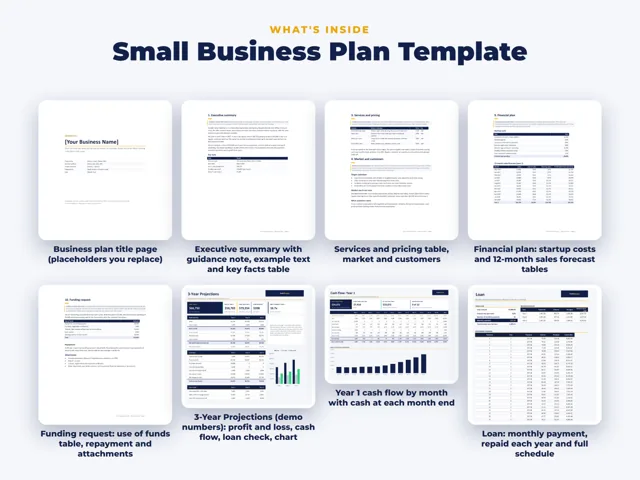
Run your own quotes through the free startup cost calculator. If you need a loan for a truck, the coming-soon small business plan template helps you show a lender your plan and numbers.
5. Know your cost per mile, then price your loads
Worked example: one month, one truck (example numbers only)
- Miles driven: 10,000
- Fuel: 10,000 miles / 6.25 miles per gallon = 1,600 gallons x $3.90 = $6,240
- Truck payment: $2,500
- Insurance: $1,200
- Maintenance and tires set aside: 10,000 x $0.18 = $1,800
- Permits, phone and other fixed costs: $600
- Total cost: $6,240 + $2,500 + $1,200 + $1,800 + $600 = $12,340
- Cost per mile: $12,340 / 10,000 = $1.234, about $1.23
Now check a load. A broker offers $2,400 for 900 loaded miles, and you will drive 100 empty miles to pick it up.
- Total miles: 900 + 100 = 1,000
- Rate per loaded mile: $2,400 / 900 = $2.67
- Rate per total mile: $2,400 / 1,000 = $2.40
- Cost: 1,000 x $1.234 = $1,234
- What is left: $2,400 minus $1,234 = $1,166 before your own pay and taxes
Always judge a load on total miles, not just loaded miles. The free price per job calculator helps you test rates.
6. Find freight
- Direct shippers. Local manufacturers, distributors and farms often pay better than one-off loads and give repeat work.
- Brokers and load boards. Good for filling gaps. Check every rate against your cost per mile and check who you are dealing with.
- Dedicated lanes. A regular run between the same two places cuts empty miles.
Keep a list of every customer and what they paid. A few good customers usually matter more than many one-off loads.
7. Track money, miles and taxes
Use a separate business bank account and card. Each week, record load pay, fuel, repairs, tolls, insurance and every other cost, plus which loads are still unpaid.
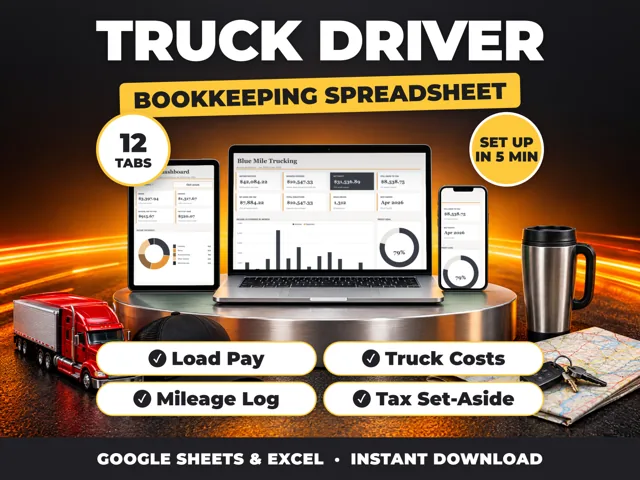
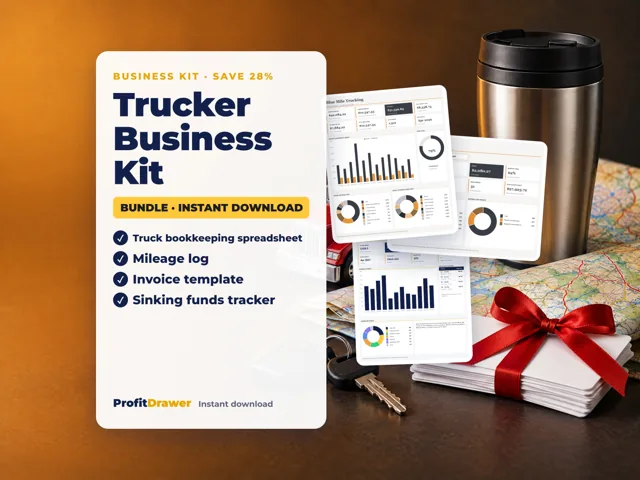
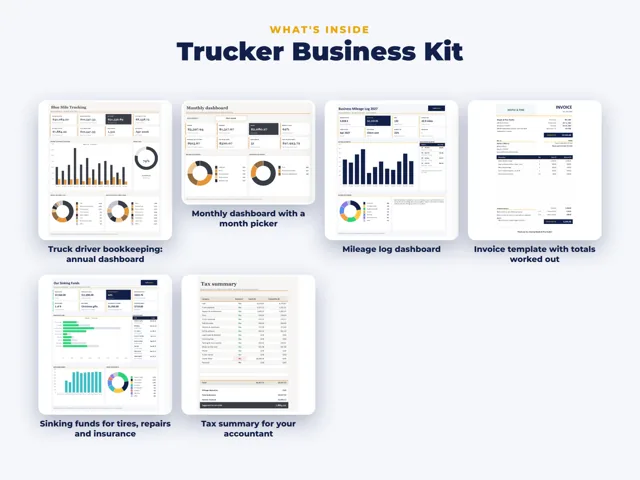
The truck driver bookkeeping spreadsheet tracks load pay, fuel and truck costs, with dashboards and a tax summary, in Excel and Google Sheets. It does not dispatch loads or create invoices. The trucker business kit adds a mileage log, a separate invoice template and a sinking funds tracker for tires, repairs and insurance. For a simple weekly habit, read how to track business expenses.
As a self-employed owner you pay self-employment tax of 15.3% on net earnings, plus income tax, and the IRS says you generally make estimated payments if you expect to owe $1,000 or more. Ask a tax professional how to deduct your truck costs. See small business tax deadlines for 2027 and the free self-employed tax calculator. This is general information, not tax or legal advice.
8. A 30-day launch plan
Week 1: decide and register - Choose lease on or own authority, and your freight type. - Register the business, get a free EIN, open a bank account. - Read the FMCSA registration pages linked in this guide.
Week 2: filings and insurance - Apply for your USDOT number and authority if you need them. - Get insurance quotes and have your insurer file proof with FMCSA. - Check UCR, Form 2290, fuel tax and state plates.
Week 3: numbers and freight - Work out your cost per mile and minimum rate. - Contact 10 local shippers and set up broker accounts. - Set up your bookkeeping spreadsheet.
Week 4: first loads - Run your first loads once your authority is active. - Log every mile and receipt. - Review the month: which loads actually paid?
Common mistakes to avoid
- Hauling before your authority is active.
- Ignoring empty miles when you judge a rate.
- No repair fund. One breakdown can wipe out a month.
- Missing Form 2290 or UCR deadlines.
- Not saving for taxes. Set aside part of every load.
One truck, a known cost per mile and clean records is a solid start. Grow once the first truck is steady.
Tools for this





Questions people ask
How much does it cost to start a trucking business with one truck?
It depends mostly on the truck. Leasing onto a carrier with a truck you already own can keep costs to insurance, plates, fuel and a repair buffer. Running under your own authority with a financed truck and trailer costs far more. Our example budget runs from about $7,850 to $63,000, but your costs will differ.
What do I need to start a trucking business?
For interstate for-hire freight in a heavy truck, FMCSA says you generally need a USDOT number, and operating authority (an MC number) if you haul regulated goods owned by others. You also need the insurance FMCSA requires, any state registrations, and you may owe the IRS heavy highway vehicle use tax on Form 2290. A business bank account and simple bookkeeping round it out.
How do I start a trucking company with no money?
It is very hard to start with nothing, because insurance, plates and fuel come before the first payment. Some drivers start by leasing onto an existing carrier, which uses that carrier's authority, and save toward their own. Avoid buying a truck on terms you cannot cover in a slow month.
How do I get an LLC for a trucking business?
You form an LLC by filing with your state, usually through the secretary of state's office, and paying a filing fee. An LLC can separate business and personal liability, but it does not replace a USDOT number, operating authority or insurance. Talk to a local professional about whether it fits you.
How long does it take to get MC authority?
New USDOT number and operating authority applications now go through Motus, FMCSA's online registration system, which replaces the Unified Registration System (Federal Register, April 29, 2026). Check FMCSA's registration pages for current processing times before you pick a start date. The authority is not active until FMCSA grants it and your insurance filing is in place.
Sources
- Do I Need a USDOT Number? (FMCSA)
- Get Operating Authority (Docket Number) (FMCSA)
- How do I get operating authority (MC number)? (FMCSA)
- Availability of Motus, FMCSA's New Registration System (Federal Register, April 29, 2026)
- Getting Started with Registration (FMCSA)
- Insurance Filing Requirements (FMCSA)
- What is the Unified Carrier Registration (UCR) system and how do I sign up? (FMCSA)
- About Form 2290, Heavy Highway Vehicle Use Tax Return (IRS)
- Instructions for Form 2290 (IRS)
- Self-employment tax (Social Security and Medicare taxes) (IRS)
- Estimated taxes (IRS)
- Get an employer identification number (IRS)
- Launch your business: Apply for licenses and permits (U.S. Small Business Administration)
General information, not tax, legal or financial advice. Check the rules for your state and your situation.