
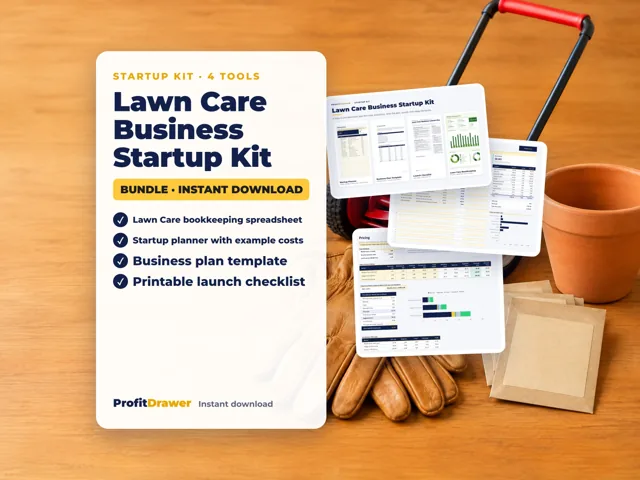
ProfitDrawer's landscaping business guide gives an example budget of about $2,950 to $17,000, assuming you already own a pickup. The biggest lines are a utility trailer ($1,000 to $4,000), a commercial mower ($500 to $6,000) and power tools such as a trimmer, edger, blower and hedge trimmer ($500 to $2,000), plus insurance and licenses. Renting large machines per job keeps the total lower. These are example ranges; your costs will differ.
Example budget, assumes you already own a pickup (your costs will differ):
| Item | Low | High |
|---|---|---|
| Used or new utility trailer | $1,000 | $4,000 |
| Commercial mower (used push or new walk-behind) | $500 | $6,000 |
| Trimmer, edger, blower, hedge trimmer | $500 | $2,000 |
| Hand tools, wheelbarrow, rakes, shovels, tarps | $200 | $600 |
| Safety gear | $100 | $300 |
| Business registration and licenses | $100 | $1,000 |
| Insurance (first months) | $300 | $1,500 |
| Marketing (door hangers, yard signs, website) | $150 | $1,000 |
| Fuel and maintenance reserve | $100 | $600 |
| Total | $2,950 | $17,000 |
The services you offer move the total most. Mowing, mulch and cleanups need less gear than hardscape or irrigation, which can also need a state landscape or contractor license. Applying pesticides for pay can require a state applicator certification, so ask your state agriculture department first.
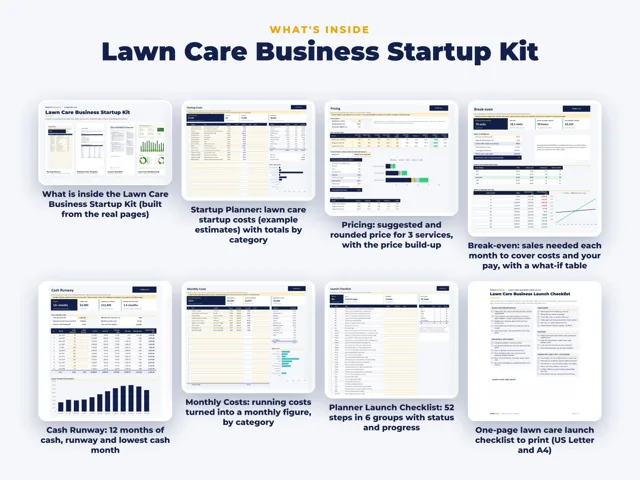
Rent sod cutters, skid steers and plate compactors per job until you use them often. For scale, the guide's revenue example is $1,600 a week for a 32 week season: $51,200 before fuel, equipment, insurance, dump fees and taxes. Put your own quotes into the free startup cost calculator.
Source: How to Start a Landscaping Business (ProfitDrawer guide) · Updated
Tools and spreadsheets for this





Related questions
All questions on ProfitDrawer Answers →
General information, not tax, legal or financial advice. Check the rules for your state and your situation.