
To start a landscaping business, decide which services you will offer (maintenance, planting, mulch, cleanups, hardscape or irrigation), check your city, county and state license rules, buy or rent the equipment for those services, price each job from your real hourly costs, and win your first clients in a small service area near home. Many owners begin with maintenance and seasonal cleanups, then add installs once they have steady clients. Good records from day one show you which jobs actually make money.
This guide covers each step, with an example budget, a worked bid and a 30-day launch plan. If you only plan to mow and edge, see our separate guide on how to start a lawn care business.
1. Choose your landscaping services
Landscaping covers a wide range of work. Pick a starting mix that matches your skills and equipment:
- Maintenance: mowing, edging, trimming shrubs, weeding beds, leaf blowing. Recurring income through the season.
- Seasonal cleanups: spring and fall cleanups, leaf removal, bed edging. Good one-time jobs that lead to contracts.
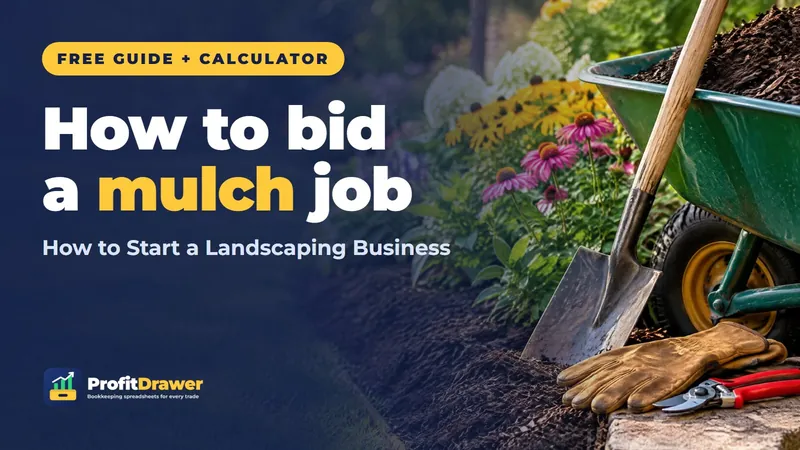
- Mulch, soil and planting: spreading mulch, installing shrubs, flowers and small trees.
- Hardscape: pavers, retaining walls, borders, gravel paths. Higher job values, more skill, equipment and often licensing.
- Irrigation and drainage: sprinkler installs, repairs and winterizing. Often licensed separately in some states.
- Fertilizing and weed control: chemical applications that can require state certification.
A common beginner path: maintenance plus cleanups and mulch in year one, planting in year two, and hardscape only when you have the experience.
2. Check licenses, permits and insurance
Landscaping rules depend heavily on where you work. The SBA notes that states regulate a broader range of activities than the federal government and that cities and counties often add their own licenses. Check with your city, county and state before your first paid job.
Look into:
- Business structure and name. Sole proprietor or LLC. Register a DBA if you trade under a business name.
- General business license from your city or county.
- Landscape or contractor license. Some states require one for certain jobs, especially hardscape, irrigation or work above a dollar amount.
- Pesticide applicator certification. The EPA explains that states, territories and tribes certify applicators, that anyone applying restricted use pesticides must be certified, and that many states require certification for all commercial applicators. Ask your state agriculture department before you spray anything for pay.
- Insurance. General liability for damage to client property, commercial auto for your truck and trailer, and workers' compensation if you hire.
- Dump and green waste rules. Know where you can legally drop debris and what it costs.
3. Work out your startup costs
Example budget, your costs will differ (assumes you already own a pickup):
| Item | Low | High |
|---|---|---|
| Used or new utility trailer | $1,000 | $4,000 |
| Commercial mower (used push or new walk-behind) | $500 | $6,000 |
| String trimmer, edger, blower, hedge trimmer | $500 | $2,000 |
| Hand tools, wheelbarrow, rakes, shovels, tarps | $200 | $600 |
| Safety gear (eye and ear protection, gloves, boots) | $100 | $300 |
| Business registration and licenses | $100 | $1,000 |
| Insurance (first months) | $300 | $1,500 |
| Marketing (door hangers, yard signs, website) | $150 | $1,000 |
| Fuel and maintenance reserve | $100 | $600 |
| Total | $2,950 | $17,000 |
Rent larger machines such as sod cutters, skid steers or plate compactors per job until you use them often enough to own one. Add your numbers to the free startup cost calculator.
4. Price your jobs
Landscapers usually bid in one of three ways: a flat price per visit for maintenance, a price per job for installs (labor plus materials with a markup), or hourly for small odd jobs. Whatever method you use, start from your cost per crew hour.
Worked bid example: a mulch install (example numbers only)
- Mulch needed: 8 cubic yards at $40 per yard delivered, so 8 x $40 = $320
- Markup on materials: 20%, so $320 x 1.20 = $384
- Labor: 2 people for 5 hours = 10 crew hours. At $45 per crew hour (wages or your pay plus a share of insurance and equipment), 10 x $45 = $450
- Edging and bed prep: 2 crew hours x $45 = $90
- Truck, trailer and fuel for the job: $40
- Disposal of old debris: $25
- Cost before profit: $384 + $450 + $90 + $40 + $25 = $989
- Add 15% profit: $989 x 1.15 = $1,137.35
- Bid: $1,140
The free price per job calculator can do this math for maintenance visits and one-off jobs. Check what local companies charge so your bid lands in a sensible range.
5. Get your first clients
- Start close to home. A tight route cuts drive time and fuel.
- Door hangers and yard signs. After each job, leave hangers on the neighbors' doors and ask the client if you can place a small sign for a week.
- Free business listing on map and search results with before and after photos.
- Realtors, property managers and small HOAs. They need reliable crews for listings, rentals and common areas.
- Seasonal offers. Spring cleanup plus first mowing, or fall cleanup plus gutter debris removal.
- Referral reward for clients who send a neighbor.
Photograph every job before and after. Those photos become your best sales tool.
6. Track money and plan for taxes
Landscaping has many small costs that add up: fuel, blades, trimmer line, dump fees, repairs. Record them all, plus every client payment and unpaid invoice.
- Use a separate bank account for the business.
- Log mileage between jobs, supply yards and dump sites. The IRS business standard mileage rate for 2026 was 72.5 cents a mile from January to June and 76 cents from July to December. Check the 2027 rate on irs.gov.
- Set aside money for taxes. Self-employed owners pay self-employment tax of 15.3% on net earnings, plus income tax, often through quarterly estimated payments. See small business tax deadlines for 2027 and the free self-employed tax calculator. This is general information, not tax advice.
The landscaping business spreadsheet keeps this in one file for Excel or Google Sheets: START HERE, Settings, dashboards, Income, Expenses, Mileage, Unpaid Invoices, Top Clients, a Monthly Summary, Quarterly totals and a Tax Summary. Our guide on how to track business expenses explains the weekly habit.
7. A simple 30-day launch plan
Days 1 to 7: plan - Pick your services and a service area of a few miles. - Check your city, county and state license and certification rules. - Price your insurance and choose a name.
Days 8 to 14: set up - Register, open a business bank account and buy insurance. - Buy or rent the gear you need for your first services only. - Write a simple price sheet for maintenance, cleanups and mulch.
Days 15 to 21: market - Hand out 300 door hangers in two or three neighborhoods. - Set up your business listing and post photos. - Contact five realtors or property managers.
Days 22 to 30: work and review - Do your first jobs and time each one. - Adjust prices if jobs take longer than planned. - Ask every client for a review and a referral. - Check income, expenses and profit for the month.
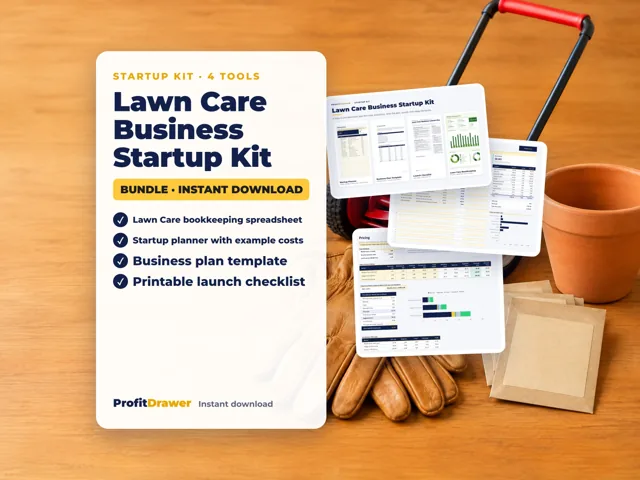
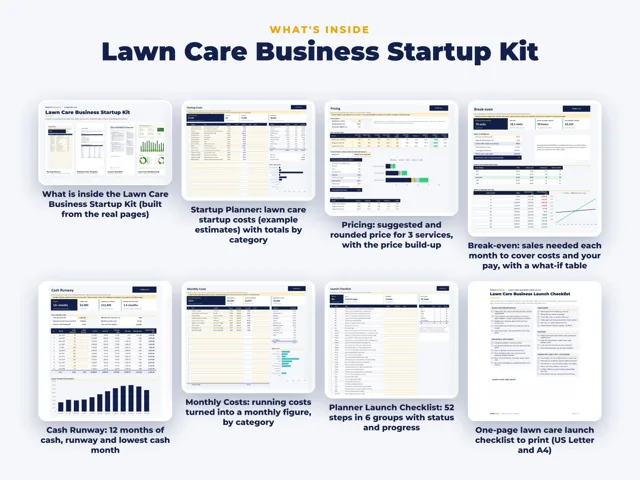
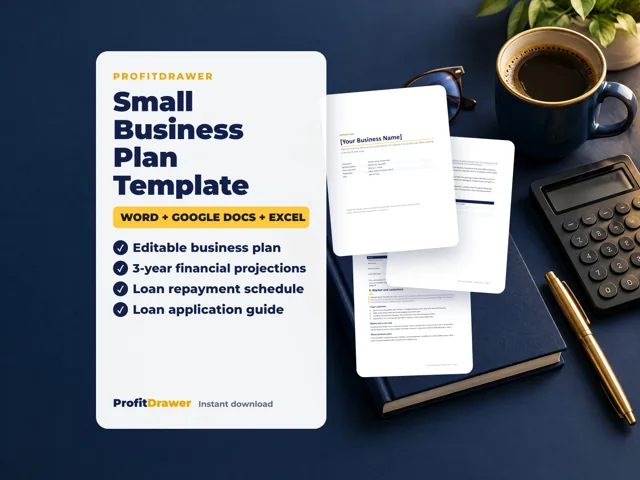
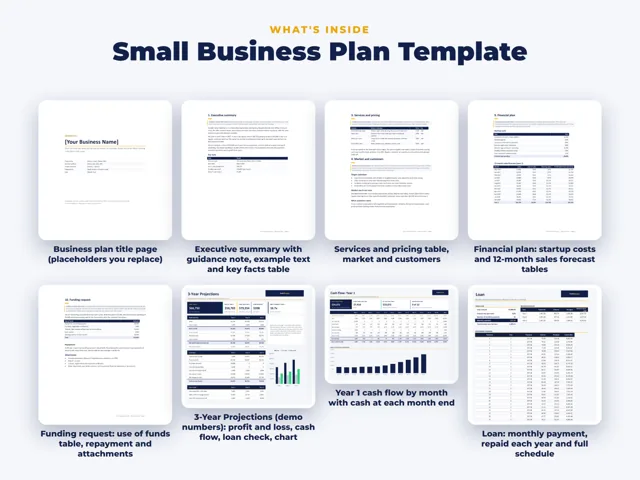
A written plan helps if you need a loan for a trailer or mower. The coming-soon small business plan template is built for that, and the coming-soon lawn care business startup kit adds a Startup Planner workbook for startup costs, pricing, break-even and cash runway, a business plan template and a launch checklist.
Common mistakes to avoid
- Buying top-end equipment before you have clients. Start used or rent.
- Underbidding installs by forgetting disposal, delivery or a second worker.
- Spraying chemicals without the right certification.
- Spreading clients across a wide area. Drive time is unpaid time.
- Not planning for winter. Save during the busy months or add snow removal or holiday lighting if your area allows.
Landscaping rewards owners who show up on time, do clean work and know their numbers. Start with the services you can do well, price from real costs and grow one season at a time.
Tools for this





Questions people ask
How much does it cost to start a landscaping business?
It depends on the services you offer and whether you already own a truck. Mowing and cleanups need less gear than planting, hardscaping or irrigation. Our example budget below runs from about $2,950 to $17,000 if you already have a pickup, but your costs will differ, so run your own list through the startup cost calculator.
What licenses are needed to start a landscaping business?
Most areas require a general business license from the city or county. Some states also license landscape contractors, especially for hardscape, irrigation or larger jobs, and applying many pesticides or herbicides for pay can require a state applicator certification. Check with your city, county and state before you take paid work.
How much does a landscaping business make per year?
It depends on your crew size, season length and pricing. For example, a solo owner who bills $1,600 a week for 32 weeks of the season earns $51,200 in revenue (1,600 x 32), and then pays fuel, equipment, insurance, dump fees and taxes out of that. Track your numbers so you know your real profit.
Can I start a landscaping business with no experience?
Yes, but start with simpler work such as mowing, mulching, cleanups and planting while you learn. Work a season with an established company if you can, and leave hardscape, tree work and chemical applications until you have the skills, insurance and any license your state requires.
Do I need an LLC for a landscaping business?
Not required in most places. Many owners start as sole proprietors. An LLC can help separate business and personal liability, which some landscapers value because the work involves heavy equipment and client property. It has a state filing fee, so compare the cost and ask a local professional.
Sources
- Launch your business: Apply for licenses and permits (U.S. Small Business Administration)
- Launch your business: Register your business (U.S. Small Business Administration)
- Plan your business: Calculate your startup costs (U.S. Small Business Administration)
- How to Get Certified as a Pesticide Applicator (US EPA)
- Self-employment tax (Social Security and Medicare taxes) (IRS)
- Standard mileage rates (IRS)
General information, not tax, legal or financial advice. Check the rules for your state and your situation.