
To start a box truck business, decide what you will haul (local deliveries, furniture, moving or expedited freight), get a truck with the right weight rating, register the business and any DOT numbers your routes require, and buy commercial auto insurance. Then find your first loads through local businesses and load boards, price every run by the mile so it covers your real costs, and track every mile and receipt. Many owners start with one non-CDL truck and add trucks later.
Below are the steps, an example startup budget, a worked rate example and a 30-day launch plan.
1. Pick the kind of box truck work you will do
A box truck can earn money in several ways. Each one changes the truck you need and where your customers come from.
- Local and last mile delivery: furniture stores, appliance dealers, building supply yards and restaurant suppliers often need deliveries but do not want their own truck.
- Moving and junk hauling: small moves, office moves, estate cleanouts. You may need helpers and moving equipment.
- Expedited and dedicated freight: pallets for businesses, often found on load boards or through brokers, sometimes across state lines.
- Contract routes: regular routes for one shipper or a delivery service. Steady, but read contracts closely.
Beginners often mix local delivery with small moves. Both pay on the same day and keep you close to home while you learn your costs.
2. Check the rules: weight, DOT and local licenses
Trucking rules depend on your truck's weight rating, where you drive and whether you haul for hire. This is general information, so confirm everything with the agencies below.
- Know your weight rating. Look for the GVWR on the door sticker. Under federal rules, a vehicle used in interstate commerce with a weight rating or weight of 10,001 pounds or more is a commercial motor vehicle, which brings federal safety rules into play.
- USDOT number and operating authority. If you cross state lines, check FMCSA's registration pages to see if you need a USDOT number, and if you haul other people's goods for pay across state lines, whether you need operating authority (often called an MC number). FMCSA has an online tool that asks about your operation. Some states also require their own DOT number for trucks that never leave the state.
- CDL. Many 26 foot box trucks are rated at 26,000 pounds or less, under the usual CDL line, but check your exact truck and your state DMV.
- Business registration. Register your business name with your state or a DBA with your county. The SBA explains how to register and which licenses may apply.
- EIN. An EIN from the IRS is free. You will use it for your bank account and with brokers and shippers.
- Insurance. Commercial auto liability is a must. Cargo insurance and general liability are often required by brokers and shippers.
3. Startup costs: an example budget
This example budget, your costs will differ, compares starting with a truck you already own against buying a used truck with a down payment.
| Item | Low (truck you own) | High (used truck, financed) |
|---|---|---|
| Truck down payment or purchase | $0 | $15,000 |
| Liftgate, ramp or repairs | $0 | $4,000 |
| Commercial auto and cargo insurance (down payment) | $1,500 | $5,000 |
| Registration, plates and DOT filings | $300 | $1,500 |
| Business registration and EIN | $50 | $300 |
| Dolly, straps, blankets, load bars | $300 | $900 |
| Phone, tablet and load board subscription | $100 | $600 |
| First month of fuel | $800 | $2,500 |
| Cash buffer for repairs | $1,000 | $3,000 |
| Total | $4,050 | $32,800 |
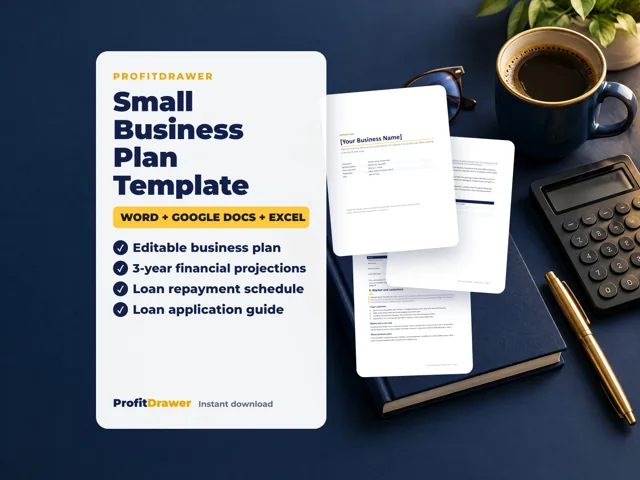
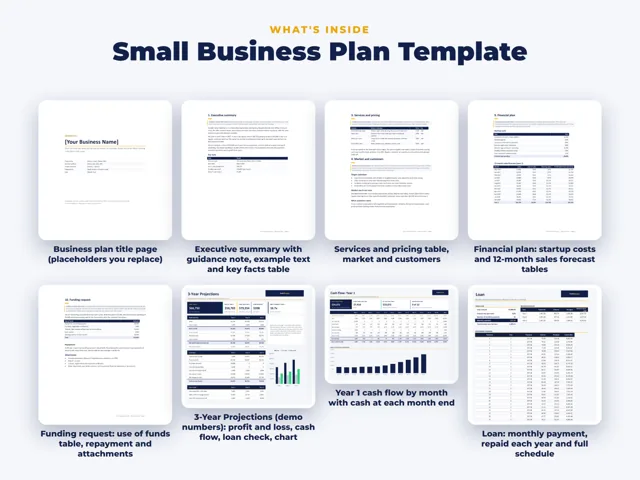
Run your own list through the free startup cost calculator, and if you need a loan, a small business plan template helps you show a lender your numbers.
4. Know your cost per mile, then price your loads
Box truck owners live or die by cost per mile. Work it out before you accept any rate.
Worked example: one month, one truck
- Miles driven: 6,000
- Fuel: 6,000 miles / 10 miles per gallon = 600 gallons x $3.80 = $2,280
- Truck payment: $1,100
- Insurance: $900
- Maintenance and tires set aside: 6,000 x $0.12 = $720
- Phone, load board and other fixed costs: $300
- Total cost: $5,300. Cost per mile: $5,300 / 6,000 = $0.88
Now check a load. A broker offers $420 for a 180 mile run, and you will drive 40 empty miles to pick it up.
- Total miles: 180 + 40 = 220
- Rate per total mile: $420 / 220 = $1.91
- Cost: 220 x $0.88 = $194
- What is left: $420 - $194 = $226 before your own pay and taxes.
For local deliveries and moves, price by the job or by the hour plus mileage. Example: 3 hours at $95 plus 30 miles at $1.50 = $285 + $45 = $330. The free price per job calculator helps you test prices like this.
5. Find your first loads and customers
- Local businesses first. Visit furniture and appliance stores, flooring shops, building supply yards and event rental companies. Ask who handles their deliveries today.
- Load boards and brokers. Useful for filling empty days, but compare every rate against your cost per mile and watch out for long unpaid miles.
- Moving and hauling customers. A free business profile on map search, local online groups and real estate agents bring small moves.
- Contract routes. Read the contract for who pays fuel, how routes are assigned and how you get paid.
Keep a list of every customer and what they paid. Your best few customers will often bring most of your income.
6. Track every mile, receipt and invoice
Trucking has lots of small costs: fuel, tolls, parking, scale tickets, repairs. Missing a few each week adds up.
- Use a separate business bank account and card.
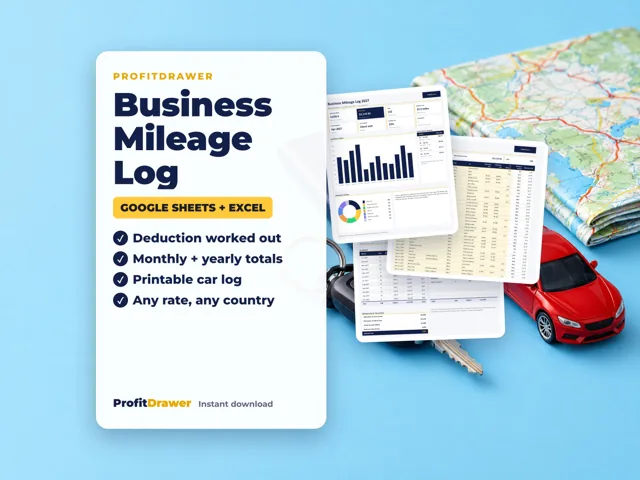
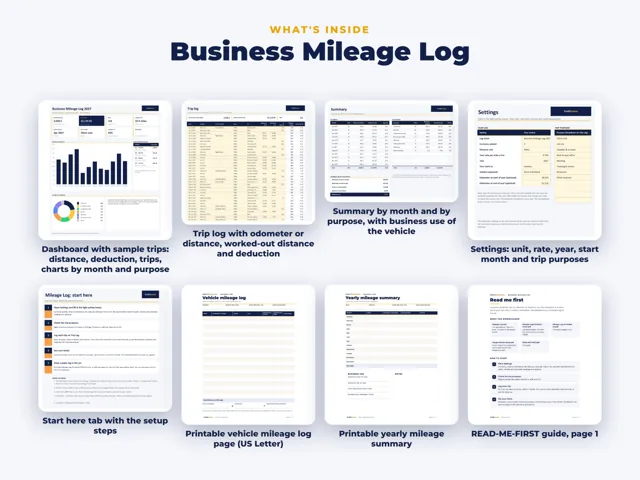
- Log business miles daily. The IRS business standard mileage rate was 72.5 cents per mile from January to June 2026 and 76 cents from July to December 2026; check the IRS page for 2027. A printable mileage log keeps a record in the cab. Ask a tax professional whether the standard rate or actual expenses fits your truck, because rules can differ for heavier vehicles.
- Follow up on unpaid invoices from brokers and shippers every week.
- Read how to track business expenses for a simple weekly routine.
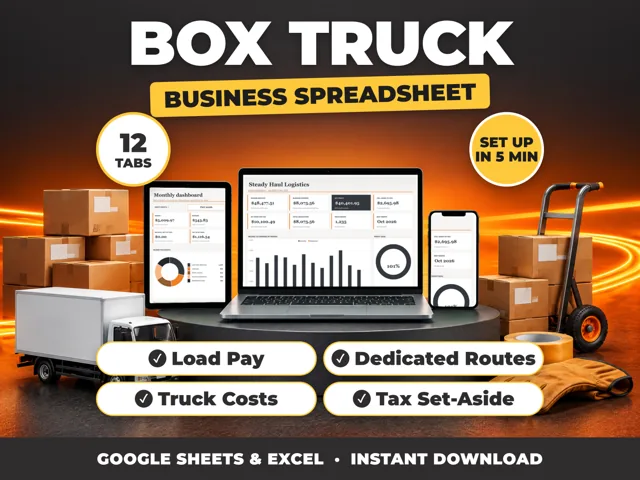
A spreadsheet like the box truck business spreadsheet tracks income, expenses, mileage, unpaid invoices and top clients, with a monthly summary, a quarterly view and a tax summary. It works in Excel and Google Sheets. It does not dispatch loads or create invoices.
Taxes. As a self-employed owner you generally pay self-employment tax of 15.3% plus income tax on your profit, and you may need quarterly estimated payments. See the 2027 small business tax deadlines and estimate your set-aside with the free self-employed tax calculator. This is general information, not tax advice.
7. A 30-day launch plan
Week 1: decide and register
- Pick your work type and service area.
- Check your truck's weight rating, FMCSA and state DOT rules, and CDL needs.
- Register the business, get a free EIN, open a business bank account.
Week 2: truck and insurance
- Buy, lease or prepare your truck and install any liftgate or equipment.
- Get commercial auto and cargo insurance quotes and bind a policy.
- File any DOT registrations you need.
Week 3: numbers and sales
- Work out your cost per mile and your minimum rate.
- Visit 15 local businesses that ship or deliver goods.
- Set up your bookkeeping spreadsheet and mileage log.
Week 4: first runs
- Run your first loads, log every mile and receipt.
- Ask happy customers for repeat work and referrals.
- Review your first month: which loads actually paid?
Doing smaller packages and same-day runs instead? Read how to start a courier business.
Key takeaways
- Choose your work type first; it decides the truck and the rules.
- Check your weight rating, FMCSA registration, state DOT rules and CDL needs before you haul.
- Know your cost per mile and never take a load below it.
- Log every mile and receipt, chase unpaid invoices weekly and set money aside for taxes.
Tools for this




Questions people ask
How much does it cost to start a box truck business?
It depends most on whether you buy, finance or lease the truck. Some owners start with a used truck they already own and spend a few thousand dollars on insurance, registration and equipment, while buying a newer 26 foot truck can cost tens of thousands. The example budget in this guide shows the main line items so you can price your own.
Do I need a CDL to start a box truck business?
Many box trucks used for local delivery are rated under 26,001 pounds, which is the usual line for needing a CDL, but always check the weight rating on your truck's door sticker and your state's rules. Weight also matters for federal rules, since a truck rated 10,001 pounds or more used in interstate commerce counts as a commercial motor vehicle. Check FMCSA's registration pages and your state DMV before you haul.
Can you make money with a box truck?
Yes, if your rate per mile covers fuel, insurance, the truck payment and maintenance with room left over. For example, a 200 mile day paid at $2.50 per mile brings in $500; if your costs are $1.30 per mile, you keep $240 before taxes. Track your real cost per mile so you know which loads are worth taking.
What do I need to start a box truck business?
You need a truck with the right size and weight rating, commercial auto insurance, any state and federal registrations that apply to your routes, a business entity or DBA, and equipment like a liftgate, dolly, straps and moving blankets. You also need a way to find loads and a simple system to track income, expenses and miles.
How do I start a box truck business with no money?
It is hard to start with nothing, because insurance and registration come before the first payment. Some owners start by driving for another carrier to learn routes and save, or begin with local moving and junk hauling using a truck they already have. Start small, keep costs low and reinvest your first profits.
Sources
- 49 CFR 390.5 Definitions (Legal Information Institute)
- 49 CFR 383.5 Definitions, CDL rules (Legal Information Institute)
- Apply for licenses and permits (SBA)
- Register your business (SBA)
- Get an employer identification number (IRS)
- Self-employment tax (IRS)
- Standard mileage rates (IRS)
- Estimated taxes (IRS)
General information, not tax, legal or financial advice. Check the rules for your state and your situation.