
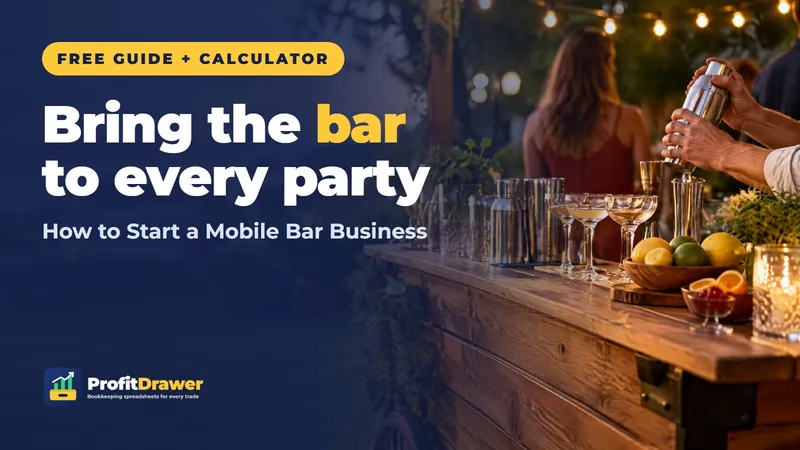
To start a mobile bar business, decide whether you will bartend with alcohol your clients buy or sell alcohol yourself, check the alcohol rules for that model with your state, county and city, set up a simple portable bar with tools and insurance, price each event so it covers staff, supplies and travel, and book your first events through people you know. Many owners start small with a folding bar and private parties. The licensing question comes first, because it shapes everything else.
This guide walks you through each step in plain language, with an example budget, a worked pricing example and a 30-day launch plan.
1. Choose your service model
How you handle alcohol matters more than the look of your bar. The two common models:
- Bartending only (the client buys the alcohol): you bring the bar, tools, ice, mixers, garnishes and bartenders. The host buys the beer, wine and spirits. Many new mobile bars start here.
- Full service (you sell or supply the alcohol): you buy the alcohol and sell drinks or charge for it in your package. This is usually much more regulated.
Rules for these two models differ, and they differ again from state to state, so check before you choose. Then decide what you will offer:
- Private parties: birthdays, showers, graduations and backyard events
- Weddings: larger guest counts, longer hours, more planning
- Corporate events: office parties and client events, often on weekdays
- Mocktail or coffee bars: an option where alcohol rules are strict or the host wants no alcohol
Start with one main event type and one setup you can run well.
2. Check alcohol rules and register
Alcohol is regulated at more than one level, so check with your city, county and state before you book anything. The SBA lists alcohol among the activities that need federal and local licensing, and it explains that state and local requirements depend on your activity and location.
A simple checklist:
- Ask your state alcohol agency what your service model needs. Bartending for a client who buys the alcohol and selling alcohol yourself are treated differently, and the rules differ, so check.
- Ask your city and county about event permits and any local alcohol rules. Venues may have their own rules too.
- Check federal registration if you will sell alcohol. TTB says anyone who sells or offers to sell beer, wine or spirits must register with TTB before starting, and keep records of what they receive. TTB does not issue state or local licenses, so you still need those.
- Ask about server training. Some areas or venues want bartenders to hold a responsible serving certificate. Check what applies to you.
- Register your business. Pick a structure (sole proprietor or LLC) and register a DBA if you use a business name.
- Get insurance. Ask an agent about general liability and liquor liability coverage. Many venues ask for a certificate of insurance before the event.
This is general information, not tax or legal advice. When in doubt, ask your state alcohol agency directly.
3. Work out your startup costs
List every cost before you buy anything. The SBA suggests keeping one-time costs separate from monthly costs such as insurance and phone.
Example budget, your costs will differ:
| Item | Low | High |
|---|---|---|
| Portable bar or converted trailer | $300 | $8,000 |
| Bar tools, glassware or cups, coolers and ice chests | $200 | $1,200 |
| Licenses, permits and registration | $100 | $1,500 |
| Insurance, including liquor liability (first months) | $300 | $1,500 |
| Server training or certificates | $0 | $300 |
| Signs, drink menus and photos | $100 | $800 |
| Marketing and a simple website | $50 | $600 |
| Total | $1,050 | $13,900 |
A trailer or vintage vehicle bar looks great at weddings, but it is the biggest cost and may need its own permits and a tow vehicle. Many owners prove demand with a portable bar first. Try your own numbers in the free startup cost calculator.
4. Price your events
Mobile bars usually price by package: a base fee for a set number of hours and guests, with extras for more hours, more bartenders or signature drinks. Some price per guest.
Worked pricing example (example numbers only, client buys the alcohol):
- Event: 100 guests, 4 hours of service, 2 bartenders
- Bartender time: 5.5 hours each, including setup and breakdown. 2 x 5.5 x $30 an hour = $330
- Mixers, garnishes, ice and cups: $1.50 per guest, so 100 x $1.50 = $150
- Driving: 40 miles round trip. Using $0.70 a mile as a rough running cost, 40 x $0.70 = $28
- Share of insurance and permits for the event: $40
- Equipment wear and cleaning: $25
- Cost before profit: $330 + $150 + $28 + $40 + $25 = $573
- Add a 25% markup for planning time, taxes and slow months: $573 x 1.25 = $716.25
- Round to a package price of $725, or $7.25 per guest
Price add-ons the same way. The free price per job calculator can do this math for each package. Check what local mobile bars charge so your price is in a sensible range, and put a deposit and a cancellation policy in every contract.
5. Get your first bookings
Your first events will usually come through people you know and other event vendors.
- Friends and family. Offer to run the bar at a party and ask for photos and referrals.
- Event vendors. Caterers, photographers, DJs, planners and venues refer each other all the time.
- Photos and short videos of your setup and drinks. Post them in local groups and on a free business listing.
- Bridal and community events. A small table with a mocktail sample (if allowed) gets you seen.
- Repeat corporate clients. One office holiday party can turn into a yearly booking.
Follow up every event with a thank you and a request for a review.
6. Track your money and plan for taxes
Keep a separate business bank account and record every deposit, final payment and supply run.
Track these after each event:
- Income per event, including deposits and balances still owed
- Expenses such as mixers, ice, cups, staff pay, insurance, permits and ads
- Mileage for every event and supply trip. The IRS business standard mileage rate for 2026 was 72.5 cents a mile from January to June and 76 cents a mile from July to December. Check the 2027 rate on irs.gov.
If you are self-employed, you pay self-employment tax of 15.3% on net earnings plus income tax, often through quarterly estimated payments. Our guide to small business tax deadlines for 2027 lists the dates, and the free self-employed tax calculator helps you estimate what to set aside. This is general information, not tax or legal advice.
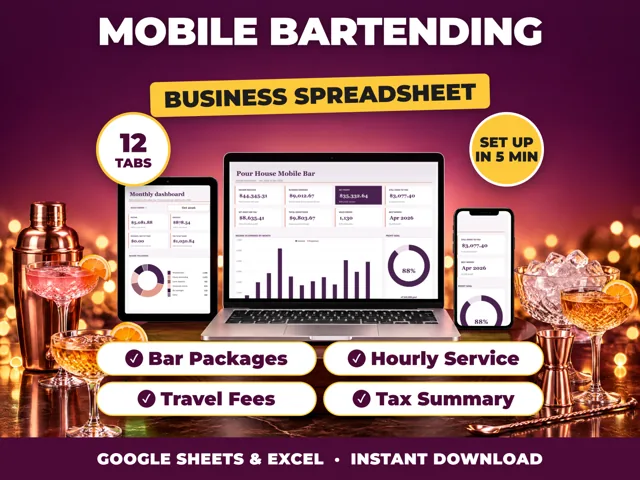
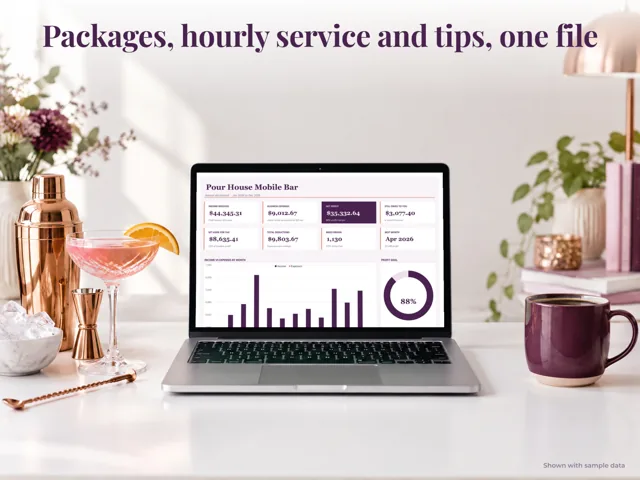
The mobile bartending business spreadsheet gives you a START HERE tab, Settings, dashboards, Income, Expenses, Mileage, Unpaid Invoices, Top Clients, a Monthly Summary, Quarterly totals and a Tax Summary, in Excel and Google Sheets. It does not do invoices, contracts, scheduling or stock counts, so keep those in your own tools. The Unpaid Invoices tab helps you see which balances are still due before each event. For the weekly habit, see how to track business expenses.
7. A simple 30-day launch plan
Days 1 to 7: rules and model - Choose your service model and event type. - Call your state alcohol agency, city and county and write down what applies to you. - Get insurance quotes, including liquor liability.
Days 8 to 14: set up - Register your business and open a separate bank account. - Buy a portable bar, tools, coolers and supplies. - Build a short menu of four to six drinks and practice them. - Write your packages, contract, deposit and cancellation terms.
Days 15 to 21: get seen - Run the bar at a friend's party and take photos. - Contact ten local event vendors and venues. - Set up a free business listing and post your packages.
Days 22 to 30: book and review - Book your first paid events and collect deposits. - After each event, record income, costs and time. - Adjust package prices if setup takes longer than planned.
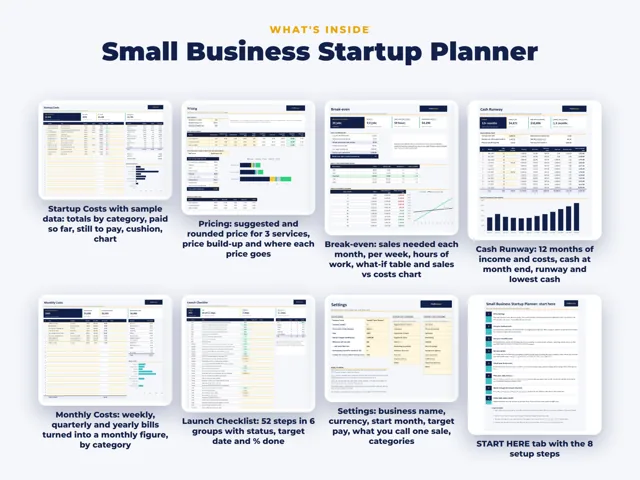
To plan startup costs, pricing, break even and cash runway before you buy a trailer, the coming-soon small business startup planner puts it in one workbook. If you also serve food, our guide on how to start a food truck business covers food permits and costs.
Common mistakes to avoid
- Booking before checking alcohol rules. Confirm what your model needs first.
- Skipping liquor liability insurance. Venues often require it, and it protects you.
- Buying a trailer too early. Prove demand with a simple portable bar.
- Underpricing setup time. Loading, setup and breakdown can add two or more hours.
- No deposit or contract. Last-minute cancellations happen. Protect your date.
A mobile bar business can grow from a few private parties into a busy event calendar. Check the rules first, price on real numbers, and keep clean records for every event.
Tools for this
Questions people ask
How much does it cost to start a mobile bartending business?
It depends mostly on your bar setup. A portable folding bar with basic tools and coolers costs far less than a converted trailer or vintage vehicle. Our example budget below runs from about $1,050 to $13,900, but licenses and insurance vary a lot by area, so your costs will differ.
What do I need to start a mobile bartending business?
You need a bar setup, bar tools and coolers, a way to get ice and supplies to events, insurance that covers serving alcohol, and whatever licenses or permits your city, county and state require. You also need clear contracts that say who buys the alcohol and what you will and will not serve. Check alcohol rules before you book your first event.
Do I need a liquor license to start a mobile bar business?
It depends on your service model and your location. Bartending for clients who buy their own alcohol is treated differently from selling alcohol yourself, and the rules differ from state to state and even city to city. Check with your state alcohol agency and your city and county before you take bookings.
How do I start a private bartending business?
Start with private events such as birthdays, showers and small weddings, where the host buys the alcohol and you provide the bartending, mixers and setup. Get insurance, check local rules, build a short drink menu and a price list, and book your first events through people you know and local event vendors.
Is a mobile bar business profitable?
It can be, because events pay per booking and many clients add extras like signature drinks or longer hours. Profit depends on pricing each event to cover staff time, supplies, travel, insurance and taxes. Track every event so you know which packages earn the most.
Sources
- Launch your business: Apply for licenses and permits (U.S. Small Business Administration)
- Launch your business: Register your business (U.S. Small Business Administration)
- Plan your business: Calculate your startup costs (U.S. Small Business Administration)
- Beverage Alcohol Retailers (TTB)
- Self-employment tax (Social Security and Medicare taxes) (IRS)
- Standard mileage rates (IRS)
General information, not tax, legal or financial advice. Check the rules for your state and your situation.