
To start a non-medical home care business, decide which services you will offer (companionship, help with daily tasks, meals, errands, respite for families), check your state's licensing rules, register the business and buy insurance. Then set an hourly rate that covers caregiver pay and overhead, write a clear client agreement, and find your first clients through families, senior communities and local professionals. Many owners start by giving care themselves, then hire caregivers once their own hours are full. Decide early how you will hire, because the employee or contractor question matters a lot in this business.
This guide walks you through each step, with an example budget, a worked hourly price and a 30-day launch plan.
1. Choose non-medical home care services
First, know the difference. Home health care usually includes skilled medical services from licensed nurses or therapists. Non-medical home care (sometimes called private home care or private caregiving) helps people stay safe and comfortable at home without medical treatment. This guide covers the non-medical side.
Common non-medical services:
- Companionship: conversation, games, walks, reading together.
- Help around the house: light housekeeping, laundry, meal preparation.
- Errands and appointments: grocery runs, pharmacy pickups, rides to visits.
- Respite care: a few hours so a family caregiver can rest or work.
- Help with daily activities: some states treat hands-on help, such as bathing or dressing, differently. Check before you offer it.
Start with a short list you can deliver well, and a clear service area so travel time stays low.
2. Check state licensing and local requirements
Licensing for home care is set mainly at the state level, and the rules can depend on exactly which services you provide. Check with your state health department or the agency that licenses care providers in your state, and ask your city and county about a general business license. The SBA notes that most businesses need some mix of state and local licenses and permits, depending on activity and location.
Your checklist:
- Pick a business structure. A sole proprietorship is simplest; an LLC can separate business and personal liability.
- Register your business name with your state, or a DBA with your county.
- Ask your state whether your services need a home care license, and what training, background checks or inspections come with it.
- Get a free EIN from the IRS. You need one to hire employees.
- Buy insurance. General and professional liability are common starting points. Ask about bonding and, if you hire, workers' compensation.
- Write a client service agreement that lists services, hours, rates and how to cancel. Have a local lawyer review it.
3. Decide how you will hire caregivers
This is where many new owners get into trouble. Calling someone a contractor does not make them one.
The IRS explains that the answer depends on the whole relationship and on how much right you have to direct and control the work. It groups the evidence into three areas: behavioral control (do you direct what is done and how), financial control (who pays expenses, supplies tools and controls how the worker is paid), and the type of relationship (contracts, benefits, how permanent the work is). If you are unsure, either side can ask the IRS to decide using Form SS-8.
The Department of Labor's Wage and Hour Division also has a page for home care agencies and other employers about minimum wage, overtime and record keeping for direct care workers. Read the current version of that page, check your state's wage laws, and talk to a tax professional or employment lawyer before your first hire.
4. Work out your startup costs
The SBA suggests listing one-time costs apart from monthly ones, and planning for at least a year of monthly costs.
Example budget, your costs will differ:
| Item | Low | High |
|---|---|---|
| Business registration and local license | $100 | $800 |
| State home care license fees, if your state has them | $0 | $2,000 |
| Liability insurance (first months) | $500 | $3,000 |
| Background checks and caregiver training | $100 | $800 |
| Phone, laptop and office supplies | $200 | $1,500 |
| Marketing (cards, flyers, simple website) | $200 | $1,500 |
| Lawyer review of client agreement | $0 | $1,000 |
| Cash buffer for first payroll and slow weeks | $1,000 | $6,000 |
| Total | $2,100 | $16,600 |
The cash buffer matters: if you hire, you usually pay caregivers before every client has paid you. Run your own numbers in the free startup cost calculator.
5. Price each care hour
Home care is usually priced by the hour, often with a minimum visit length so short visits still cover travel. Build your rate from the cost of one hour.
Worked pricing example (example numbers only):
- Caregiver pay: $18.00 an hour
- Payroll taxes and workers' compensation, using 15% as an example: $18.00 x 0.15 = $2.70
- Share of insurance, phone, training and marketing: $3.00 an hour
- Cost of one care hour: $18.00 + $2.70 + $3.00 = $23.70
- Add a 25% markup for your pay, taxes and slow weeks: $23.70 x 1.25 = $29.625
- Round to a rate of $30 an hour
Your payroll costs will differ, so ask a payroll provider or accountant for your real percentage. Now check a month for one client:
- Care hours: 80 a month
- Sales: 80 x $30 = $2,400
- Costs: 80 x $23.70 = $1,896
- Left over: $2,400 minus $1,896 = $504 before your own pay and income tax
If you give the care yourself, your own time replaces the caregiver line. The free price per job calculator helps you test different rates.
6. Find your first clients
- Tell people you know. Families caring for an aging parent are often a friend of a friend.
- Senior centers, faith groups and community events. Offer a short talk on staying safe at home.
- Local professionals: hospital discharge planners, social workers, elder law attorneys and senior living staff.
- A free business listing on map and search results, with your services and area.
- Free first visit. Meet the client and family, learn their needs and write a care plan together.
Trust is everything here. Arrive on time, send the same caregiver where you can, and keep families updated.
7. Track your money and plan for taxes
Use a separate business bank account from day one. Each week, record:
- Income by client, and which invoices are still unpaid
- Expenses such as insurance, training, supplies and advertising
- Mileage for errands and travel between clients. The IRS business standard mileage rate for 2026 was 72.5 cents a mile from January to June and 76 cents a mile from July to December. Check the 2027 rate on irs.gov before you file.
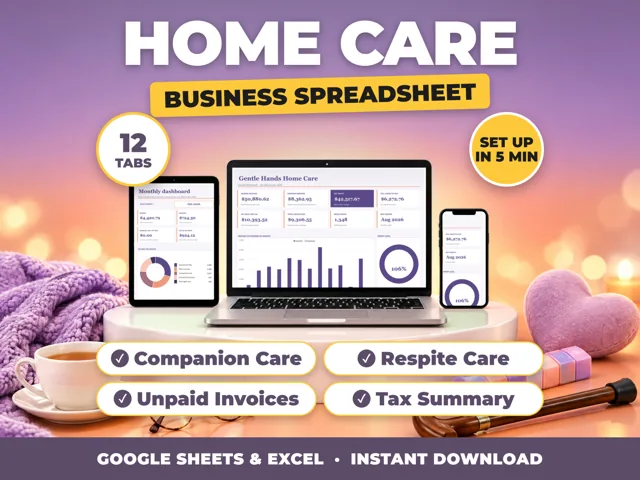
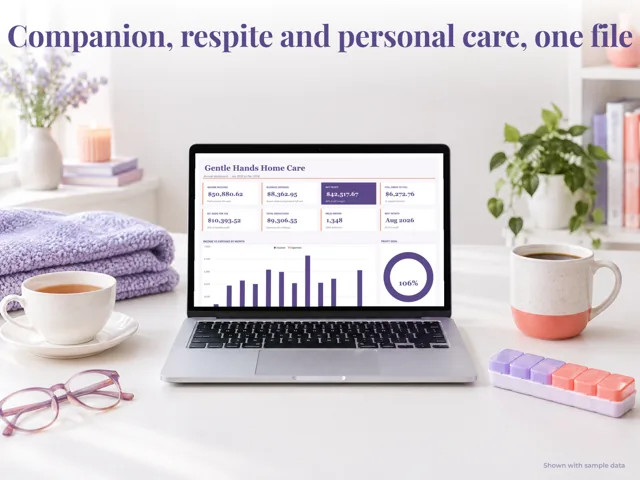
The home care business spreadsheet has a START HERE tab, Settings, dashboards, Income, Expenses, Mileage, Unpaid Invoices, Top Clients, a Monthly Summary, Quarterly totals and a Tax Summary, in Excel and Google Sheets. It does not run payroll or schedule caregivers, so you will need separate tools for those. For a simple weekly routine, read how to track business expenses.
As a self-employed owner you pay self-employment tax of 15.3% on net earnings plus income tax, and the IRS says you generally make estimated payments if you expect to owe $1,000 or more. Payroll taxes for employees are a separate duty. Estimate your own set-aside with the free self-employed tax calculator. This is general information, not tax or legal advice.
8. A simple 30-day launch plan
Days 1 to 7: decide and check rules - Choose your services and service area. - Contact your state licensing agency and your city or county. - Register the business, get an EIN, open a bank account.
Days 8 to 14: protect the business - Get insurance quotes and bind a policy. - Write your client agreement and have it reviewed. - Decide how you will hire, after reading the IRS and DOL pages.
Days 15 to 21: numbers and outreach - Set your hourly rate and minimum visit length. - Visit senior centers, discharge planners and local professionals. - Set up your bookkeeping spreadsheet.
Days 22 to 30: first clients - Hold first visits and write care plans. - Track real hours and travel for each client. - Review your numbers at the end of the month.
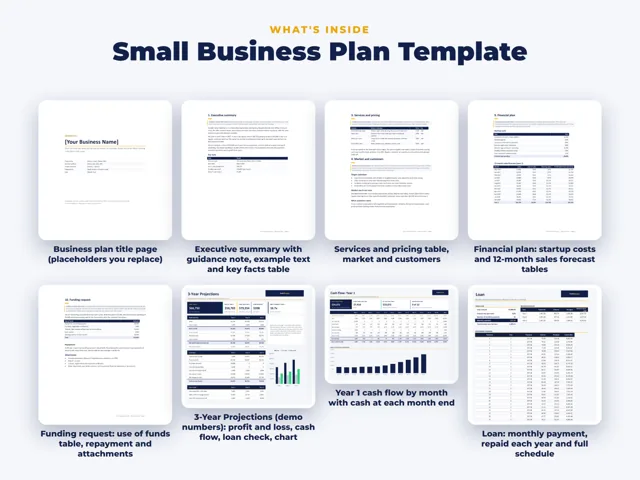
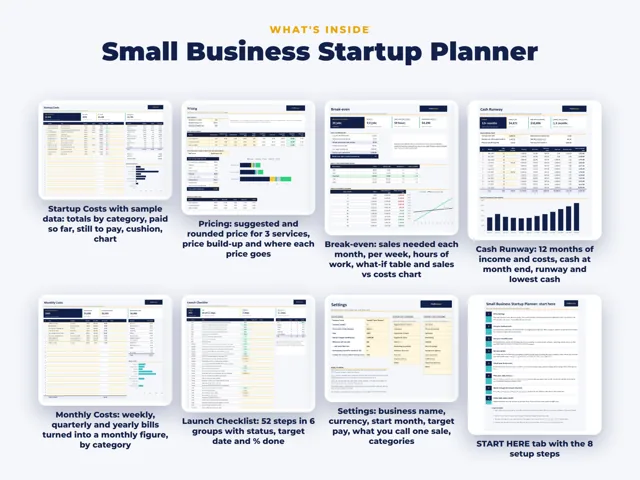
The coming-soon small business startup planner helps you lay out startup costs, pricing, break-even and cash runway, and the coming-soon small business plan template helps if a lender asks for a written plan.
Common mistakes to avoid
- Offering services your state treats as licensed without checking first.
- Treating caregivers as contractors without looking at the IRS and DOL guidance.
- Pricing below your true hourly cost. Payroll costs and travel add up.
- No cash buffer for payroll. Clients often pay after you pay your caregivers.
- Mixing personal and business money. It hides your real profit.
Start small, follow your state's rules, and price every hour on real numbers. Good care and clean records will grow the business from there.
Tools for this





Questions people ask
What licenses do I need to start a home care business?
It depends on your state and on the services you offer. Non-medical help such as companionship and meal preparation may be treated differently from home health care, which includes skilled medical services. Check with your state health department or the agency that licenses care providers, and with your city and county for a general business license.
How much does a non-medical home care business make?
It depends on how many care hours you fill each week and what you charge. For example, one client receiving 80 hours a month at $30 an hour brings in $2,400. If each hour costs you $23.70 in caregiver pay and overhead, about $504 of that is left before your own pay and taxes. Real numbers depend on your area and your costs.
How much does it cost to start a caregiver business?
A solo caregiver working under their own name can start for a few thousand dollars in registration, insurance, training and marketing. An agency that hires caregivers needs more, including money to cover payroll before clients pay. Our example budget runs from about $2,100 to $16,600, but your costs will differ.
Can my caregivers be independent contractors?
That depends on the facts of each working relationship, not on what you call it. The IRS says to look at behavioral control, financial control and the type of relationship. If you set schedules, give training and direct how the work is done, read the IRS and Department of Labor pages and talk to a tax professional before you decide.
How do I start a private home care business on my own?
Many owners start by giving care themselves to a few private pay clients. Register your business, get insurance, check your state's licensing rules, and write a clear service agreement. Once your own hours are full, you can decide whether to hire caregivers and grow into an agency.
Sources
- Independent contractor (self-employed) or employee? (IRS)
- Application of the Fair Labor Standards Act to Direct Care Workers: For Agencies and Other Employers (U.S. Department of Labor)
- Launch your business: Apply for licenses and permits (U.S. Small Business Administration)
- Plan your business: Calculate your startup costs (U.S. Small Business Administration)
- Get an employer identification number (IRS)
- Self-employment tax (Social Security and Medicare taxes) (IRS)
- Estimated taxes (IRS)
- Standard mileage rates (IRS)
General information, not tax, legal or financial advice. Check the rules for your state and your situation.