
To start a catering business, choose the kind of events and food you will serve, then call your local health department before you cook anything for sale, because they decide whether you can use a home kitchen or need a licensed commercial one. Register your business, get the food permits and insurance your area requires, and price every event per person from your real food, labor and kitchen costs. Book your first small events through people you know, take a deposit up front, and track every event's income and costs.
This guide walks you through each step, with an example budget, a worked per-person pricing example and a 30-day launch plan.
1. Choose your catering style and menu
Start small and focused. Common ways to begin:
- Drop-off catering: you cook, pack and deliver trays for offices, meetings and small parties. Lower staff needs, easy to start.
- Full-service events: you set up, serve and clean up at weddings, parties and corporate events. Higher prices, more staff and equipment.
- Meal prep and family-style dinners: regular orders for homes or small groups.
- Specialty catering: one cuisine, desserts, grazing boards or diet-friendly menus.
Write a short menu of dishes you can cook well in quantity and that travel safely. A few starters, mains and sides is enough. Each dish should hold at a safe temperature from your kitchen to the event.
2. Check health and local requirements first
This step comes before buying equipment. Food safety rules are written by states and localities, and many base them on the FDA Food Code, which the FDA describes as a model that local, state, tribal and federal regulators use for their own rules. The details still differ from place to place.
The FDA's "How to Start a Food Business" page says a private home does not have to register with the FDA, but it tells home-based food businesses to contact their local health department to learn which state and local laws apply. Local health departments inspect food businesses and issue the licenses or permits for food sold to consumers. The FDA also keeps a list of state retail and food service codes with links to each state's agency.
Questions to ask your local health department:
- Can I cater from my home kitchen, or do I need a licensed commercial kitchen?
- Which permits do I need, and what does each cost?
- Does someone on my team need a food safety or food manager certificate?
- What are the rules for transporting and holding hot and cold food?
- Do I need a separate permit to serve at events in other cities or counties?
Then the general steps. Check with your city, county and state for each:
- Pick a structure. Many caterers start as a sole proprietor. Some form an LLC for liability. The SBA notes most states require a DBA if you use a name other than your own.
- Get a general business license from your city or county.
- Ask your state revenue department about sales tax on food and catering services.
- Get insurance. General liability is the starting point. Many venues ask for proof before you can work there. If you hire, workers' compensation rules may apply.
- Ask about alcohol. Alcohol has its own licensing rules. Check before you offer it.
If you also want to sell from a mobile unit, our guide to starting a food truck business covers that route.
3. Work out your startup costs
The SBA suggests listing one-time costs separately from monthly costs like insurance and kitchen rental.
Example budget, your costs will differ:
| Item | Low | High |
|---|---|---|
| Health permits and food safety course | $100 | $800 |
| Business registration and local license | $50 | $300 |
| Insurance (first months) | $200 | $1,200 |
| Commercial kitchen rental deposit and first hours | $0 | $800 |
| Equipment (hotel pans, chafing dishes, carriers, coolers, thermometers) | $200 | $1,500 |
| Serving ware and linens | $50 | $600 |
| Food for tastings and test runs | $100 | $400 |
| Menus, website and marketing | $50 | $500 |
| Total | $750 | $6,100 |
Rent larger items like tables, tents and extra chafing dishes for each event until you know you need them often. Try your own numbers in the free startup cost calculator.
4. Price per person
Most caterers quote per person, then add any extras like rentals, staff hours or delivery.
Worked pricing example, a 50-guest buffet (example numbers only):
- Food cost per person: $9.00
- Disposables and serving supplies per person: $1.20
- Labor: 2 helpers x 6 hours x $20 = $240, plus your own 10 hours x $30 = $300, so $240 + $300 = $540. Per person: $540 / 50 = $10.80
- Kitchen rental: 6 hours x $25 = $150. Per person: $150 / 50 = $3.00
- Fuel and travel: $40. Per person: $40 / 50 = $0.80
- Share of insurance, permits and marketing: $1.00 per person
- Cost per person: $9.00 + $1.20 + $10.80 + $3.00 + $0.80 + $1.00 = $25.80
- Add a 20% markup: $25.80 x 1.20 = $30.96
- Round to a price of $31 per person, so $31 x 50 = $1,550 for the event
At that price, food is $9.00 / $31.00, about 29% of the price. Take a deposit when the client books, and set a date for the final guest count so you do not buy food for people who do not come. The free price per job calculator can run this math for each quote.
5. Get your first customers
- Your own network. Friends, family and coworkers host birthdays, showers and office lunches.
- Tastings. Invite a few local hosts or office managers to try your menu.
- Offices and small businesses. Drop-off lunches for meetings can become a regular order.
- Venues and event planners. Ask to be added to their caterer list.
- A free business listing on map and search sites with photos of real trays and setups.
- Reviews and referrals. Ask after each event, while the guests are still talking about the food.
6. Track your money and plan for taxes
Use a separate bank account and record each event as it happens: the deposit, the final payment, food receipts, rentals and staff costs. Track mileage for shopping, deliveries and event travel. The IRS business standard mileage rate for 2026 was 72.5 cents a mile from January to June and 76 cents a mile from July to December. Check the 2027 rate on irs.gov before you file.
If you are self-employed, you pay self-employment tax of 15.3% on net earnings of $400 or more, on top of income tax. If you expect to owe $1,000 or more, the IRS says you generally pay estimated tax in four payments. The free self-employed tax calculator helps you estimate what to set aside. This is general information, not tax or legal advice.
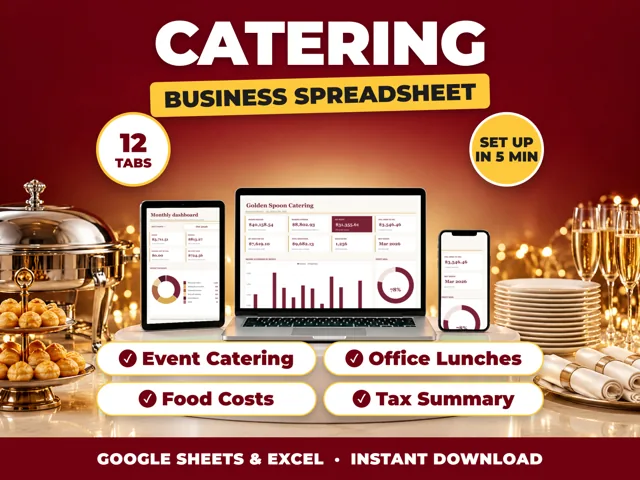
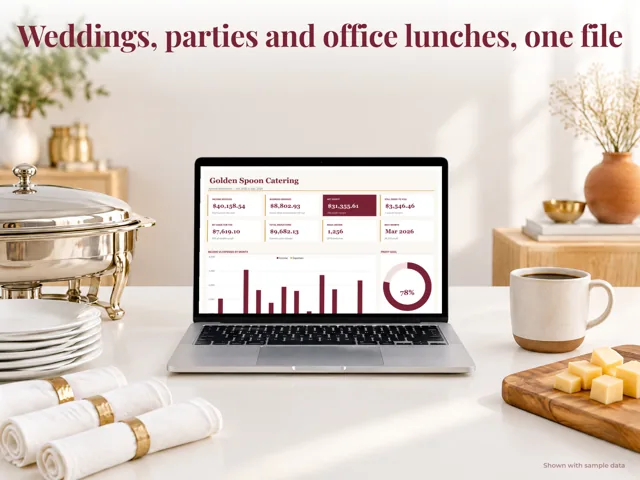
The catering business spreadsheet has a START HERE tab, Settings, dashboards, Income, Expenses, Mileage, Unpaid Invoices, Top Clients, a Monthly Summary, Quarterly totals and a Tax Summary, in Excel and Google Sheets. It does not write quotes or invoices; you record what you billed and what was paid, and the Unpaid Invoices tab shows which balances are still open.
7. A simple 30-day launch plan
Days 1 to 7: rules and numbers - Call your local health department and write down every permit, fee and step. - Decide on home kitchen or rented commercial kitchen. - Register the business and open a bank account.
Days 8 to 14: kitchen and menu - Book kitchen time and start your food safety course if required. - Test your menu in full batches. Time every dish. - Price each menu per person.
Days 15 to 21: permits and setup - Apply for permits and insurance. Buy core equipment. - Write your menu sheet, deposit terms and final count deadline. - Set up your bookkeeping spreadsheet.
Days 22 to 30: first events - Hold a tasting and tell everyone you know. - Book and cater one or two small events. - Compare each event's real cost with your quote and adjust prices.
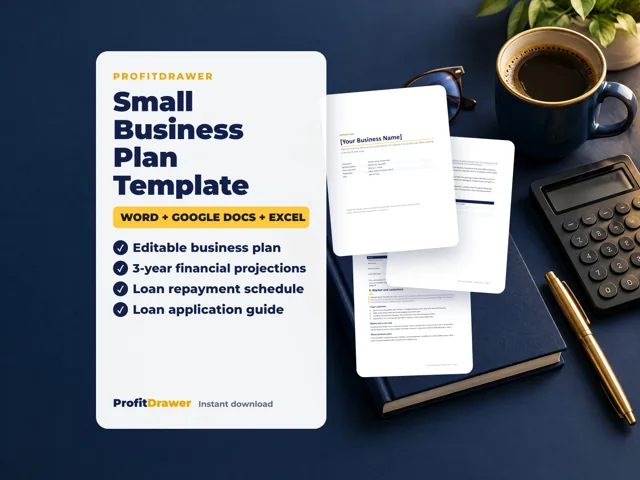
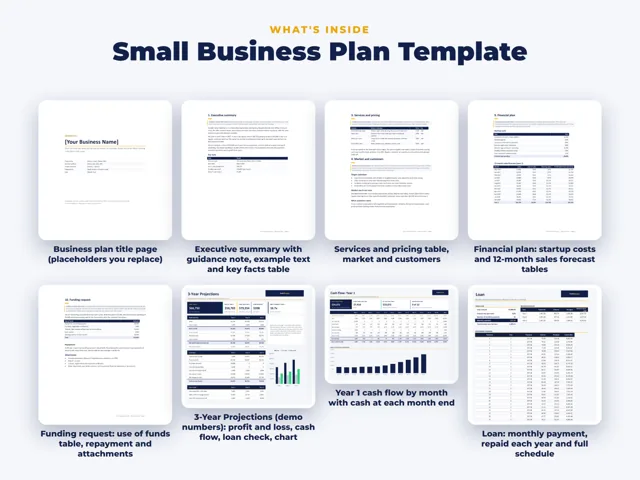
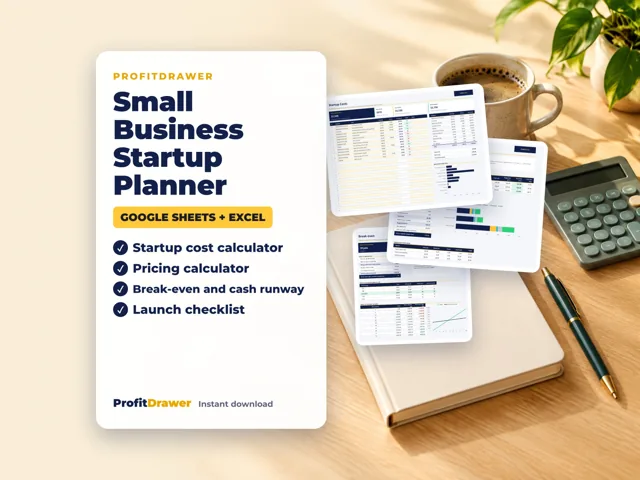
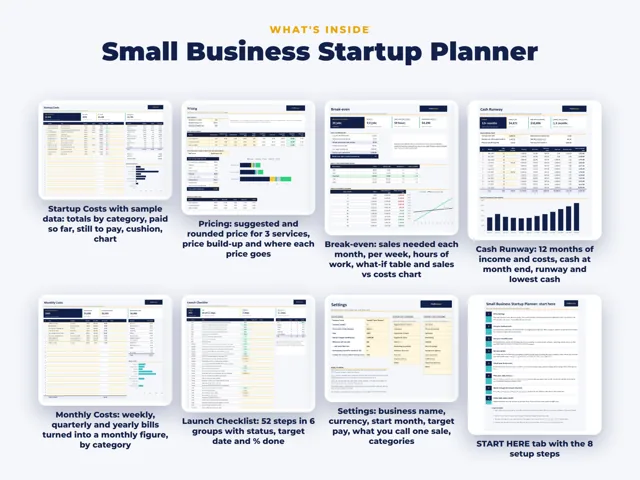
To lay out startup costs, pricing, break-even and cash runway first, use the coming-soon small business startup planner. If a lender or kitchen landlord wants a written plan, the coming-soon small business plan template has 10 sections and a 3-year projections workbook.
Common mistakes to avoid
- Cooking before you have permits. Ask the health department first.
- Underpricing labor. Shopping, prep, travel, setup and cleanup all take time.
- No deposit. Buying food for an event that cancels is a costly lesson.
- A menu that does not travel. Pick dishes that hold safely and still look good.
- Not saving for taxes. Set aside part of every payment.
Catering lets you start small with drop-off orders and grow into full events. Follow your health department's rules, price per person on real numbers and track every event, and you will know exactly what each booking earns.
Tools for this

Questions people ask
What licenses do I need to start a catering business?
Food rules are set by your state, county and city, so the list differs from place to place. Most caterers need a general business license and a food permit from the local health department, and some areas require a food safety certificate. Call your local health department first and ask for their exact steps.
Can you run a catering business from home?
It depends on where you live. The FDA says a private home does not have to register with the FDA, but state and local health rules still apply, and some areas do not allow catering from a home kitchen. Ask your local health department, and if home catering is not allowed, rent time in a licensed commercial kitchen.
How much does it cost to start a catering business?
A small caterer who rents kitchen time and starts with basic equipment can keep costs fairly low. Our example budget below runs from about $750 to $6,100, but your costs will differ. Permits, insurance and kitchen rental are the costs to check first.
How do I start a catering business from home with no money?
Start with small drop-off events, rent kitchen time by the hour instead of building a kitchen, borrow or rent serving equipment, and take a deposit before you buy food for an event. You still need the permits your area requires, so budget for those first.
How do you price catering?
Most caterers price per person. Add up food cost, disposables, labor, kitchen rental, travel and overhead for the event, divide by the guest count, then add a margin. Our worked example below shows every step.
Sources
- How to Start a Food Business (U.S. Food and Drug Administration)
- FDA Food Code (U.S. Food and Drug Administration)
- State Retail and Food Service Codes and Regulations by State (U.S. Food and Drug Administration)
- Launch your business: Apply for licenses and permits (U.S. Small Business Administration)
- Launch your business: Register your business (U.S. Small Business Administration)
- Plan your business: Calculate your startup costs (U.S. Small Business Administration)
- Self-employment tax (Social Security and Medicare taxes) (IRS)
- Estimated taxes (IRS)
- Standard mileage rates (IRS)
General information, not tax, legal or financial advice. Check the rules for your state and your situation.