
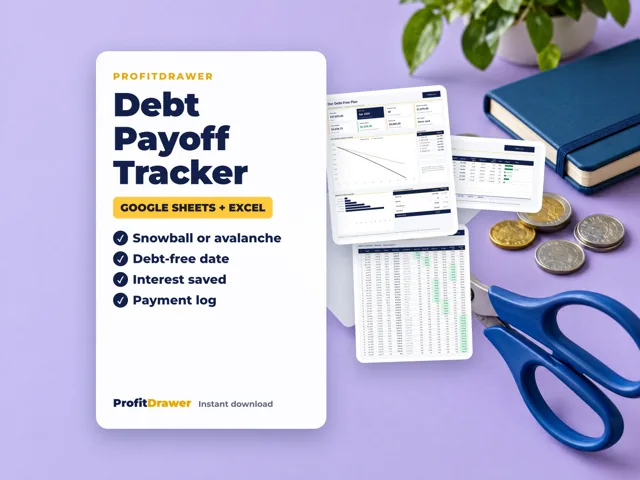
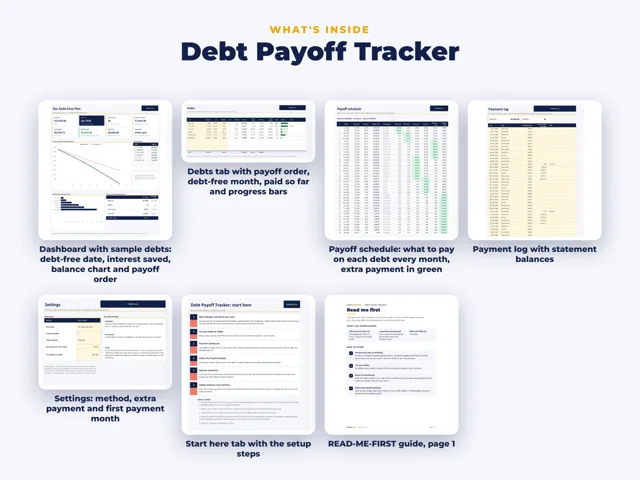
The 2 methods both pay the minimum on every debt and send extra money to one target. The debt snowball targets the smallest balance first, so you see quick wins; the debt avalanche targets the highest interest rate first, which usually costs less in total interest. The Consumer Financial Protection Bureau notes the snowball may cost more in the long run. ProfitDrawer's debt payoff tracker lets you choose either order and see your debt-free month.
How each works:
- List every debt with its balance, interest rate and minimum payment.
- Pay the minimum on all of them.
- Put every extra dollar on the target debt:
- Snowball: smallest balance first.
- Avalanche: highest interest rate first.
- When the target is paid off, roll its payment into the next target.
Trade-offs (as the CFPB describes them):
| Snowball | Avalanche | |
|---|---|---|
| Target | Smallest balance | Highest interest rate |
| Upside | You see progress quickly | Removes your costliest debts first, saving money over time |
| Downside | May cost more in the long run | It may not feel like you are making progress |
Which to pick? If the debts have similar rates, the two orders cost about the same, so the snowball's quick wins can help. If one debt has a much higher rate, such as a credit card next to a car loan, the avalanche usually saves more. The best method is the one you will keep up every month.
Before starting either, a small emergency fund helps keep new surprises off a card.
Source: How to reduce your debt (Consumer Financial Protection Bureau) · Updated
Tools and spreadsheets for this
Related questions
All questions on ProfitDrawer Answers →
General information, not tax, legal or financial advice. Check the rules for your state and your situation.