
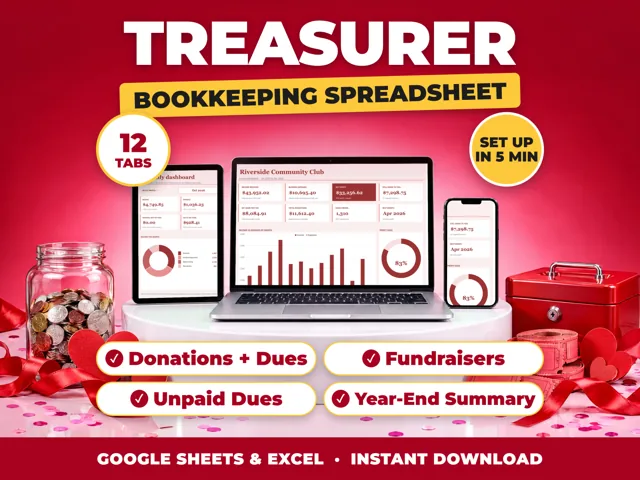
Keep one record of all money in and out, with date, source or payee, category and amount, deposit cash quickly with two people counting, pay bills only with approval and a receipt, reconcile the bank account monthly and report totals at each meeting. If the group is tax-exempt, the IRS says small organizations with gross receipts normally $50,000 or less can generally file Form 990-N. A ProfitDrawer PTA treasurer spreadsheet has categories set up for dues, fundraisers and grants.
Typical money for a PTA or school club:
| Money in | Money out |
|---|---|
| Membership dues | Teacher grants |
| Fundraisers, book fair, spirit wear | Field trips, classroom supplies |
| Donations and business sponsors | Event supplies, printing |
| Field trip money collected | State and national dues, insurance |
Habits that protect the treasurer:
- Count cash with two people at every event and both sign the count.
- Use the group's own bank account, never a personal one.
- Keep pass-through money separate, such as field trip fees you collect and pay on, so it does not look like spending.
- Approve a budget at the start of the year and report against it.
- Hand over clean records to the next treasurer.
IRS filing: Form 990-N is due by the 15th day of the 5th month after the tax year ends. A group that fails to file for 3 consecutive years automatically loses its exempt status. Check with your state or national PTA office for its own rules.
This is general information, not tax or legal advice.
Source: IRS: Annual electronic filing requirement for small exempt organizations (Form 990-N) · Updated
Tools and spreadsheets for this



Related questions
- How do I keep books for a church or nonprofit treasurer role?
- Is there a ProfitDrawer spreadsheet for church or nonprofit treasurers?
- How do I reconcile my bank statement with my books?
- What should a monthly bookkeeping checklist include?
- Do I need a separate bank account for my small business?
- How do I keep track of business expenses as a small business owner?
All questions on ProfitDrawer Answers →
General information, not tax, legal or financial advice. Check the rules for your state and your situation.