
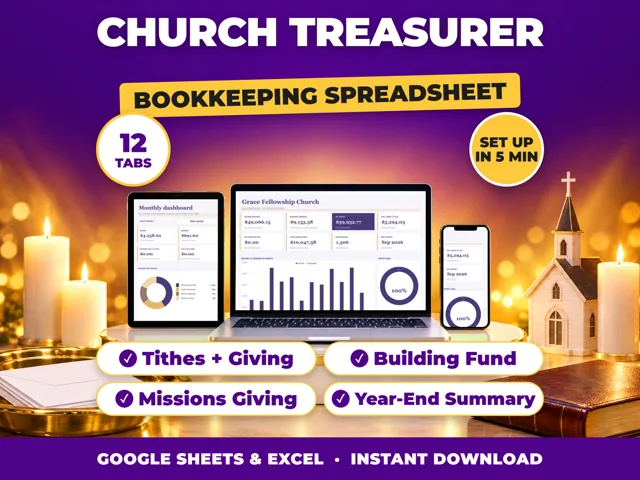
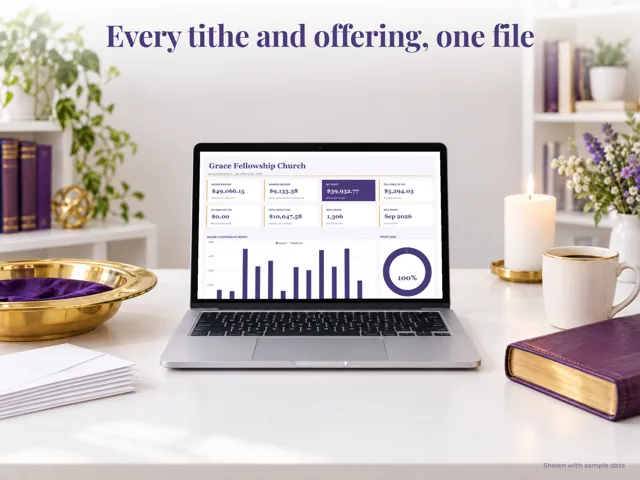
Record every gift and payment with its date, source, fund or category and amount, deposit money promptly, keep receipts, reconcile the bank account monthly and give the board a regular report. IRS Publication 1828 (Rev. 8-2015) says all tax-exempt organizations, including churches, must keep books and records that justify their exemption. A ProfitDrawer treasurer spreadsheet has dropdown categories for gifts, funds and expenses, with monthly and annual dashboards for meeting reports.
Good treasurer habits:
- Two people count cash and both sign the count sheet before it is deposited.
- Track restricted money separately, such as a building fund or missions gifts, so it is not spent on general bills.
- Pay by check or bank transfer with an approved invoice, not from cash on hand.
- Reconcile monthly and share the statement with another officer.
- Report to the board with income, spending and fund balances.
IRS points to know:
- A donor cannot deduct a single gift of $250 or more without a written acknowledgment from the church or charity. Publication 1828 says the donor must obtain it, but the organization can help by sending timely statements.
- Churches are excepted from filing Form 990. Many other small charities with gross receipts normally $50,000 or less file Form 990-N.
- An organization that fails to file a required annual return for 3 consecutive years automatically loses its exempt status.
The ProfitDrawer church treasurer spreadsheet does not create giving statements or run payroll. This is general information, not tax or legal advice.
Source: IRS Publication 1828: Tax Guide for Churches and Religious Organizations · Updated
Tools and spreadsheets for this

Related questions
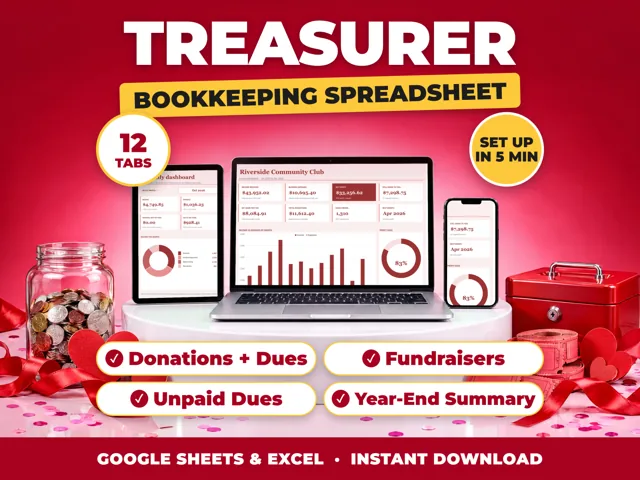
- How do I keep books for a PTA or school club?
- Is there a ProfitDrawer spreadsheet for church or nonprofit treasurers?
- How do I reconcile my bank statement with my books?
- How long should a small business keep tax records and receipts?
- What should a monthly bookkeeping checklist include?
- How do I keep track of business expenses as a small business owner?
All questions on ProfitDrawer Answers →
General information, not tax, legal or financial advice. Check the rules for your state and your situation.