
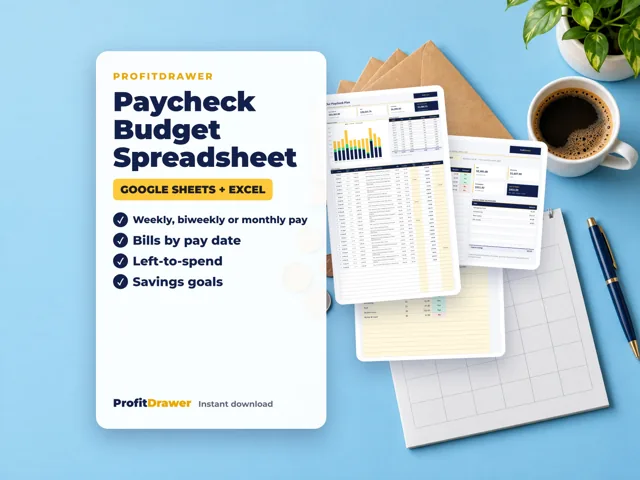
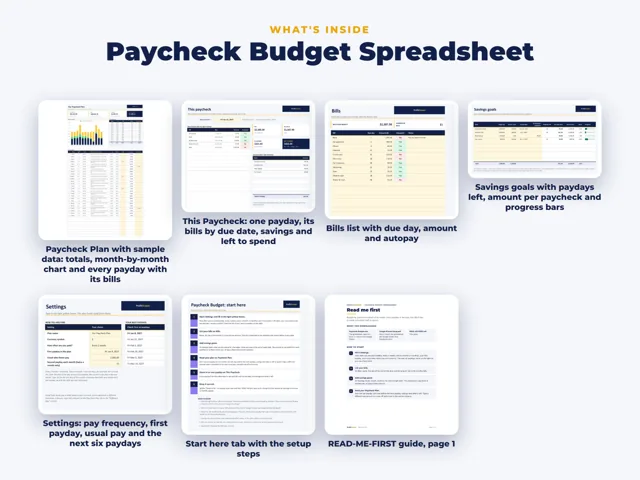
Budget each paycheck instead of each month: list your bills by due date, assign each one to the paycheck that arrives before it, then split savings and spending across both checks. Paid every two weeks, you get 26 paychecks in most years, so two months a year bring a third check. ProfitDrawer's paycheck budget spreadsheet lists every payday and the bills due before the next one, with what is left to spend.
Step by step:
- Write your take-home pay per check, not your salary.
- List every bill with its amount and due date.
- Assign each bill to a paycheck: the check that lands before the due date covers it. The Consumer Financial Protection Bureau notes that running short at month end can mean bill timing and income do not match.
- Balance the two checks. If rent makes the first check much heavier, move other bills to the second check, or ask a company for a new due date. The CFPB's cash flow calendar suggests that, and splitting a large payment, such as $700 rent paid as $350 on the 1st and 15th, if allowed.
- Split monthly costs like groceries and fuel in half per check.
- Put savings first on each payday, then flexible spending.
- Plan the extra paychecks: since your bills are covered by two checks a month, send the third check to savings, debt or yearly bills.
The paycheck budget spreadsheet handles weekly, every 2 weeks, twice a month or monthly pay, up to 30 bills and up to 10 savings goals.
Source: Building your savings? Start with small goals (Consumer Financial Protection Bureau) · Updated
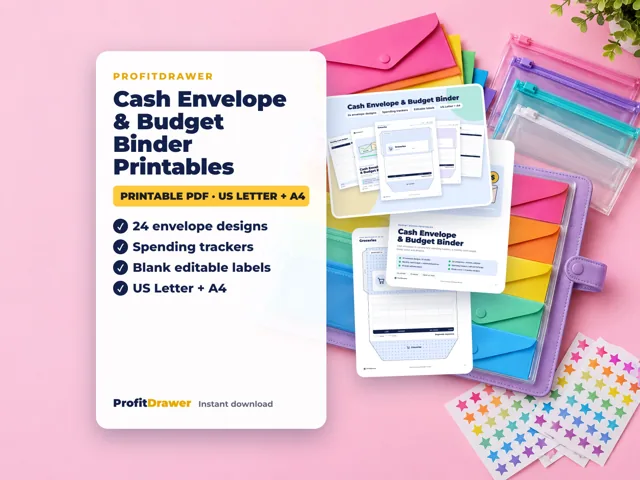
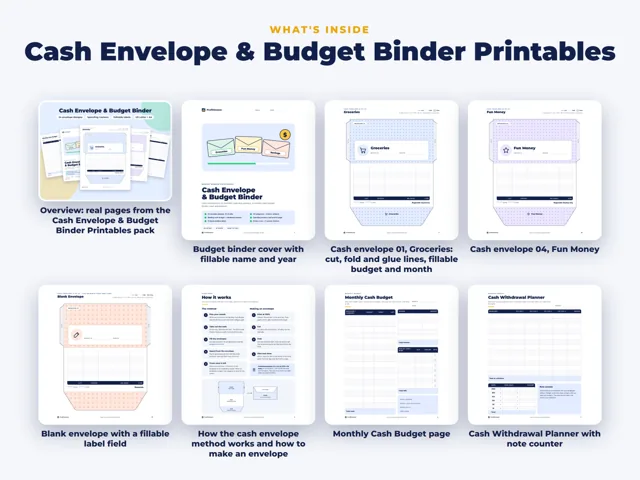
Tools and spreadsheets for this
Related questions
All questions on ProfitDrawer Answers →
General information, not tax, legal or financial advice. Check the rules for your state and your situation.