
To start a pressure washing business, pick a few services you can do well (driveways, house washing, decks), check your city, county and state for licenses and wash water rules, buy a reliable machine and liability insurance, and set prices that cover your time, chemicals and fuel. Then get your first jobs from neighbors, local groups and door hangers, and track every dollar from day one. Most owners start part time with one truck or trailer and grow from there.
This guide walks you through each step with an example budget, real pricing math and a simple 30-day launch plan.
1. Choose the services you will offer
Pressure washing covers a lot of different work. Starting with a short menu keeps your equipment list small and your quotes simple.
- Flatwork: driveways, sidewalks, patios and pool decks. A surface cleaner makes this fast and even.
- House washing (soft washing): low pressure plus a cleaning solution for vinyl siding, stucco and painted surfaces. High pressure can damage siding and windows, so this is a different technique.
- Decks and fences: wood needs lower pressure and care so you do not raise the grain.
- Roof cleaning: soft wash only, and it adds ladder and fall risk. Many beginners leave this for later.
- Commercial work: storefronts, dumpster pads, gas station aprons and parking areas. These can become regular monthly accounts.
A good beginner mix is driveways, sidewalks and house washing for homeowners. Add commercial routes once you have the equipment and confidence.
2. Check local requirements
Rules differ by place, so treat this as a checklist, not legal advice.
- Business license. Many cities and counties require one. The SBA explains how federal, state and local licenses work and suggests checking your state and local government websites.
- Business name. If you work under a name that is not your own, you may need to register a DBA (doing business as). If you form an LLC, you register with your state.
- Wash water. Some cities and states limit what can run into storm drains, especially water with chemicals, oil or grease. Ask your city or county stormwater office what they expect, and plan for drain covers or water recovery on commercial jobs.
- Contractor or home improvement registration. A few states and cities require this for work on homes. Ask your state licensing office.
- Insurance. General liability insurance protects you if you damage a car, window or plant. Commercial clients often ask for a certificate before you start.
- Tax numbers. You may need a state sales tax permit if your state taxes cleaning services. An EIN from the IRS is free and helps you open a business bank account.
3. Startup costs: an example budget
Your costs will differ based on your area and whether you buy new or used. This example budget, your costs will differ, shows a part-time start and a fuller trailer setup.
| Item | Low (part time) | High (trailer rig) |
|---|---|---|
| Gas pressure washer | $600 | $3,500 |
| Surface cleaner | $150 | $700 |
| Hoses, reels, nozzles, wand | $150 | $600 |
| Soft wash pump or downstream injector | $50 | $1,200 |
| Water tank (for jobs without a spigot) | $0 | $600 |
| Trailer | $0 | $3,000 |
| Chemicals (starting stock) | $100 | $400 |
| Safety gear (boots, gloves, eye and ear protection) | $75 | $200 |
| Business license and registration | $50 | $300 |
| Liability insurance (first payment) | $100 | $500 |
| Marketing (door hangers, yard signs, simple website) | $100 | $600 |
| Total | $1,375 | $11,600 |
Plug your own numbers into the free startup cost calculator to see your total and how many jobs it takes to earn it back.
4. How to price pressure washing jobs
Most owners price flatwork by the square foot and house washing by the size of the house or by the linear foot. Whatever method you use, check the price against what the job costs you and how long it takes.
Worked example: a two-car driveway plus front walk
- Area: 24 ft x 40 ft driveway = 960 sq ft, plus a 4 ft x 30 ft walk = 120 sq ft. Total 1,080 sq ft.
- Your rate: $0.20 per sq ft. Price = 1,080 x $0.20 = $216.
- Your direct costs: chemicals $10 + fuel for the machine $6 + driving 20 miles x $0.40 = $8 + wear on equipment $10 = $34.
- Time: 2 hours including setup and cleanup.
- What is left: $216 - $34 = $182, or $91 per hour before insurance, marketing and taxes.
If that hourly number feels low after you add your fixed costs, raise the rate or set a minimum job price (for example $150) so small jobs still pay. The free price per job calculator does this math for you.
Tips for quoting:
- Measure on a map app or with a measuring wheel before you quote.
- Charge more for oil stains, heavy mildew, two-story houses and long drives.
- Offer a bundle (driveway, walk and house) with a small discount to raise the job size.
5. Get your first customers
You do not need a big budget. You need people to see clean results.
- Before and after photos. Wash your own driveway or a friend's for free and take sharp photos. Half clean, half dirty photos get attention.
- Door hangers in one neighborhood. After a job, drop hangers on the 20 houses nearest to it. Neighbors can see the clean driveway.
- Local online groups and a free business profile on map search, with photos and reviews.
- Real estate agents and property managers need clean exteriors before listings and move-ins.
- Small commercial routes. Restaurants and shops may want monthly sidewalk or dumpster pad cleaning, which gives steady income.
Ask every happy customer for a review and a referral. Reviews with photos help you win the next job.
6. Track money, miles and taxes
A pressure washing business can look busy and still lose money if chemical, fuel and repair costs creep up. Keep it simple:
- Open a separate bank account for the business.
- Record every job, every expense and every business mile the day it happens. Our guide on how to track business expenses shows a simple weekly routine.
- Track your miles. The IRS business standard mileage rate for 2026 was 72.5 cents per mile from January to June and 76 cents per mile from July to December. Check the IRS standard mileage rates page for the 2027 rate.
- Set money aside for taxes. As a self-employed person you generally pay self-employment tax (15.3% for Social Security and Medicare) on top of income tax, and you may need to make quarterly estimated payments if you expect to owe $1,000 or more. See the 2027 small business tax deadlines, and estimate your set-aside with the free self-employed tax calculator.
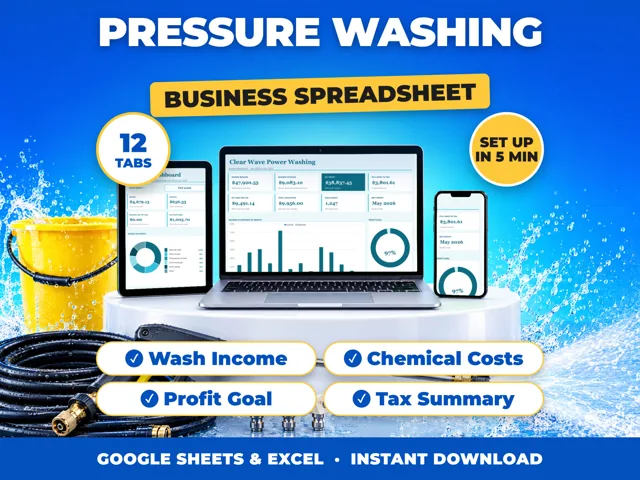
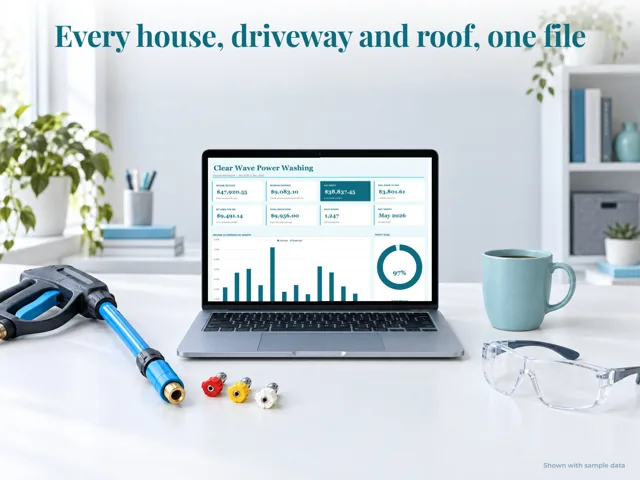
You can track income, expenses, mileage, unpaid invoices and a tax summary in a spreadsheet like the pressure washing business spreadsheet. It works in Excel and Google Sheets, with a dashboard, monthly summary and quarterly view so you can see which services make the most money. It does not create quotes or schedule jobs, so keep using your phone or a calendar for that.
This is general information, not tax or legal advice. A local tax professional can help with your exact situation.
7. A simple 30-day launch plan
Days 1 to 7: plan and register
- Pick your three starting services and your service area.
- Check city, county and state licenses and wash water rules.
- Register your name if needed, get a free EIN and open a business bank account.
- Get liability insurance quotes.
Days 8 to 14: equipment and practice
- Buy or rent your machine, surface cleaner, hoses and chemicals.
- Practice on your own property and two or three friends' driveways.
- Take before and after photos of every practice job.
Days 15 to 21: prices and marketing
- Set your per square foot rates and a minimum job price.
- Print door hangers and a yard sign.
- Set up a free business profile with your photos.
- Set up your bookkeeping spreadsheet and enter your startup costs.
Days 22 to 30: first paid jobs
- Hand out hangers in two neighborhoods.
- Contact five real estate agents or property managers.
- Book and finish your first paid jobs, ask for reviews and log every dollar and mile.
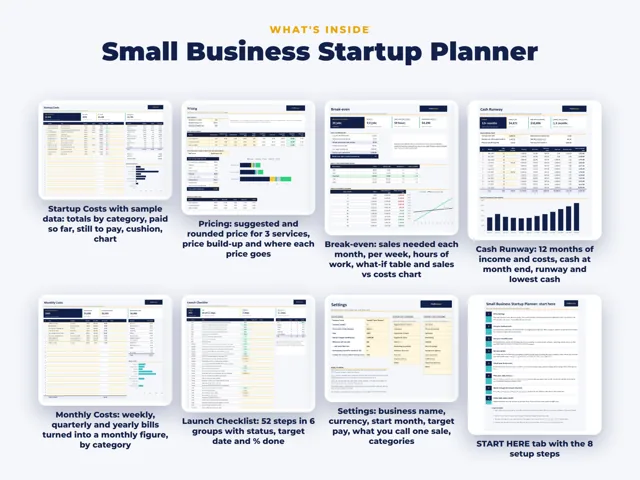
Planning the whole thing first? The small business startup planner helps you lay out startup costs, pricing and break-even before you spend money.
Key takeaways
- Start with a short menu: driveways, walks and house washing.
- Check local licenses and wash water rules before your first paid job.
- Price by the square foot, but check each quote against your real costs and time.
- Photos, door hangers and reviews win the first customers.
- Track every job, expense and mile so you know what you really earn and what to set aside for taxes.
Tools for this


Questions people ask
Do I need a license to start a pressure washing business?
It depends on where you work. Many cities and counties ask for a general business license, and some places have rules about where wash water can drain or require a contractor or home improvement registration. Call or check the websites of your city, county and state before you take paid jobs.
How much does it cost to start a pressure washing business?
It depends mostly on the machine you buy. A part-time start with a quality gas pressure washer, surface cleaner, hoses and chemicals can land in the low thousands, while a trailer rig with a water tank and a hot water unit costs much more. Use the example budget in this guide and the free startup cost calculator to price your own list.
How much does a pressure washing business make?
It depends on your prices, how many jobs you book and your costs. For example, if you do 12 jobs a month at $250 each, that is $3,000 in sales; if chemicals, fuel and wear cost $35 a job, you keep $2,580 before insurance, marketing and taxes. Track it month by month so you know your real number.
What do I need to start a pressure washing business?
You need a reliable pressure washer, a surface cleaner, hoses, nozzles, chemicals and safety gear, plus a way to get it all to the job. On the business side you need any local licenses, liability insurance, a separate bank account and a simple way to track income, expenses and miles.
Should I use a gas or electric pressure washer for a business?
Most people who wash driveways, decks and house siding for pay use gas machines because they offer more flow and do not need an outlet. Small electric units can work for light patio jobs but slow you down on big flat surfaces. Look at the gallons per minute as well as the pressure, because flow does much of the cleaning.
Sources
General information, not tax, legal or financial advice. Check the rules for your state and your situation.