
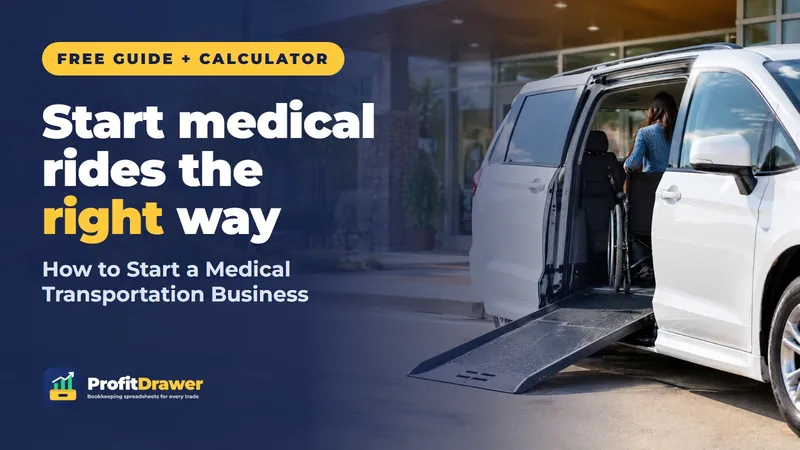
To start a medical transportation business, decide who you will drive (ambulatory riders, wheelchair users or both), choose who will pay (Medicaid, facilities or private pay riders), and get a safe, suitable vehicle with commercial auto insurance. Then register your business, check what your city, county, state and state Medicaid agency require, and line up your first clients from clinics, senior communities and families. Many owners start with one van they drive themselves. Price every trip from your real costs and log every mile from day one.
This guide walks you through each step, with an example budget, a worked trip price and a 30-day launch plan.
1. Choose your riders and your payers
Non-emergency medical transportation (NEMT) means rides to and from medical care for people who do not need an ambulance. Before you buy anything, decide two things.
Who you will drive:
- Ambulatory riders: people who can walk to the vehicle with little help. A clean minivan or sedan can work.
- Wheelchair riders: you need a wheelchair accessible van with a ramp or lift and proper securement straps.
- Door-through-door help: some riders need help from inside their home to inside the clinic. This takes more time per trip, so price it that way.
Who will pay:
- Medicaid trips. Your state runs its Medicaid ride program, and rates and rules come from the state program.
- Facilities. Dialysis centers, rehab clinics, assisted living and adult day programs sometimes contract for regular rides.
- Private pay. Riders and families who pay you directly, often for appointments, hospital discharges or trips Medicaid does not cover.
Some owners also offer non-medical transportation, such as rides to errands or senior outings. That can fill gaps between medical trips, but check the rules and insurance for each type of ride.
2. Check Medicaid and local requirements
Every state and city has its own rules, so check with your city, county and state before you carry paying riders. The SBA explains that most businesses need some mix of state and local licenses, and that requirements depend on your activity and location.
What the federal Medicaid page says. Medicaid.gov explains that state Medicaid agencies must assure necessary transportation to and from providers for beneficiaries, and that states choose how they fund and run it. It also says each state plan must have a way to make sure transportation providers and individual drivers meet minimum standards. Those include not being excluded from federal health care programs, drivers holding a valid driver's license, having a process to address violations of state drug laws, and having a process to disclose each driver's driving history to the state Medicaid program.
That means your state Medicaid agency is the place to ask how rides are arranged in your state and how to apply as a transportation provider. Find it through your state's official government website.
Your checklist:
- Pick a business structure. Many start as a sole proprietor; some form an LLC to separate business and personal liability.
- Register your business name with your state, or a DBA with your county.
- Get any city or county business license and ask whether your area licenses for-hire passenger vehicles.
- Get a free EIN from the IRS if you will hire drivers or form a partnership or corporation.
- Buy commercial auto insurance. Your personal policy usually will not cover paid rides. Ask about general liability too.
- Check driver standards your state program and facility clients expect, such as background checks, driving records and training.
3. Work out your startup costs
List one-time costs (vehicle, equipment, filings) apart from monthly costs (insurance, fuel, phone), as the SBA suggests.
Example budget, your costs will differ:
| Item | Low | High |
|---|---|---|
| Vehicle down payment (low: minivan you own) | $0 | $15,000 |
| Wheelchair ramp or lift, securement straps | $0 | $8,000 |
| Commercial auto insurance (first months) | $1,500 | $6,000 |
| Business registration and local licenses | $100 | $800 |
| Background checks, driving records, first aid and CPR training | $200 | $1,000 |
| Phone and scheduling tools | $100 | $500 |
| Marketing (flyers, cards, visits to clinics) | $100 | $800 |
| Cash buffer for repairs and slow weeks | $1,000 | $4,000 |
| Total | $3,000 | $36,100 |
Put your own quotes into the free startup cost calculator. If you need a loan for a van, the coming-soon small business plan template helps you lay out your plan and numbers for a lender.
4. Price each trip from your real costs
For Medicaid trips, the rate comes from your state program, so you do not set it. For private pay and facility trips, you do. Common setups are a base pickup fee plus a rate per mile, with extra for wait time or wheelchair service. Whatever you choose, check it against your costs.
Worked pricing example (example numbers only):
- A round trip to a clinic: 30 total miles and 1.5 hours of your time, including the wait
- Your target pay: $20 an hour, so 1.5 x $20 = $30
- Van running cost: 30 miles x $0.60 a mile = $18
- Share of insurance per trip: $8
- Share of phone, cleaning and marketing: $5
- Cost before profit: $30 + $18 + $8 + $5 = $61
- Add a 20% markup for taxes and slow days: $61 x 1.20 = $73.20
- Round to a price of $75 per round trip
Wheelchair trips take longer to load and secure, so time a few and price them separately. The free price per job calculator does this arithmetic for you.
To see what a month could look like, take the same example: 4 trips a day x 22 working days = 88 trips. 88 x $75 = $6,600 in sales before fuel, insurance, van payments and taxes. Your real results depend on how full your schedule is.
5. Find your first riders and contracts
- Visit local clinics and facilities. Dialysis centers, physical therapy offices, senior living communities and adult day programs. Ask who handles rides today and what problems they have.
- Hospital discharge planners and social workers often need someone reliable for patients going home.
- Senior centers and faith groups. Leave cards and offer a short talk about safe rides.
- A free business listing on map and search results, with your service area and whether you take wheelchairs.
- Your state Medicaid agency. Ask how to become a provider and what the application needs.
Be on time, every time. In this business, one missed pickup can mean a missed treatment, and facilities remember it.
6. Track every mile, trip and payment
Keep business money separate from personal money with a business bank account.
- Income by payer, and which invoices are still unpaid.
- Expenses such as fuel, insurance, repairs, cleaning supplies and phone.
- Mileage for every trip, including empty miles. The IRS business standard mileage rate for 2026 was 72.5 cents a mile from January to June and 76 cents a mile from July to December. Check irs.gov for the 2027 rate, and ask a tax professional whether the standard rate or actual expenses fits your van.
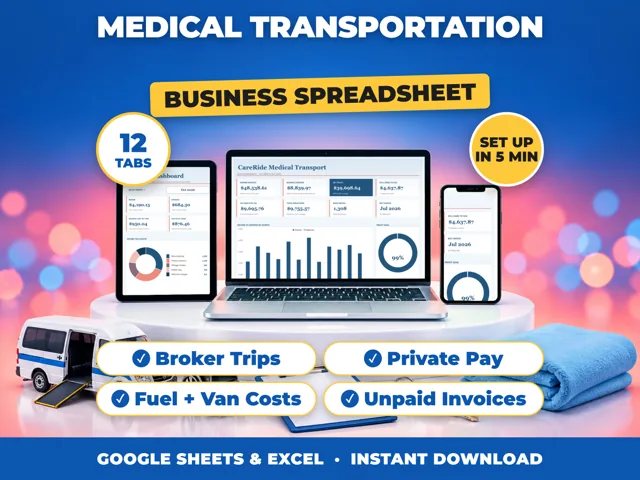
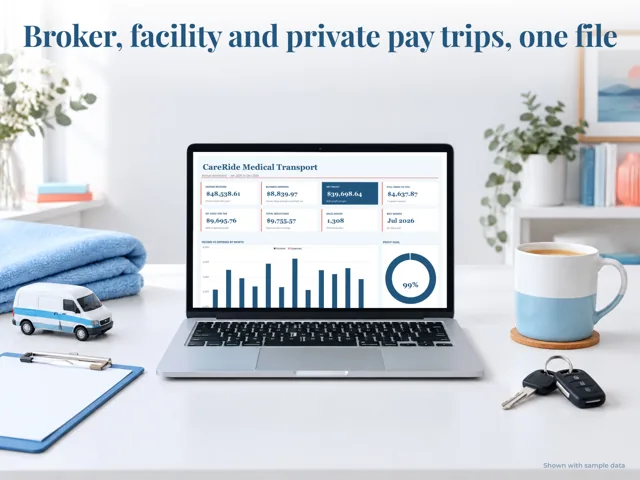
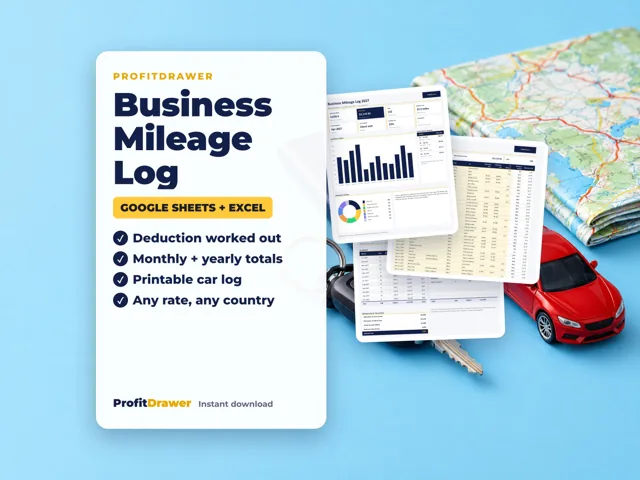
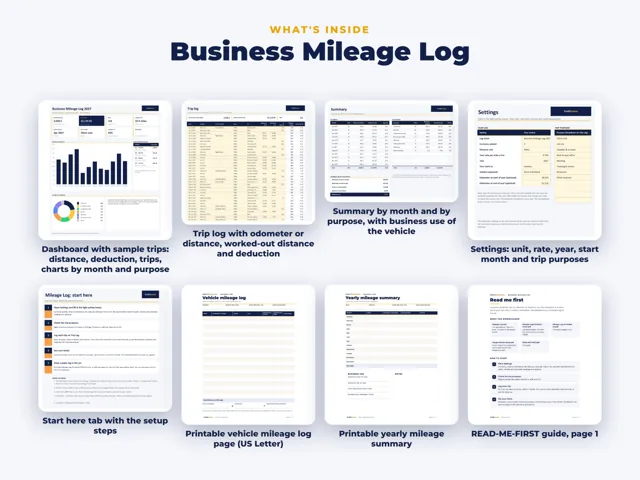
A business mileage log with a printable sheet keeps a record in the van. The medical transportation business spreadsheet has a START HERE tab, Settings, dashboards, Income, Expenses, Mileage, Unpaid Invoices, Top Clients, a Monthly Summary, Quarterly totals and a Tax Summary, in Excel and Google Sheets. It does not schedule rides or send invoices.
Taxes. As a self-employed owner you pay self-employment tax of 15.3% on net earnings, plus income tax. The IRS says individuals generally must make estimated payments if they expect to owe $1,000 or more when they file. See our small business tax deadlines for 2027 and the free self-employed tax calculator. This is general information, not tax or legal advice.
7. A simple 30-day launch plan
Days 1 to 7: decide and register - Choose your riders, service area and payers. - Register your business and ask your city or county about licenses. - Contact your state Medicaid agency about provider enrollment. - Open a business bank account.
Days 8 to 14: vehicle and insurance - Inspect or buy your vehicle. Add a ramp or lift if you will carry wheelchairs. - Get commercial auto insurance quotes and bind a policy. - Finish first aid, CPR and securement training.
Days 15 to 21: numbers and outreach - Work out your cost per mile and your trip prices. - Visit 15 clinics, senior communities and discharge planners. - Set up your bookkeeping spreadsheet and mileage log.
Days 22 to 30: first trips - Run your first trips. Write down real times, miles and wait times. - Adjust prices if trips take longer than planned. - Ask happy riders and facilities for referrals.
Doing deliveries for clinics and labs instead of rides? Read how to start a courier business.
Common mistakes to avoid
- Buying a costly van before you know your payers. Talk to your state agency and local facilities first.
- Driving on a personal auto policy. Paid rides need commercial coverage.
- Pricing only the loaded miles. Empty miles and wait time cost you too.
- Missing pickups. Reliability is what keeps contracts.
- Not saving for taxes. Set aside part of every payment.
Start with one vehicle, learn your real cost per trip, and keep clean records. That way you will know which trips and clients actually pay before you add a second van.
Tools for this





Questions people ask
How much does it cost to start a medical transportation business?
It depends mostly on the vehicle. If you already own a reliable minivan, your main costs are insurance, registration, driver checks and training. Buying a wheelchair accessible van costs far more. Our example budget runs from about $3,000 to $36,100, but your costs will differ, so price your own list with the free startup cost calculator.
How much does a medical transportation business make?
There is no single number, because it depends on how many trips you run and who pays for them. For example, 4 private pay trips a day at $75, for 22 days, brings in $6,600 a month before fuel, insurance, van costs and taxes (4 x 22 x $75). Medicaid trip rates are set through your state program, so ask your state Medicaid agency.
How do I start a NEMT business with one van?
Many owners start with one van and drive the trips themselves. Register the business, get commercial auto insurance, check what your state Medicaid agency and your city or county require, and line up a few private pay clients or facility contracts. Add a second van and driver only when your first one is busy.
What do I need to start a medical transportation business?
You need a suitable vehicle, commercial auto insurance, a business registration and any local license, and a clean driving record. If you want Medicaid trips, you also need to meet your state's provider requirements. Training in first aid, CPR and safe wheelchair securement is a common expectation from clients and facilities.
Is non-medical transportation the same as NEMT?
Not quite. Non-medical transportation usually means rides for errands, social visits or senior outings, often paid by the rider or family. NEMT means rides to and from medical care, and Medicaid NEMT follows your state's program rules. Some businesses offer both, but check the rules for each before you advertise.
Sources
- Assurance of Transportation (Medicaid.gov)
- Launch your business: Apply for licenses and permits (U.S. Small Business Administration)
- Plan your business: Calculate your startup costs (U.S. Small Business Administration)
- Get an employer identification number (IRS)
- Self-employment tax (Social Security and Medicare taxes) (IRS)
- Estimated taxes (IRS)
- Standard mileage rates (IRS)
General information, not tax, legal or financial advice. Check the rules for your state and your situation.