
To start a laundromat business, decide whether you will buy an existing store, build a new one or start smaller with wash and fold or pickup service. Then study the location, check zoning and permits with your city, county and state, work out the full cost of machines, lease and utilities, and price each cycle so it covers water, power and repairs. Before you sign anything, build a simple budget and a monthly profit estimate.
This guide covers the steps, an example budget, a worked pricing example and a 30-day plan for getting started.
1. Choose your laundry business model
"Laundromat" can mean very different businesses. Pick the one that fits your money and time.
- Buy an existing laundromat. You get customers, machines and a lease right away. The risk is overpaying or inheriting old machines.
- Build a new store. You choose the location, layout and machines. It takes the most money and time before you open.
- Wash and fold service. Customers drop off laundry and you charge by the pound. You can run this inside a laundromat you own, or partner with one.
- Pickup and delivery. You collect laundry from homes and businesses and bring it back clean. Lower startup cost; the work is driving, scheduling and folding.
- Commercial accounts. Gyms, salons, short-term rentals and small clinics often need towels and linens washed on a schedule.
Many owners start with one model and add others. A laundromat with wash and fold plus a few commercial accounts earns from several sources.
2. Study the location and the numbers
For a self-service store, location is most of the business. Look for:
- Lots of renters nearby, since many apartments do not have in-unit washers.
- Easy parking and visible signs.
- Few competing laundromats nearby, or competitors with old, broken machines.
- A lease long enough to pay back your investment, with clear terms on repairs.
If you are buying, ask the seller for real records: bank statements, utility bills for water, sewer, gas and electric, and repair receipts. Compare the water bill with the sales the seller claims. Water use rises and falls with the number of washes, so the two should line up.
3. Check permits and local requirements
Laundromats touch plumbing, gas, electrical and wastewater, so local rules matter.
- Zoning and business license. Ask your city or county whether a laundromat is allowed at the address and what license you need. The SBA explains how state and local licenses work.
- Building, plumbing and gas permits. New installs and remodels usually need permits and inspections.
- Wastewater and sewer. Some water utilities have rules or fees for commercial laundry discharge. Call your local utility.
- Business registration and EIN. Register an LLC or DBA with your state or county, and get a free EIN from the IRS.
- Sales tax. Some states tax laundry services or vending sales. Check with your state revenue department.
- Insurance. Property, general liability and equipment coverage. If you hire, check your state's workers' compensation rules.
4. Startup costs: an example budget
This example budget, your costs will differ, compares a small wash and fold and delivery start with buying a small existing store. Real laundromat prices vary widely by city and machine age, so get quotes and have an accountant review any purchase.
| Item | Low (wash and fold / delivery) | High (buy small existing store) |
|---|---|---|
| Purchase price or down payment | $0 | $80,000 |
| Commercial washers and dryers (or upgrades) | $0 | $40,000 |
| Lease deposit and first month | $0 | $8,000 |
| Repairs, plumbing and electrical work | $0 | $10,000 |
| Folding tables, carts, scales, bags | $400 | $3,000 |
| Delivery vehicle setup (signs, racks) | $300 | $2,000 |
| Licenses, permits, registration | $100 | $2,000 |
| Insurance (first payment) | $300 | $3,000 |
| Signs, website and opening marketing | $300 | $3,000 |
| Working capital for 3 months of bills | $1,500 | $20,000 |
| Total | $2,900 | $171,000 |
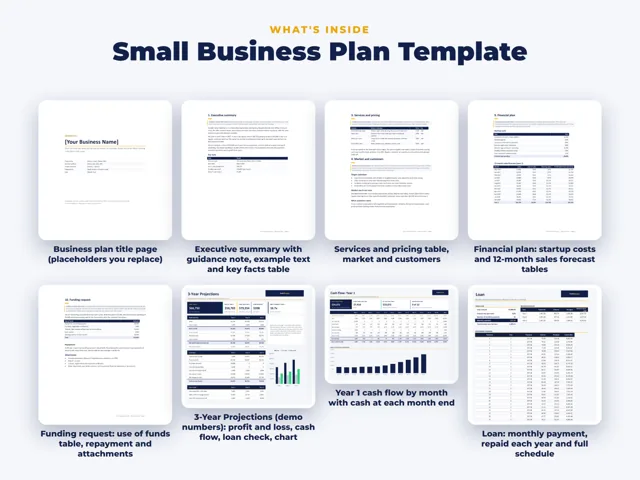
Put your own quotes into the free startup cost calculator. If you need a loan, a small business plan template helps you present your numbers to a lender.
5. How to price washes, dries and wash and fold
Self-service: check each cycle against its cost.
Worked example for one large front load washer cycle:
- Water and sewer: 25 gallons at $0.015 per gallon = $0.38
- Hot water heating: $0.30
- Electricity for the machine: $0.07
- Repairs and parts set aside: $0.40
- Cost per cycle: $1.15
- If your price is $5.00, each cycle brings in $5.00 - $1.15 = $3.85 toward rent, staff and profit.
Your local utility rates will change this math, so use your own bills.
Monthly check. Say your store does 1,800 wash cycles at $5.00 and 1,600 dryer cycles at $2.00:
- Sales: (1,800 x $5.00) + (1,600 x $2.00) = $9,000 + $3,200 = $12,200
- Costs: rent $3,500 + utilities $3,000 + repairs $600 + staff $2,000 + insurance and other $700 = $9,800
- Left before taxes: $12,200 - $9,800 = $2,400
Wash and fold: price by the pound. If you charge $1.75 per pound with a 15 pound minimum, a 20 pound bag is 20 x $1.75 = $35. If supplies and utilities cost $5 and folding takes 40 minutes, check that the rest covers your labor at the hourly rate you want.
6. Get customers through the door
- Clean, working machines and good lighting. Broken machines send people elsewhere.
- A free business profile on map search with photos, hours and prices. Ask regulars for reviews.
- Flyers at nearby apartment buildings, college housing and community boards.
- Wash and fold offers for busy families: first order discount or free pickup.
- Commercial accounts. Visit gyms, salons, spas, short-term rental hosts and small restaurants with a simple price sheet.
7. Track utilities, income and taxes
A laundromat's profit hides in its utility bills and repairs. Watch them monthly.
- Record cash, card and app sales separately, and count coin or card machine collections on a set schedule.
- Log every utility bill, repair and supply purchase. See how to track business expenses.
- Compare water use with wash sales each month. A big gap can point to a leak or a sales problem.
- Keep records as long as the IRS requires. The general rule is 3 years, and employment tax records at least 4 years.
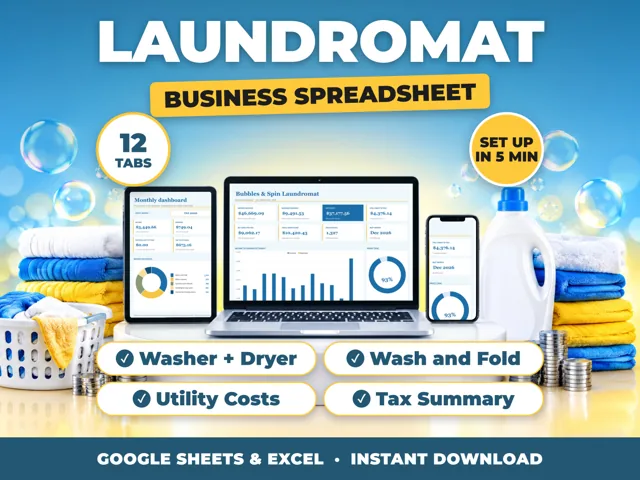
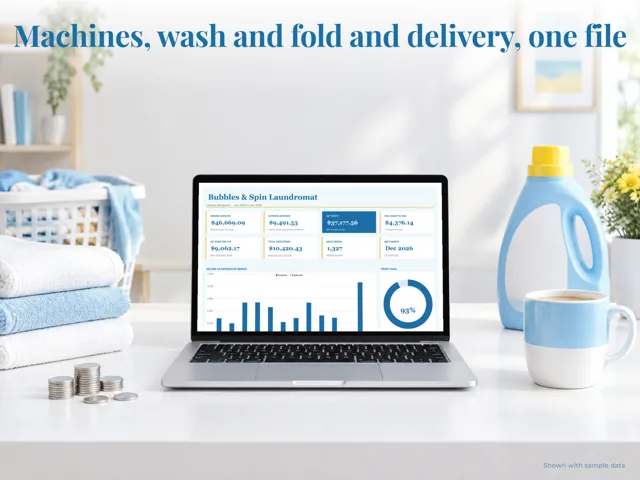
You can track income, expenses, mileage for pickup routes, unpaid invoices for commercial accounts and a tax summary in a spreadsheet like the laundromat business spreadsheet, with a dashboard, monthly summary and quarterly view. It works in Excel and Google Sheets. It does not manage machines, staff schedules or payroll.
If you run the business as a sole proprietor or single-member LLC, you report profit on Schedule C and may owe self-employment tax and quarterly estimated taxes. See the 2027 small business tax deadlines and the free self-employed tax calculator. This is general information, not tax or legal advice.
8. A 30-day plan to get started
Week 1: model and research
- Choose your model: buy, build, wash and fold or delivery.
- Visit five laundromats near your target area at busy times. Count machines and customers.
- Call your city about zoning and permits.
Week 2: numbers
- Get quotes for machines, rent and utilities, or request records from sellers.
- Fill in the example budget with real numbers.
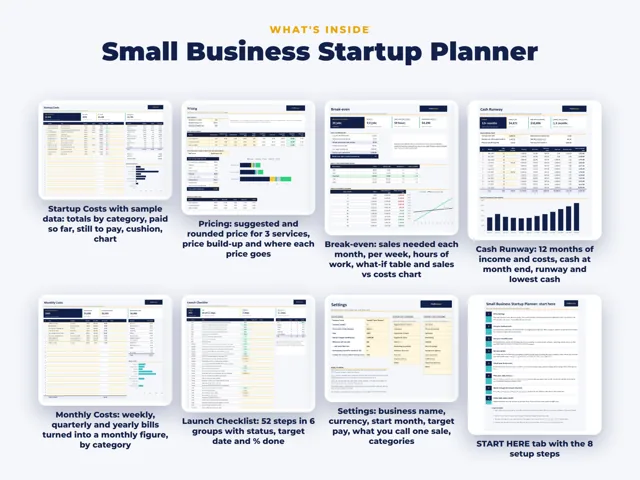
- Plan your first year with the small business startup planner.
Week 3: set up
- Register the business, get your EIN and open a business bank account.
- Line up insurance and any loan meetings.
- Set up your bookkeeping spreadsheet.
Week 4: first customers
- Start with wash and fold or pickup customers while the store plan moves forward.
- Hand out flyers and set up your map profile.
- Log every sale, bill and mile from day one.
Key takeaways
- Pick your model first: buying, building, wash and fold or pickup and delivery.
- Location and lease terms make or break a self-service store.
- Check zoning, plumbing, gas and wastewater rules before you sign.
- Know your cost per cycle and per pound, and watch utility bills every month.
Tools for this
Questions people ask
How much does it cost to start a laundromat business?
It depends on whether you buy an existing laundromat, take over a lease with old machines or build a new store. Buying or building usually takes a large amount of money for machines, plumbing, venting and the lease, while a wash and fold service from an existing space costs far less. Work through the example budget in this guide and get real quotes for your space.
How do laundromats make money?
Laundromats earn from self-service washer and dryer cycles, plus extras like wash and fold service, pickup and delivery, vending and commercial accounts. Profit is what is left after rent, water, sewer, gas, electricity, repairs and staff. For example, in the worked example in this guide, $12,200 in monthly sales minus $9,800 in costs leaves $2,400 before taxes.
How do I start a laundromat business with no money?
Opening a store with no money is unlikely, because machines and a lease need cash or a loan. A lower cost start is a wash and fold or pickup and delivery service, where you use a commercial space or partner with an existing laundromat. Some owners also look at SBA backed loans once they have a business plan and some savings.
Can I start a laundry business from home?
Some people run a small wash and fold or pickup service from home, but check your city and county home business rules first. Zoning, water use and business license rules vary. Your home equipment may also wear out quickly under commercial use, so price your service to cover repairs.
Is it better to buy an existing laundromat or build a new one?
Buying gives you customers and history from day one, but you need to check the real numbers, the age of the machines and the lease terms. Building lets you choose the location and equipment, but it takes longer and costs more before any income. Ask for utility bills and bank statements from any seller, not only their own summary.
Sources
General information, not tax, legal or financial advice. Check the rules for your state and your situation.