
To start a junk removal business, get a vehicle that can haul (a pickup with a trailer is enough to begin), check the licenses and hauling rules in your city, county and state, find out what your local transfer station accepts and charges, then price each job by how much of your load it fills. Add insurance, basic moving gear and a few local ads, and your first jobs will usually come from neighbors, landlords and real estate agents. Dump fees and driving are your biggest running costs, so build them into every price. Tracking each job from day one shows you which work really pays.
This guide walks you through each step, with an example budget, a worked pricing example and a 30-day launch plan.
1. Choose the junk removal work you will offer
Decide what you will haul and who you will haul it for:
- Household junk: old furniture, mattresses, appliances, boxes and yard waste. The core of most junk businesses.
- Cleanouts: garages, basements, attics, estates and rental units. Bigger jobs that often fill a whole load.
- Light construction debris: drywall, flooring and cabinets from small remodels. Heavy, so disposal costs more.
- Single-item pickups: one couch or one hot tub. Quick, but set a minimum charge.
- Landlord and realtor work: clearing units after tenants move out or before a listing. Good repeat customers.
Start with household junk and cleanouts. Turn down anything you cannot legally take, such as some chemicals, and learn your local rules first (see step 2).
2. Check licenses, hauling rules and disposal
Rules change from place to place, so check with your city, county and state before you take paid work. Some places require a hauling or waste permit, and larger trucks may fall under commercial vehicle rules. The SBA explains that licenses and permits can come from several levels of government depending on your activity and location.
A simple checklist:
- Pick a business structure. Many haulers start as a sole proprietor. Some form an LLC to separate business and personal liability; a state filing fee applies.
- Register your business name. If you use a name other than your own, most states require a DBA ("doing business as") registration.
- Get a general business license and ask your city or county whether hauling needs its own permit.
- Get an EIN from the IRS if you will hire employees or form a partnership or corporation. It is free on irs.gov.
- Get insurance. General liability insurance covers damage to a client's property. Your vehicle needs commercial or business-use auto coverage, so tell your insurer how you will use it. If you hire helpers, workers' compensation rules apply in most states.
Know where loads can go. Call or visit your local transfer station, landfill and recycling centers. Ask what they accept, how they charge (by weight or by load), their hours and any rules for businesses. Many items, such as metal, cardboard and working furniture, can go to recyclers or donation centers instead, which can lower your dump fees.
Household hazardous waste needs care. The EPA describes household hazardous waste as leftover products that can catch fire, react, corrode or are toxic, such as paints, cleaners, oils, batteries and pesticides. These are mostly regulated by state and local governments and should not go in regular trash. Ask your local solid waste office how such items must be handled, and tell customers up front what you cannot take.
3. Work out your startup costs
List every cost before you spend. The SBA suggests separating one-time costs, such as a trailer and licenses, from monthly costs, such as insurance, phone and fuel.
Example budget, your costs will differ:
| Item | Low | High |
|---|---|---|
| Used dump trailer or vehicle upgrade (if you need one) | $0 | $6,000 |
| Dollies, straps, tarps, gloves and tools | $150 | $500 |
| Business registration and local license or permit | $50 | $500 |
| Liability and business auto insurance (first months) | $150 | $1,200 |
| First disposal fees (money set aside) | $100 | $400 |
| Simple website or booking page, business cards | $0 | $400 |
| Marketing (flyers, truck magnets, local ads) | $50 | $500 |
| Phone and software for the first months | $50 | $150 |
| Total | $550 | $9,650 |
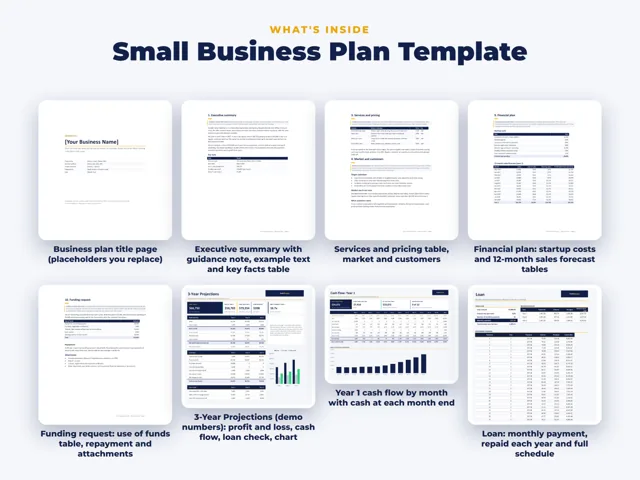
Plug your own numbers into the free startup cost calculator. If you need a loan for a trailer or truck, the coming-soon small business plan template pairs a written plan with a financial projections workbook to show a lender your numbers. For more on vehicle-based businesses, see how to start a box truck business.
4. Price your junk removal jobs
Most junk haulers price by volume: a minimum charge, then a quarter, half, three-quarter or full load. Some add a fee for very heavy items or for items with special disposal fees, such as mattresses or tires. Build each price from your real costs.
Worked pricing example (example numbers only):
- Job: a quarter-load garage cleanout
- Time: 1.5 hours for 2 people, including the dump run
- Labor: 2 people x 1.5 hours x $30 an hour = $90
- Dump fee for a quarter load at your local site: $45
- Driving: 25 miles round trip. Using $0.70 a mile as a rough running cost, 25 x $0.70 = $17.50
- Share of insurance, phone and marketing: about $15 per job
- Cost before profit: $90 + $45 + $17.50 + $15 = $167.50
- Add a 20% markup for taxes and slow weeks: $167.50 x 1.20 = $201
- Round up to a price of $205 for a quarter load
Work out each load size the same way, using your own dump fees and times. The free price per job calculator does this math for you. Check what local haulers advertise so your prices sit in a sensible range.
5. Get your first customers
- Tell everyone you know. Friends, family and neighbors often have a garage that needs clearing.
- Landlords, property managers and real estate agents need fast cleanouts between tenants and before sales.
- A free business profile on map and search listings with photos of your truck and before and after shots.
- Truck magnets or signs so every trip advertises your number.
- Flyers and community groups in neighborhoods near your disposal site, which keeps driving down.
- Partner with movers, cleaners and handymen who see junk every week and can send you jobs.
Answer calls fast and give a clear price range by phone or from a photo. Speed wins many junk jobs.
6. Track your money and plan for taxes
Keep business money separate from personal money from the first job. A separate checking account makes tax time far easier.
Track these every week:
- Income from each job, and which invoices are still unpaid
- Expenses such as dump fees, fuel, helper pay, insurance and advertising
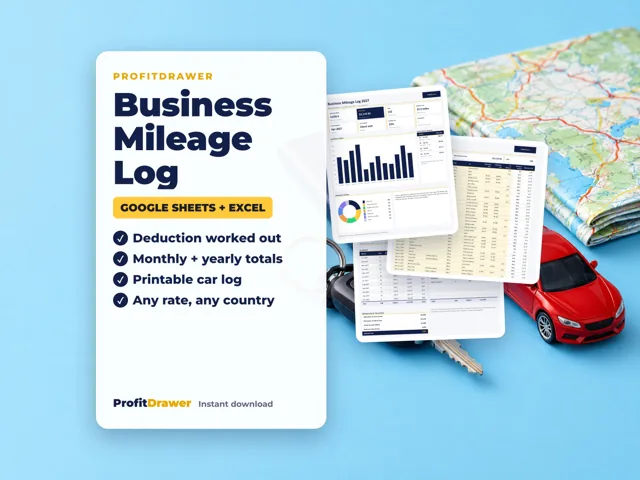
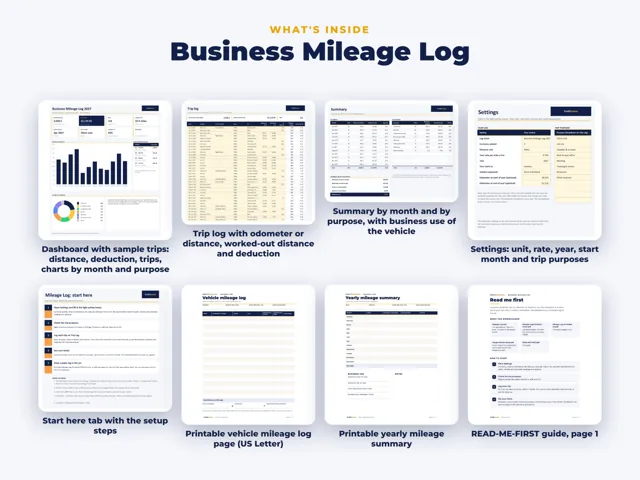
- Mileage for every trip to jobs and disposal sites. The IRS business standard mileage rate for 2026 was 72.5 cents a mile from January to June and 76 cents a mile from July to December. Check the 2027 rate on irs.gov before you file, and ask a tax professional which method fits your vehicle. A mileage log with a printable car log keeps the record in your cab.
As a self-employed hauler you pay self-employment tax of 15.3% (12.4% Social Security plus 2.9% Medicare) once your net earnings reach $400, on top of income tax. If you expect to owe $1,000 or more for the year, the IRS says you generally need to make estimated tax payments. See our guide to small business tax deadlines for 2027 and the free self-employed tax calculator. This is general information, not tax or legal advice.
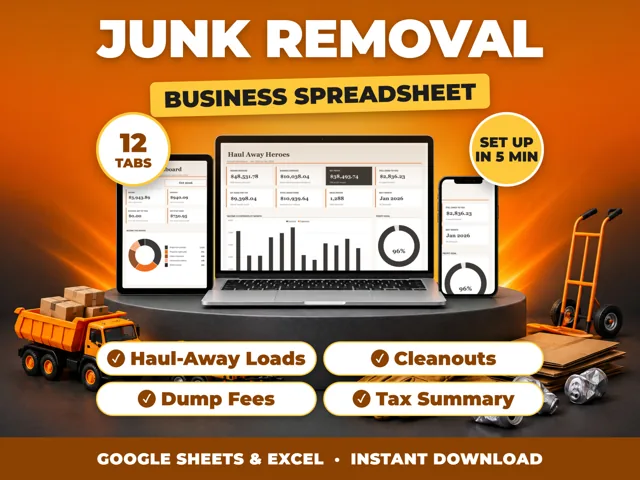
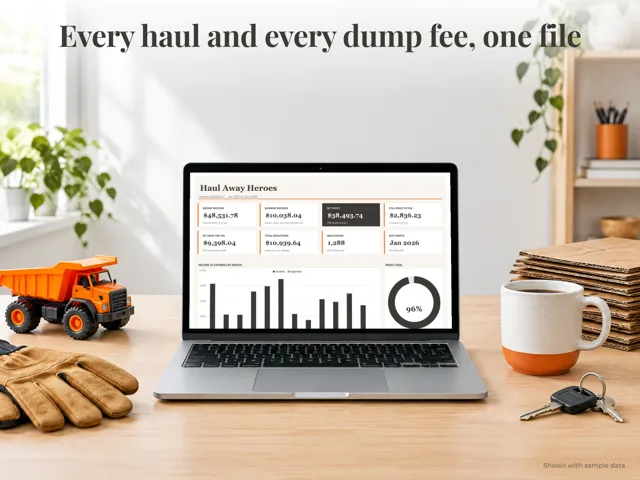
A spreadsheet is enough at the start. The junk removal business spreadsheet has a START HERE tab, Settings, dashboards, Income, Expenses, Mileage, Unpaid Invoices, Top Clients, a Monthly Summary, Quarterly totals and a Tax Summary, in Excel and Google Sheets.
7. A simple 30-day launch plan
Days 1 to 7: decide and register - Choose your services and service area. - Check licenses and hauling permits with your city, county and state. - Register your name if needed, get insurance quotes and open a separate bank account.
Days 8 to 14: set up - Visit your transfer station and recycling centers. Write down fees, hours and what they accept. - Get your trailer or truck ready and buy your gear. - Write your load prices and minimum charge. - Set up your junk removal spreadsheet and mileage log.
Days 15 to 21: tell people - Message 20 people you know and ask for referrals. - Contact five landlords, property managers or real estate agents. - Set up a free business listing and put signs on your vehicle.
Days 22 to 30: haul, learn and adjust - Do your first paid jobs and record time, miles and dump fees for each. - Adjust prices if your costs were higher than planned. - Ask for reviews and photos. - At month end, check income, expenses and profit.
Common mistakes to avoid
- Forgetting dump fees in the quote. Know your local rates before you price.
- Taking items you cannot legally dispose of. Learn the rules for hazardous waste first.
- Lifting without help or gear. Injuries can end the business. Use dollies and a helper for heavy items.
- Mixing personal and business money. It hides your profit and makes taxes harder.
- Not saving for taxes. Put a share of every payment aside.
Junk removal can start with one truck and a trailer. Know your local rules, price every load from real costs and keep clean records, and you will see exactly what each job earns.
Tools for this




Questions people ask
What license do I need to start a junk removal business?
Most places want at least a general business license, and some also require a hauling or waste permit, or have rules for commercial vehicles. Requirements differ a lot by location, so check with your city, county and state before your first job. The SBA page on licenses and permits explains which level of government handles what.
What do I need to start a junk removal business?
You need a pickup with a trailer, a dump trailer or a box truck, plus dollies, straps, tarps, gloves and basic tools. You also need any license your area requires, general liability insurance, a place to legally dispose of loads and a simple way to track income, expenses and miles.
How much does a junk removal business make?
It depends on how many jobs you book and how you price them. For example, 20 jobs a month at an average of $205 brings in $4,100 in sales (20 x $205). Dump fees, fuel, helper pay, insurance and taxes come out of that, so track every job to see your real profit.
How much does it cost to start a junk removal business?
If you already own a suitable truck, you can start with a few hundred dollars for gear, a license, insurance and marketing. Buying a trailer or upgrading a vehicle is the big cost. Our example budget below runs from about $550 to $9,650, but your costs will differ.
Where do junk removal businesses take the junk?
Usually to a local transfer station, landfill or recycling center, plus donation centers for usable items. Each site sets its own fees and rules about what it accepts. Items such as paint, chemicals, batteries and oils are household hazardous waste and need special handling, so check your local rules.
Sources
- Launch your business: Apply for licenses and permits (U.S. Small Business Administration)
- Launch your business: Register your business (U.S. Small Business Administration)
- Plan your business: Calculate your startup costs (U.S. Small Business Administration)
- Household Hazardous Waste (HHW) (EPA)
- Get an employer identification number (IRS)
- Self-employment tax (Social Security and Medicare taxes) (IRS)
- Estimated taxes (IRS)
- Standard mileage rates (IRS)
General information, not tax, legal or financial advice. Check the rules for your state and your situation.