
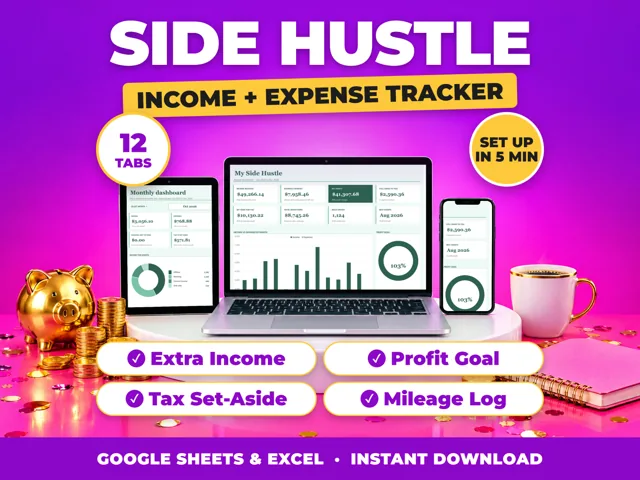
Start small with a service you can deliver in evenings and weekends, keep the business money separate, and plan for taxes your employer does not withhold. For the 2026 tax year, self-employment tax of 15.3% applies once net earnings reach $400. The IRS says employees can raise paycheck withholding with a new Form W-4 instead of paying estimated tax. ProfitDrawer's side hustle tracker keeps side income apart from your job.
Steps that fit around a job:
- Check your employment agreement for rules on outside work or competing with your employer.
- Pick work you can schedule: weekend jobs, evening clients, or products you make ahead.
- Register lightly. Many people start as a sole proprietor; check city and county licenses. An EIN from the IRS is free.
- Open a separate account so business money never mixes with your paycheck.
- Keep startup spending low and reinvest early income before buying better gear.
- Record every sale, expense and mile weekly, so you know whether it actually makes money.
Taxes on side profit (2026 tax year, filed in 2027):
- Self-employment tax: 15.3% (12.4% Social Security plus 2.9% Medicare) when net earnings are $400 or more.
- Estimated tax: generally required if you expect to owe $1,000 or more, unless you increase withholding at your job with a new Form W-4.
The free self-employed tax calculator helps estimate how much to set aside. General information, not tax advice.
Source: Estimated taxes (IRS) · Updated
Tools and spreadsheets for this

Related questions
- Do I have to file taxes if my side business made less than $400?
- Do I have to pay quarterly estimated taxes in my first year of business?
- How much should I set aside for taxes if I am self-employed?
- How do I start a business with no money?
- Do I need a separate bank account for my small business?
- How do I build a budget that includes my side income?
All questions on ProfitDrawer Answers →
General information, not tax, legal or financial advice. Check the rules for your state and your situation.