
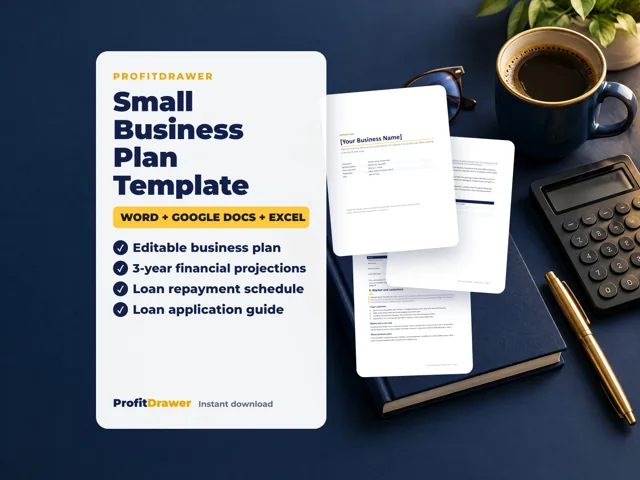
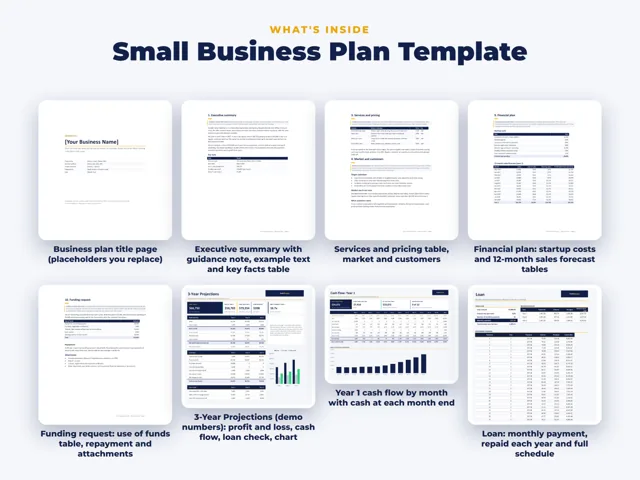
Prepare before you apply: the SBA says a new business's loan eligibility is typically based on the owner's personal credit score, and it advises having a business plan, expense sheet and financial projections. Then use the SBA's Lender Match to find lenders offering SBA-guaranteed loans, such as microloans up to $50,000 or 7(a) loans up to $5 million. ProfitDrawer's business plan template includes a loan repayment schedule.
How SBA loans work: the SBA does not hand you the money. Approved lenders make the loan and the SBA guarantees part of it, which lowers the lender's risk. For 7(a) loans the SBA says you always work directly with your lender.
Options the SBA lists:
| Program | Amount | Notes |
|---|---|---|
| Microloan | Up to $50,000 | Average about $13,000; repayment term up to 7 years; made by nonprofit intermediary lenders |
| 7(a) | Up to $5 million | Main SBA program for long term financing |
| 504 | Varies | Long term, fixed rate financing through Certified Development Companies |
Steps:
- Check your personal credit; the SBA says poor credit history is one of the main reasons small business loan applications are declined.
- Write a business plan with startup costs and projections.
- Know how much you need and how you will repay it.
- Use Lender Match or contact your local SBA district office.
- Compare terms from more than one lender.
General eligibility includes operating for profit in the U.S., meeting SBA size standards and showing ability to repay. Lenders set their own requirements. General information, not financial advice.
Source: Fund your business (U.S. Small Business Administration) · Updated
Tools and spreadsheets for this
Related questions
All questions on ProfitDrawer Answers →
General information, not tax, legal or financial advice. Check the rules for your state and your situation.