
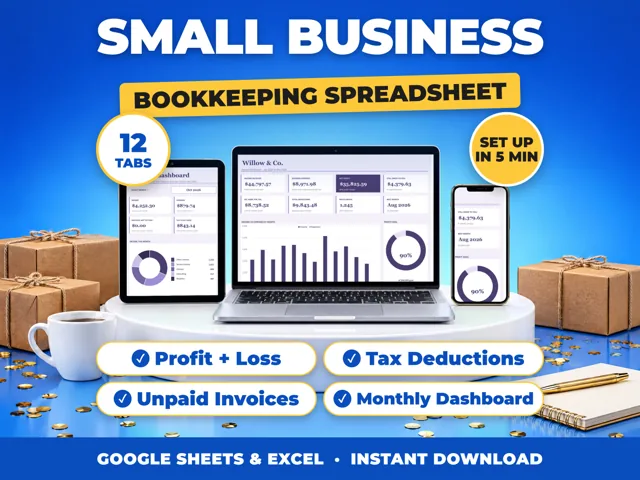
A single-member LLC that has not elected to be taxed as a corporation is a disregarded entity, so if the owner is an individual, the business income and expenses go on Schedule C with the owner's Form 1040. For the 2026 tax year, that return is due April 15, 2027. ProfitDrawer's bookkeeping spreadsheets total income and expenses by category on a Tax Summary tab, which gives you clean figures for Schedule C.
Steps for the 2026 tax year (filed in 2027):
- Report the LLC's income and expenses on Schedule C (or Schedule E or F if those apply).
- If net earnings from self-employment are $400 or more, figure self-employment tax on Schedule SE.
- Pay estimated tax during the year if you expect to owe $1,000 or more.
- File by April 15, 2027, or extend to October 15, 2027 with Form 4868. An extension gives more time to file, not to pay.
Where a single-member LLC differs:
- If the LLC has employees, it must file employment tax returns using the LLC's own name and EIN.
- An LLC with no employees and no excise tax liability does not need an EIN for federal tax, but it can get one to open a bank account or if state law requires it.
- On a Form W-9, a disregarded LLC owned by an individual gives the owner's SSN or EIN, not the LLC's EIN.
- The LLC can elect to be treated as a corporation by filing Form 8832, which changes the returns it files.
State LLC fees and filings are separate. General information, not tax advice.
Source: IRS: Single member limited liability companies · Updated
Tools and spreadsheets for this


Related questions
- What is the difference between a sole proprietorship and an LLC?
- What is Schedule C and who files it?
- Is the money I take out of my LLC taxable?
- When are small business taxes due in 2027?
- How do I get an EIN for my business and does it cost anything?
- What is self-employment tax and how much is it in 2026?
All questions on ProfitDrawer Answers →
General information, not tax, legal or financial advice. Check the rules for your state and your situation.