
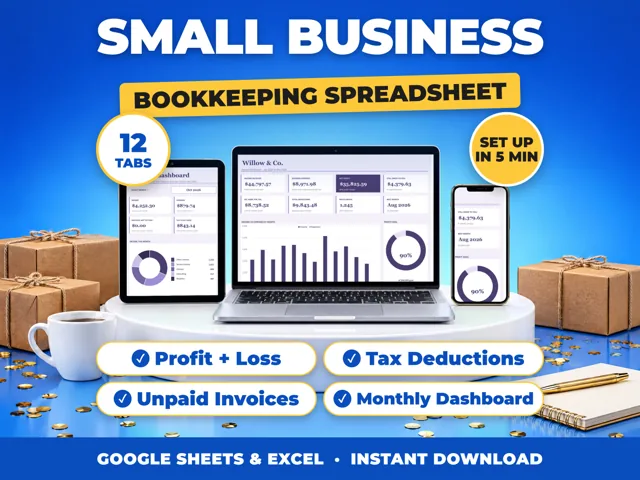
Often, yes. If you are self-employed with a net profit, you may deduct medical, dental, vision and qualified long-term care premiums for yourself, your spouse, your dependents and a child under age 27. For the 2025 tax year, it goes on Schedule 1 (Form 1040), line 17, not Schedule C, and not for months you could join an employer-subsidized plan. In a ProfitDrawer bookkeeping spreadsheet, a category marked non-business keeps premiums out of business profit.
Conditions (Instructions for Form 7206, 2025):
- You had a net profit on Schedule C or Schedule F, were a partner with self-employment earnings, or were a more-than-2% S corporation shareholder paid wages by the corporation.
- The plan is established under your business. For Schedule C filers, the policy can be in the business's name or your own name.
- You cannot count any month you were eligible to take part in a subsidized plan through your employer, your spouse's employer, or the employer of a dependent or of your child under 27.
- The deduction is subject to a net earnings limit from the business the plan is established under.
- Medicare premiums you pay voluntarily can count.
Use Form 7206 instead of the simpler worksheet if you have more than one source of self-employment income, file Form 2555, or are using long-term care premiums. If the plan came from the Health Insurance Marketplace and you claim the premium tax credit, see Form 8962 and Publication 974.
You can take this deduction even if you do not itemize. General information, not tax advice.
Source: IRS Instructions for Form 7206 (2025) · Updated
Tools and spreadsheets for this

Related questions
All questions on ProfitDrawer Answers →
General information, not tax, legal or financial advice. Check the rules for your state and your situation.