
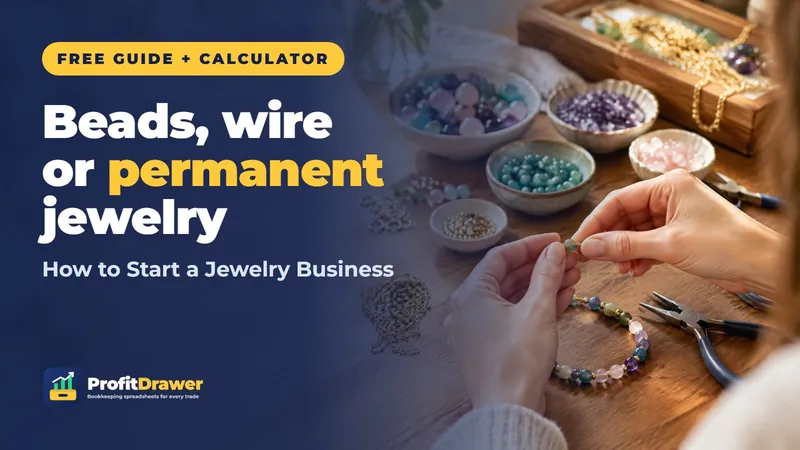
To start a jewelry business, choose one style you can make well and repeat, such as beaded bracelets, wire-wrapped pendants or simple chain necklaces, and decide where you will sell it first. Register your business, check local license and sales tax rules, and price every piece from its materials, your time, fees and a profit. Many makers start from home with a small budget and grow by adding styles that sell. If you want a service you can take to events, permanent jewelry is another route, covered below.
This guide walks you through each step, with an example budget, two worked pricing examples and a 30-day launch plan.
1. Choose your jewelry style and niche
Jewelry is a crowded market, so a clear focus helps buyers remember you. Pick one of these to start:
- Beaded and stretch jewelry: low cost tools and materials, quick to learn.
- Wire-wrapped and stone pieces: pendants and rings with natural stones.
- Chain and charm jewelry: necklaces, anklets and bracelets you can personalize.
- Metalsmithing: stamped, soldered or cast pieces. More tools and training, higher prices.
- Permanent jewelry: a chain welded closed on the customer's wrist, ankle or neck, sold as a service.
Then narrow by customer: bridal parties, minimalist everyday wear, birthstones, pet lovers or a local theme. Make 10 to 20 pieces in one style before you open, so your shop or table looks complete.
2. Check local requirements and register
Rules depend on where you live, so check with your city, county and state before you sell. The SBA says most businesses need a mix of state and local licenses and permits, and that the details depend on your activity and location.
- Pick a structure. Many makers start as a sole proprietor. The SBA notes you do not need to register if you trade under your own legal name, but most states require a DBA for a different name.
- Get a general business license if your city or county requires one, and ask about a home occupation permit.
- Ask about sales tax. Your state revenue department can tell you whether you need a seller's permit for online sales, markets and events.
- Describe your pieces truthfully. The FTC publishes Jewelry Guides that explain how to describe metals, gemstones, lab-created stones and pearls accurately. Read them before you label anything as gold, silver, platinum or a named gemstone.
- Get insurance if you sell at markets or offer permanent jewelry. Event organizers often ask for proof of liability coverage.
3. Work out your startup costs
The SBA suggests listing one-time costs separately from monthly costs. This example is for handmade jewelry from home.
Example budget, your costs will differ:
| Item | Low | High |
|---|---|---|
| Hand tools (pliers, cutters, mandrel, tray) | $40 | $250 |
| Starter materials (beads, wire, chain, findings) | $100 | $600 |
| Packaging, cards and pouches | $30 | $200 |
| Photo setup (light, backdrop, props) | $20 | $150 |
| Business registration and local license | $50 | $300 |
| Market display and table cover | $0 | $300 |
| Marketing | $0 | $300 |
| Total | $240 | $2,100 |
Permanent jewelry adds a welder, safety gear, a chain selection and event costs on top of this, so get several quotes and add them to your own list. The free startup cost calculator adds it up for you.
4. Price each piece
Price from your costs up. Do not leave out your time, because that is the cost new makers forget most.
Worked pricing example, beaded bracelet (example numbers only):
- Materials: beads $2.40 + clasp $0.50 + wire $0.30 = $3.20
- Pouch and card: $0.80
- Your time: 20 minutes at $24 an hour, so $24 x 20 / 60 = $8.00
- Share of tools, photos and marketing: $1.00
- Cost per bracelet: $3.20 + $0.80 + $8.00 + $1.00 = $13.00
- Add a 25% markup: $13.00 x 1.25 = $16.25
- Cover an example 10% in selling and payment fees: $16.25 / 0.90 = $18.06 (rounded)
- Round to a price of $19
Check: $19 minus 10% fees ($1.90) is $17.10. Minus the $13.00 cost leaves $4.10 profit, on top of the $8.00 for your time.
The free price per job calculator can run this math for each style.
5. Permanent jewelry: what is different
Permanent jewelry is a service as much as a product. You measure the customer, cut the chain to fit, connect it with a small jump ring and weld that ring closed, so there is no clasp. People often book it for friend groups, birthdays and bridal parties.
What to plan for:
- Training and practice. Learn from a reputable course or experienced welder, and practice on test chain until every weld is clean and strong.
- Safety. Follow the welder's instructions, protect the customer's skin and use the eye protection the equipment calls for.
- Where you work. Markets, salons, boutiques, pop-ups and private parties. Ask the venue and your city or county whether any extra permit applies.
- Pricing by the piece. Most of the cost is the chain, which is usually priced by the inch.
Worked pricing example, permanent bracelet (example numbers only):
- Chain: 7 inches at $2.50 an inch, so 7 x $2.50 = $17.50
- Jump ring: $0.75
- Welding supplies share: $0.50
- Your time: 15 minutes at $40 an hour, so $40 x 15 / 60 = $10.00
- Share of the event booth fee: $4.00
- Cost: $17.50 + $0.75 + $0.50 + $10.00 + $4.00 = $32.75
- Add a 40% markup: $32.75 x 1.40 = $45.85
- Cover an example 3% card fee: $45.85 / 0.97 = $47.27 (rounded)
- Round to a price of $48
6. Get your first customers
- Wear your own work and carry cards. Jewelry sells when people see it up close.
- Friends, family and coworkers. Ask each person to share your shop.
- Open an Etsy shop or your own site. Use clear, honest titles, list metal type and sizes, and show pieces on a person for scale.
- Local markets and craft fairs. You learn fast which pieces people pick up.
- Boutiques and salons. Offer a small consignment or wholesale order, or host permanent jewelry days.
- Parties and events. Bridal showers and birthday groups book permanent jewelry together.
7. Track your money and plan for taxes
Keep a separate bank account for the business. Each week, record income from every channel, every expense, and mileage for supply runs and markets. The IRS business standard mileage rate for 2026 was 72.5 cents a mile from January to June and 76 cents a mile from July to December. Check the 2027 rate on irs.gov before you file.
The IRS says business expenses must be ordinary and necessary for your trade, and materials that become part of the products you sell count toward cost of goods sold. Pieces you keep to wear are personal. If you are self-employed, you pay self-employment tax of 15.3% on net earnings of $400 or more, on top of income tax. If you expect to owe $1,000 or more, you generally make estimated payments four times a year. See small business tax deadlines for 2027 and the free self-employed tax calculator. This is general information, not tax or legal advice.
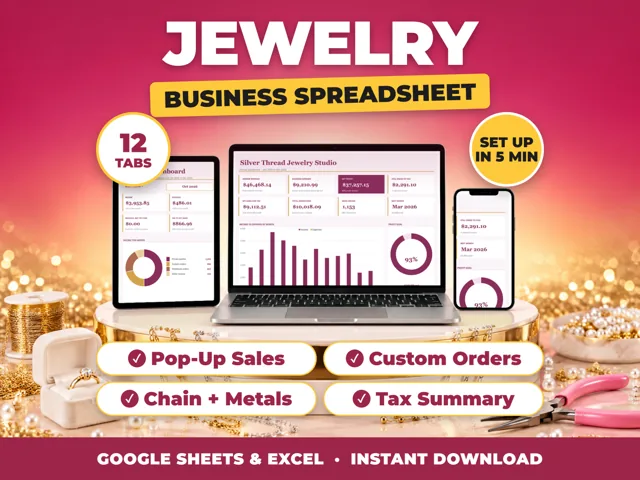
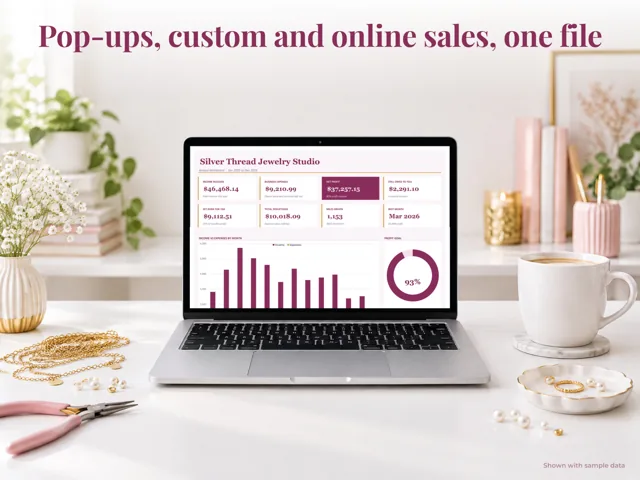
The jewelry business spreadsheet gives you a START HERE tab, Settings, dashboards, Income, Expenses, Mileage, Unpaid Invoices, Top Clients, a Monthly Summary, Quarterly totals and a Tax Summary, in Excel and Google Sheets. It tracks money, not materials on hand, so keep a simple stock list next to it.
8. A simple 30-day launch plan
Days 1 to 7: decide and register - Pick your style and customer. Check license and sales tax rules. - Open a separate bank account and order starter materials.
Days 8 to 14: make and price - Make 10 to 20 pieces. Time yourself on each. - Work out prices from your real time and costs. - Set up your bookkeeping spreadsheet.
Days 15 to 21: photograph and list - Photograph every piece and open your shop. - Apply for one or two local markets.
Days 22 to 30: sell and learn - Tell everyone you know and post your best photos. - Track what sells and what people ask about. - At month end, review income, costs and profit.
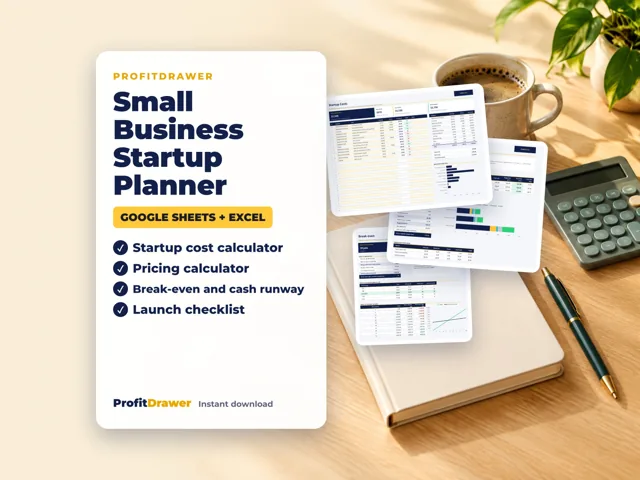
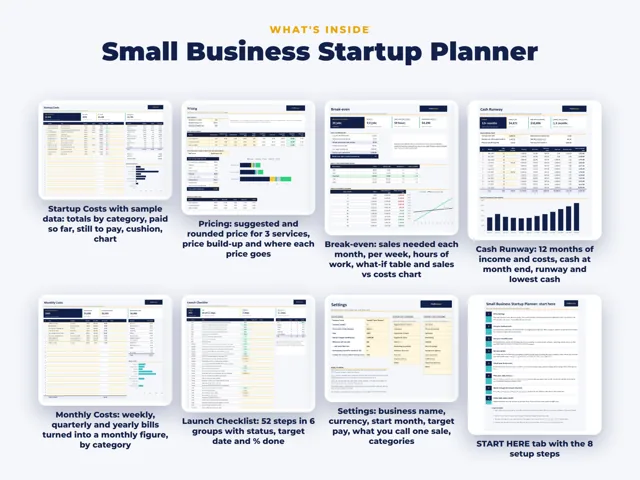
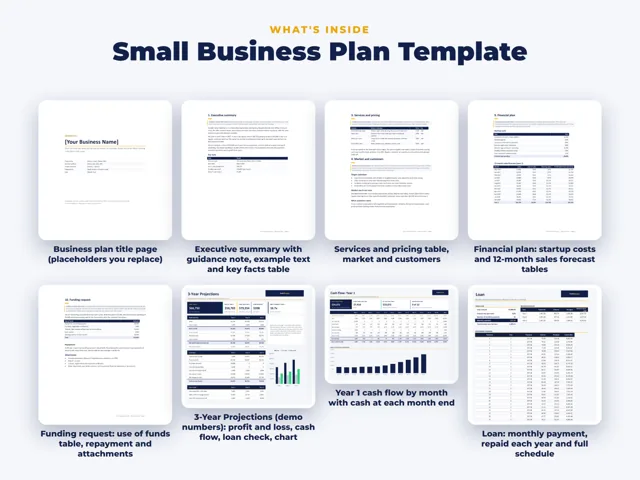
To plan costs, pricing, break-even and cash runway before you buy a welder or bulk materials, use the coming-soon small business startup planner. If you need a loan or want a written plan, the coming-soon small business plan template gives you 10 sections plus a 3-year projections workbook.
Common mistakes to avoid
- Pricing for materials only. Your time is a real cost.
- Vague metal descriptions. Say exactly what a piece is made of.
- Too many styles at once. A focused shop is easier to remember.
- Weak photos. Online buyers judge the piece by the picture.
- Not saving for taxes. Set aside a share of every sale.
A jewelry business can grow from a kitchen table to markets, shops and events. Start with one style, price on real numbers, describe your work honestly and keep clean records.
Tools for this



Questions people ask
How much does it cost to start a jewelry business?
A handmade jewelry business can start small if you begin with one style and basic hand tools. Our example budget below runs from about $240 to $2,100, but your costs will differ. Fine metals, gemstones or permanent jewelry equipment cost much more, so get quotes before you commit.
How do I start a permanent jewelry business?
Learn to weld chain safely and well, buy a welder and a small chain selection, and practice on test pieces before you charge anyone. Then book a spot at a market, salon or event, or offer private parties. Check with your city, county and state about licenses and event permits, and get insurance that covers the service you offer.
Can you write off jewelry as a business expense?
Materials, findings and packaging that go into jewelry you sell are business costs, and the IRS treats materials that become part of products for sale as cost of goods sold. Jewelry you buy to wear yourself is a personal expense. If an item is partly personal, the IRS says the personal part is generally not deductible, so ask a tax professional about your case.
Is starting a jewelry business worth it?
It can be, because you can start from home with low costs and grow slowly. The hard part is standing out, since many people sell jewelry. A focused style, honest descriptions and prices that cover your time are what turn it into a business rather than a hobby.
How do I start a jewelry business online?
Choose one style, take clear photos in natural light, and open a shop on Etsy or your own site. Describe metals and stones accurately, list sizes, and show the piece on a person for scale. Build selling and payment fees into every price.
Sources
- Launch your business: Apply for licenses and permits (U.S. Small Business Administration)
- Launch your business: Register your business (U.S. Small Business Administration)
- Plan your business: Calculate your startup costs (U.S. Small Business Administration)
- Jewelry business guidance (Federal Trade Commission)
- Publication 334, Tax Guide for Small Business (IRS)
- Self-employment tax (Social Security and Medicare taxes) (IRS)
- Estimated taxes (IRS)
- Standard mileage rates (IRS)
General information, not tax, legal or financial advice. Check the rules for your state and your situation.